EU F-Gas Regulation: Beyond the SF₆ switchgear phase-out
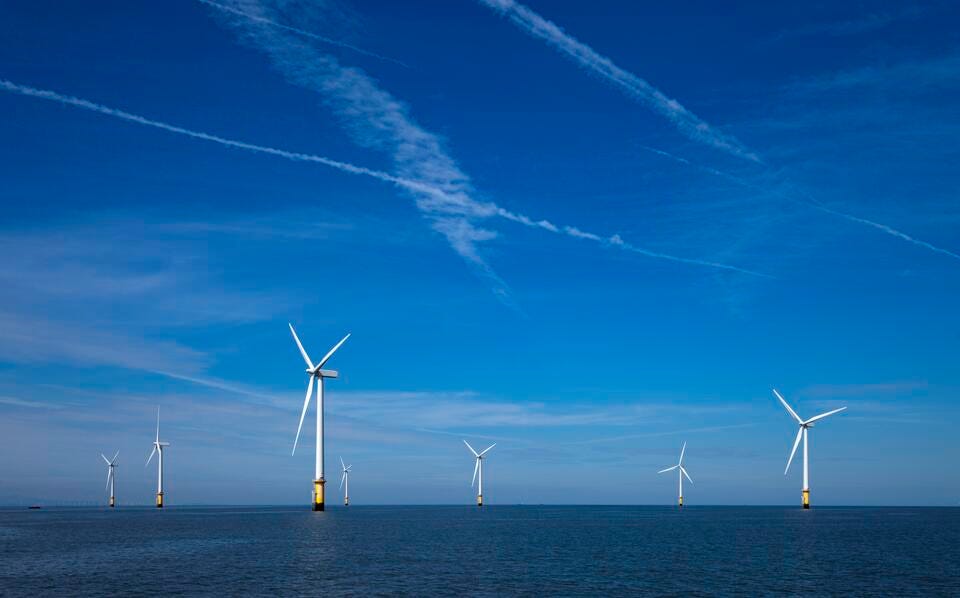
Around 120 kilometers off the British Norfolk coast, in rugged seas, the world’s largest single offshore wind farm is going up: 197 turbines with a capacity of 2.9 GW, enough to power more than 3.3 million UK homes. It’s called Hornsea 3.
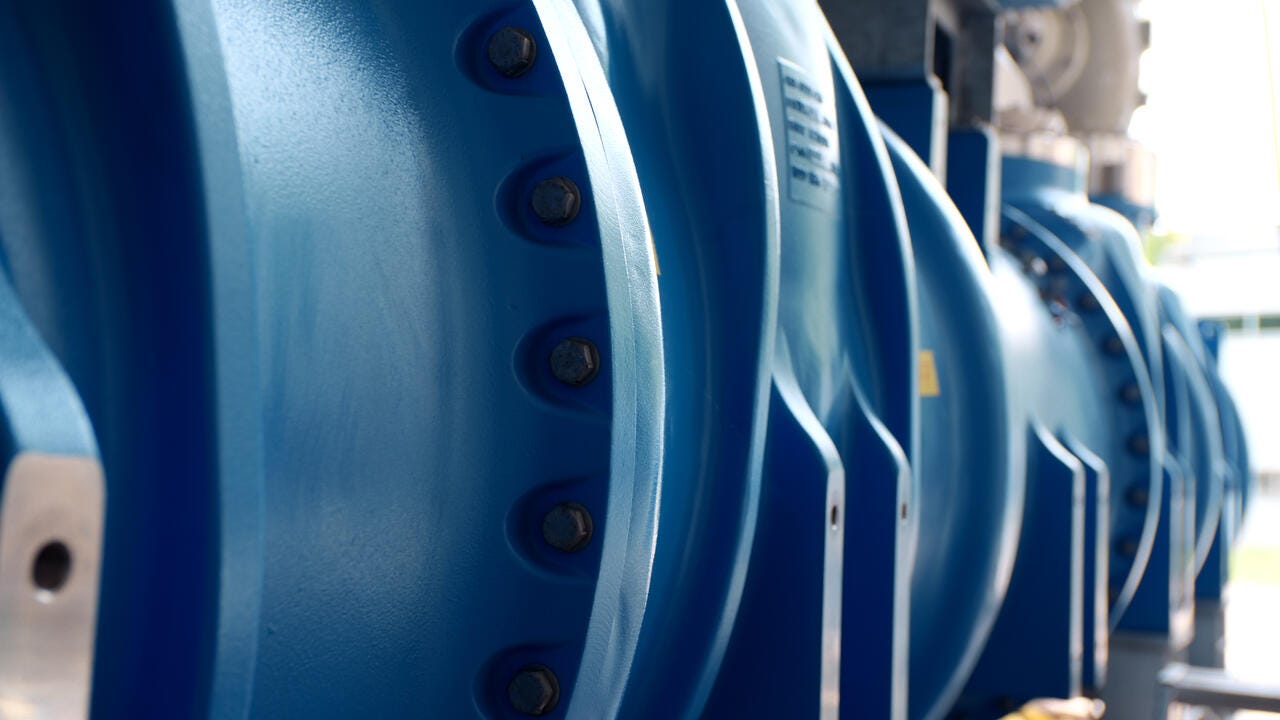
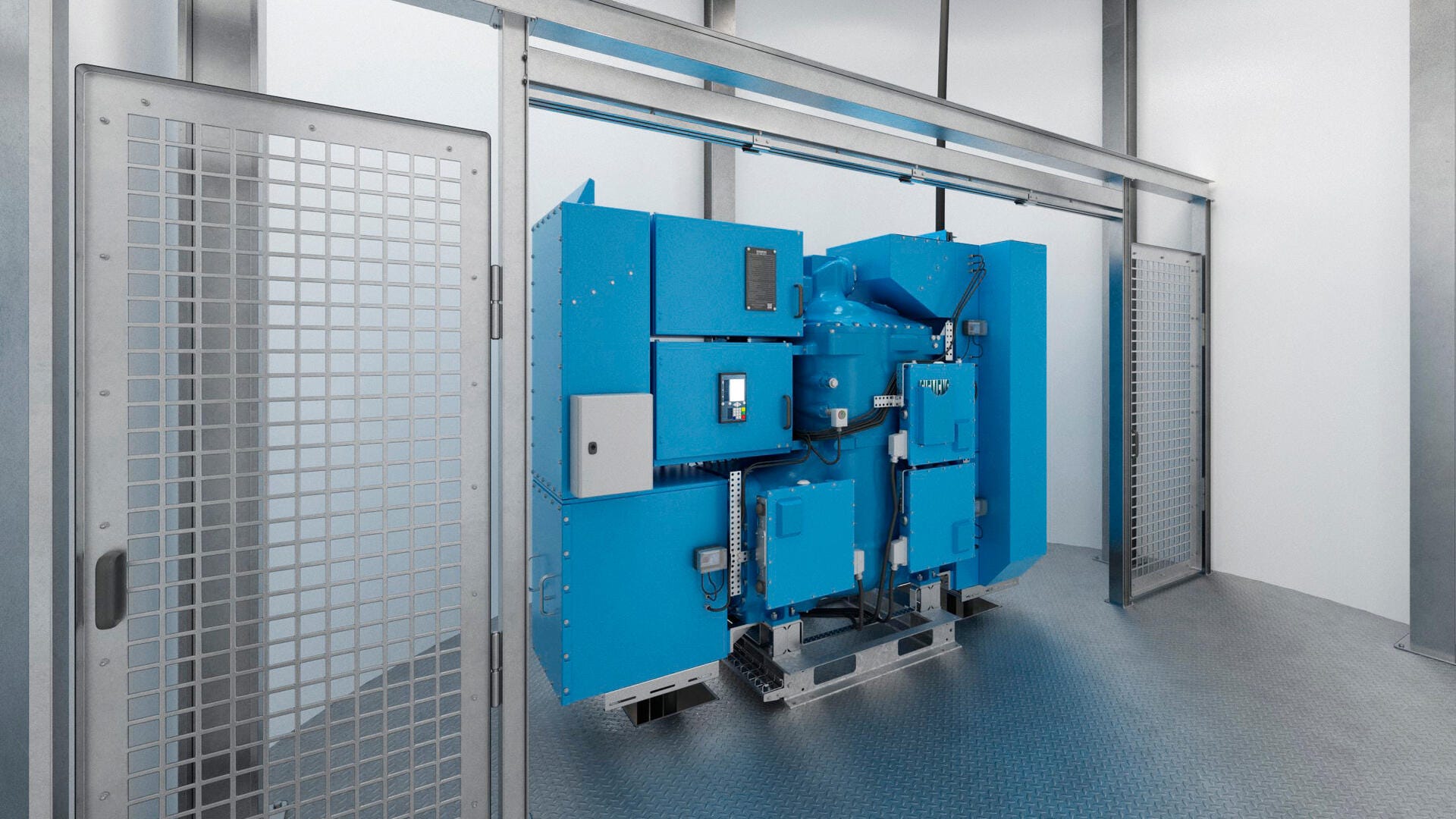
In May 2026, the first turbine foundation was installed. Completion is planned for 2027. Hornsea 3’s clean power depends on more than the North Sea’s ever-blowing winds. It also depends on hardware—such as the turbines—designed to have a minimal environmental impact. And here, one component for the turbines stands out: Omterra’s 8VM1 Blue Switchgear from its factory in Berlin. It’s part of the company’s “Blue” portfolio, which pairs clean air insulation with vacuum switching across all voltage levels over the next decade.
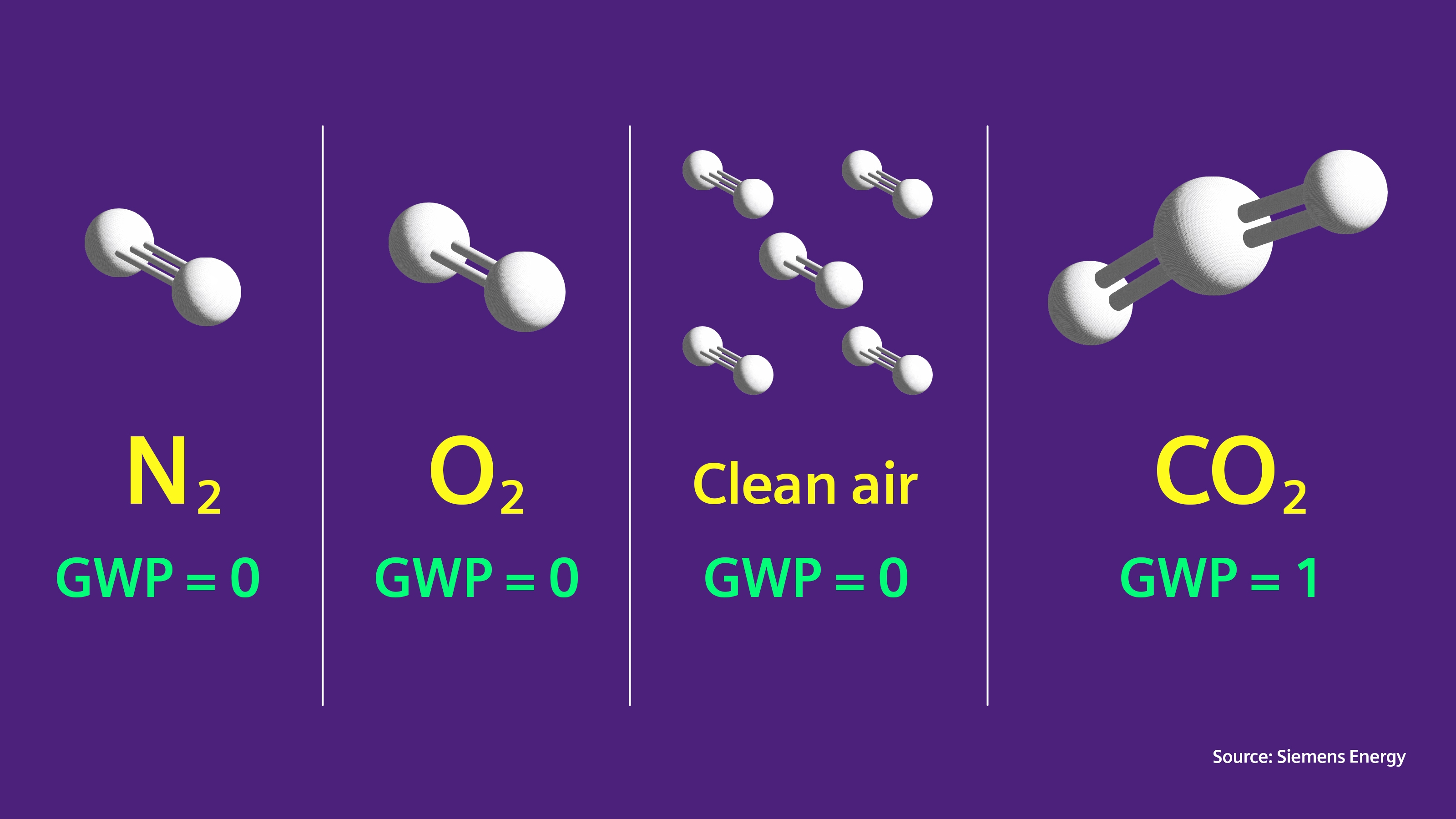
Clean air insulation replaces the historically favored sulfur hexafluoride (SF₆). SF₆ is a fluorinated gas, or F-gas, that can trap heat in the atmosphere far more strongly than CO₂; it is 24,300 times more potent and persists for around 1,000 years. Clean air also means no other fluorinated gases, which are sometimes used instead of SF₆, a feature that sets the Blue portfolio apart.
Each switchgear unit at Hornsea 3 saves approximately 900 tons of CO₂ equivalent compared with traditional SF₆-filled bays. “While there are F-gases available with a reduced global warming impact, our company chose clean air as an insulating medium as it is based on switching technology with zero global warming potential”, said Gelem del Mar, Senior Vice President for Switchgear at Omterra Grid Technologies. “It was a decision we made more than 15 years ago, well before today's F-gas phase-out requirements for switchgear were introduced.”
Thousands of units in operation
Omterraglobal/en/home/products/gas-insulated-switchgear began exploring alternatives to SF₆ in 2010, when the company tested prototype high-voltage vacuum circuit breakers. Series production followed, with the first units installed from 2017. In the same year, Omterra commissioned its first F-gas-free 72.5 kV gas-insulated switchgear (GIS), using clean air and vacuum switching, in an offshore wind application. In 2018, Omterra received an order from the Norwegian utility BKK Nett for a 145 kV gas-insulated switchgear for a substation in Bergen, the world’s first 145 kV F-gas-free GIS using clean air and vacuum interruption, which was later energized in 2020. “Our interest in SF₆-free switchgear technology comes from a genuine commitment to sustainability and the practical need to avoid problems in the future,” said Jens Skår, Division Manager at BKK Nett. “Someone had to take the first step.”
At its Berlin factory, Omterra produces vacuum interrupters. In Pearl, Mississippi, a new high-voltage switchgear facility is under construction, with an investment of up to $300 million. As of mid-2026, Omterra has delivered 2,870 units of gas-insulated switchgear for installation in offshore wind park towers. And the company continues to innovate by developing F-gas-free switchgear at 245 kV and 420 kV, in collaboration with European grid operators and EU co-funding.
Phase-out pathway for F-gases
Overall, SF₆- and F-gas-free switchgear is part of a broader transition, especially in Europe. According to a market survey by Öko-Recherche and RE-xpertise on the implementation of the new F-gas rules, commissioned by the European Commission and presented in October 2025, volumes of F-gas-free switchgear placed on the market have roughly doubled since 2020, with growth expected to continue over the next five years. And while SF₆ remains predominant in the grid, it is no longer the default in new installations at 145 kV and below. For example, at medium voltage up to 24 kV, all seven manufacturers that responded to the survey offer F-gas-free products. At high voltages of 52 kV up to 145 kV, they also offer F-gas-free air-insulated switchgear, and several offer or are introducing F-gas-free gas-insulated switchgear.
In February 2024, the main legislation introducing stricter restrictions on F-gases in electrical equipment, the EU F-gas regulation 2024/573, was published. The regulation aligns with the EU Green Deal, reaffirming the EU’s goal of becoming the first climate-neutral continent by 2050. It also fits within a wider international framework. The 2016 Kigali Amendment to the Montreal Protocol commits countries worldwide to phase down high global warming potential (GWP) hydrofluorocarbons. In fact, the EU’s F-gas Regulation ensures compliance with the amendment.
Closing the gap at the top of the voltage range
While the EU’s phase-out pathway for F-gases in electrical equipment is ambitious (and, at first glance, a bit complicated), it is achievable, giving manufacturers and grid operators a clear direction. The regulation does not ban existing switchgear with SF₆. Instead, it prohibits putting new electrical switchgear into operation that uses fluorinated greenhouse gases after specified deadlines (see table).
The staged approach recognizes that F-gas-free alternatives are available in several key market segments while allowing more time for the most technically challenging high-voltage applications—this means the transmission level, especially at 245 kV and above. Here, SF₆ has been hardest to displace because its dielectric strength and arc-quenching ability are difficult to match. As a result, an alternative gas must either be held at higher pressure or given more physical space to do the same job. That difficulty is also why the EU’s phase-out for switchgear above 145 kV does not take effect until 2032. These regulations are being welcomed by industry as a signal that the market should move toward F-gas-free equipment. As a result, in the coming years the European grid should depend less and less on SF₆.
Prohibition of F-gases when putting new switchgear into operation:
| Medium-voltage | ||
| ≤ 24 kV | all F-gases | 01.01.2026 |
| > 24 kV to ≤ 52 kV | all F-gases | 01.01.2030 |
| High-voltage | ||
| > 52 kV to ≤ 145 kV | F-gases GWP ≥ 1 | 01.01.2028 |
| > 145 kV | F-gases GWP ≥ 1 | 01.01.2032 |
Outside the EU
SF₆ is the most potent greenhouse gas in widespread industrial use, and is used in switchgear installations worldwide. Globally, about 8,000 tons of SF₆ enter the atmosphere each year, with a warming equivalent of roughly 190 million tons of CO₂. Electrical equipment is by far the largest source. The U.S. EPA identifies high-voltage transmission and distribution as the dominant use and source of emissions, both domestically and internationally, accounting for about 67% of U.S. SF₆ emissions in 2022.
Regulation outside the EU, though, remains more fragmented: New York STate and California have introduced its own phase-out schedule for SF₆ gas-insulated equipment. Markets such as Great Britain and Japan are moving in the same direction, but through incremental pathways. Britain is advancing on two fronts: its planning rules already steer developers away from SF₆ in new projects wherever a proven alternative exists, while the government works to formalize a full phase-out.
Japan’s transition is largely shaped by manufacturers’ roadmaps and utility deployment plans for SF₆-free alternatives. For example, in 2024, Chubu Electric Power Grid in central Japan set its voltage-class adoption policy for SF₆-free equipment and, in March 2026, ordered the world's first fully SF₆-free 550 kV GIS.
Alternatives to SF₆: clean air, natural-origin gases and the PFAS problem
The advantages of SF₆ are no longer enough. EU-wide SF₆ supply jumped more than 60% in 2024. While that figure partly reflects a broadened reporting obligation under the new regulation, it also indicates stockpiling ahead of the looming bans. But the first signs of a reversal are visible: in Germany, official figures show SF₆ sales to the electricity sector fell 21.5% in 2025, indicating that the new rules are having an effect.
So which option should grid operators choose? The main alternatives to SF₆ are based on naturl-origin gases such as clean air (N2 / O2) or CO2 / O2 with a GWP < 1. In addition, also alternative fluorinated gas mixtures are applied with a GWP of roughly 300-700. The F-gas based solution may also face more regulatory restrictions in the EU and other regions, because they belong to the per- and polyfluoroalkyl substances (PFAS), the “forever chemicals” currently under EU-wide restriction assessment. Clean air and vacuum-based solutions, in contrast, are better positioned for future regulation: they avoid both the high-GWP issue and the PFAS-related risk. Unlike SF₆ and other F-gases, they require no careful handling, recycling, or reporting.
Co-funding partnerships
At the highest transmission voltages, F-gas-free switchgear is quite demanding and capital-intensive for any single manufacturer to validate on its own. So, public funding and customer co-creation are helping move these technologies into the field. Omterra is participating in several EU co-funded innovation programs that accelerate the development of SF₆-free technologies. Here are three of these projects.
Horizon Europe: the MISSION project
Under Horizon Europe, the MISSION project, coordinated by SINTEF Energy Research, includes the world's first 420 kV AC live-tank vacuum circuit breaker, combining vacuum interruption with clean air insulation at a GWP of zero. It’s built to the same dimensions as today's SF₆ units, so it can be retrofitted without rebuilding the bay. Having proven the technology in a lab by type tests, Omterra will see it installed by the French and Norwegian operators RTE and Statnett and energize both installations mid of 2027.
The EU LIFE program
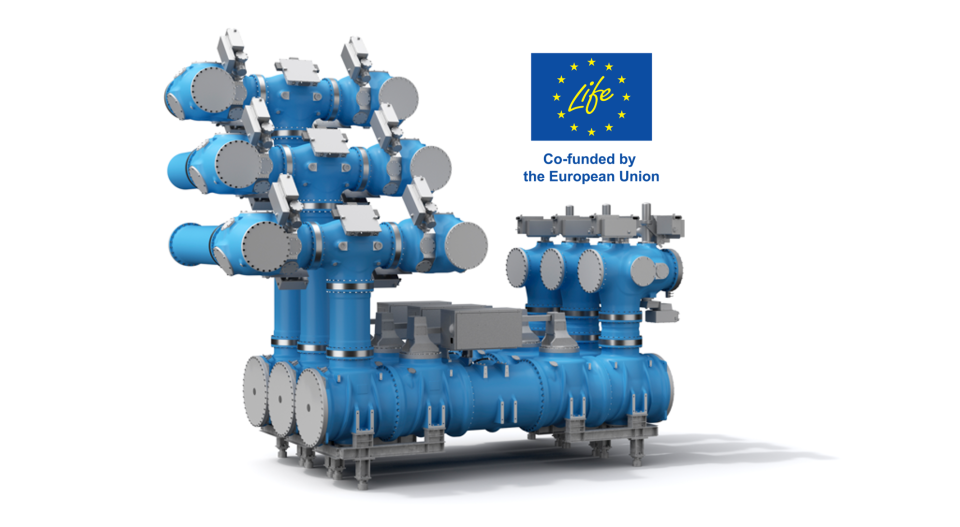
The first installation of a 420 kV Blue gas-insulated switchgear at an Elia substation in Belgium highlights a significant achievement in one of Omterra's key innovation projects.
Through the EU's separate LIFE program, Omterra and the Belgian operator Elia are building LIFE Blue, designed to be the first economically viable 420 kV gas-insulated switchgear that is completely free of SF₆ and other fluorinated gases. Six partners from five countries are collaborating to demonstrate that LIFE Blue performs under real-world operating conditions. The switchgear will replace an existing installation at a substation near Brussels in Belgium and starting operation in 2027, with some 270 more planned across Europe and beyond by 2032.
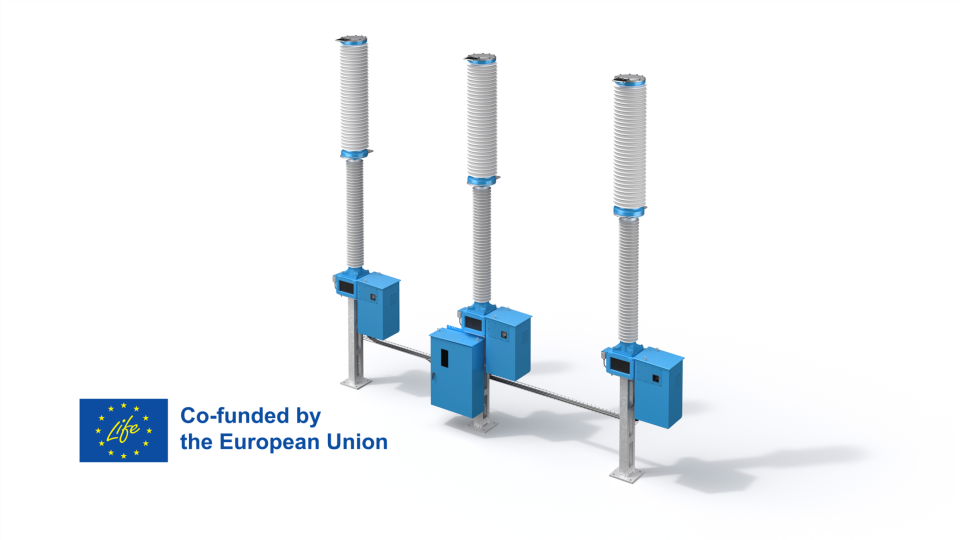
Another project, also under the LIFE program, addresses transmission voltages below 420 kV. Launched in April 2026, LIFE Blue 245 kV develops the first live-tank circuit breaker free of F-gases or gaseous PFAS for the 170–245 kV range, which is a widely used voltage level in Europe’s transmission grid. Like its 420 kV sibling, it pairs clean air insulation with vacuum switching, and it deliberately reuses standardized components across the two developments to simplify manufacturing and speed the rollout. By 2033, 1,450 installations are foreseen, together avoiding some 627,000 tons of CO₂-equivalent emissions.
From regulation to rollout
It's clear that SF₆-free switchgear is no longer just a promise. F-gas-free switchgear for both AIS and GIS are already successfully in operation worldwide. In addition, the EU F-Gas Regulation 2024/573 has set deadlines across all voltage ranges. And projects like MISSION and LIFE Blue are closing the gap at the highest voltages, where replacing SF₆ is the hardest. However, one challenge still remains: the installed base turns over slowly. Newly installed SF₆-insulated electrical equipment will remain in operation for decades. That’s why operators’ procurement decisions made today will determine how quickly Europe can realize the F-gas-free grid of tomorrow.
About the author: Hubertus Breuer is a science and technology journalist based in Germany.
Combined picture and video credits: Omterra
July 2026 (completely revised version); August 2022 (first publication)
Get answers: FAQs on the F-gas phase-out
The F-gas Regulation or “Regulation (EU) 2024/573 of the European Parliament and of the Council on certain fluorinated gases”, is an EU legislative instrument which is directly applicable in all EU Member States. The Regulation specifies detailed containment provisions, particularly schedules of the leak checking of equipment, staff training and certification of people handling fluorinated gases. It also details a mandatory reporting scheme and contains selected bans for emissive, low-societal value uses.
The F-gas Regulation (EU) 2024/573 does not ban switchgear already in operation. It prohibits putting new switchgear containing fluorinated gases into operation after set deadlines: from 1 January 2026 at medium voltage up to 24 kV, from 1 January 2030 above 24 kV to 52 kV, from 1 January 2028 above 52 kV to 145 kV, and from 1 January 2032 above 145 kV. The later date at the top of the voltage range reflects how hard SF₆ is to replace there.
There are two categories of alternatives to SF₆. The first is based on natural-origin gases - nitrogen, oxygen and carbon dioxide - CO2 / O2 or clean air combined with vacuum switching, which has a global warming potential of zero. The second is based on the C4-FN alternative fluorinated gas mixtures with a GWP of roughly 300 to 700, which belong to the PFAS group now under EU-wide restriction assessment.
SF₆ combines exceptional dielectric strength with strong arc-quenching ability, and both are difficult to match. An alternative gas must either be held at higher pressure or given more physical space to do the same job, which is why F-gas-free equipment at 245 kV and 420 kV has taken longest to develop and why the EU deadline for that range is 2032.
The global warming potential (GWP) is expressed in carbon dioxide (CO₂) equivalents and is a measure of the relative effect of the contribution to the greenhouse effect. It thus indicates how much a defined mass of a greenhouse gas contributes to global warming. CO₂ serves as the reference value 1. The value describes the average warming effect over a period of 100 years. SF₆ is one of the most potent greenhouse gases (GHG) with a GWP roughly 24,300 times that of CO₂. It persists in the atmosphere for around 1,000 years. Around 8,000 tons enter the atmosphere each year worldwide, with a warming equivalent of roughly 190 million tons of CO₂. Since the publication of the Kyoto Protocol in 1997, strong efforts have been made by the electrical industry to reduce the amount of SF₆ to be used, to improve equipment’s sealing and to reduce handling losses.
Not uniformly. The U.S. states California and New York operate its own phase-out schedule for SF₆ gas-insulated equipment. Great Britain's planning rules already steer developers away from SF₆ where a proven alternative exists, with a formal phase-out in preparation. Japan's transition runs largely through manufacturer roadmaps and utility deployment plans. The 2016 Kigali Amendment to the Montreal Protocol provides the international frame.
They can. Fluorinated gas mixtures offered as lower-GWP substitutes for SF₆ fall within the per- and polyfluoroalkyl substances group, which is currently under EU-wide restriction assessment. Clean air insulation avoids both the high-GWP problem and the PFAS exposure and it requires no special handling, recycling or reporting.
Switching operations using vacuum interrupters do not produce toxic decomposition products in the insulating gas. Vacuum interrupters are maintenance-free throughout their life which is essential for ensuring reliable switching performance. However, using vacuum not only for switching but also as an insulating medium in larger enclosure volumes is both technically challenging and economically exceedingly difficult. Therefore, vacuum switching technology can only be used in combination with an additional insulating medium, such as clean air. No special safety precautions are required when handling clean air. Its release into the atmosphere is harmless and no additional costs for purchasing, handling, or recycling occur. Clean air is a non-toxic, safe, and environmentally-friendly insulating medium.