Grid-forming for HVDC, STATCOM and E-STATCOM
The shift towards inverter-based power supplies, including renewables, batteries, and other solutions, is transforming the role of power electronics in the grid. Unlike traditional synchronous generators, these technologies are not physically synchronized to the grid, leading to new challenges in maintaining grid stability and security of supply. Grid-forming solutions address these challenges by providing flexible and resilient responses to grid disturbances, enhancing overall grid stability and energy security.
Omterra, formerly Siemens Energy, is at the forefront of this transition. Leading the way with cutting-edge grid-forming inverters that deliver essential grid stability, inertia, and resilience. Advanced grid-forming technology supports renewable energy integration, microgrids, and system restoration, ensuring a secure and reliable power supply in evolving energy landscapes. By enabling seamless integration of diverse energy sources, the grid-forming solutions are pivotal in building a sustainable and resilient power grid for the future.
What is grid-forming?
Grid-forming refers to the capability of certain inverters, known as grid-forming inverters, to establish and maintain stable voltage and frequency in a power system. These inverters play a crucial role in modern power systems, especially as grids transition towards distributed generation and incorporate more inverter-based resources (IBRs) like wind turbines, photovoltaic arrays, and batteries.
As the number of these installations grows, so does the potential for interaction problems, which can lead to reduced grid stability. The shift away from synchronous machines weakens the grid, increasing the risk of transient voltage instability and converter instability in grid-following systems. While improved controls and parameter tuning can mitigate some risks, they have limitations.
Grid-forming inverters are essential for low-inertia grids dominated by renewables, as they actively regulate voltage and frequency, providing the necessary stability and resilience. They are also critical for the restoration of meshed networks, addressing the challenges posed by the evolving energy landscape.
Grid-forming vs. grid-following
Most power electronic systems today utilize grid-following inverter controls. As their use and installed capacity continue to grow, understanding the characteristics, dynamic behavior, and potential contribution to grid reliability of these inverters becomes increasingly important. While both grid-forming and grid-following controls are designed to supply active and reactive power to the grid, their responses during and after system disturbances differ significantly.
Grid-forming inverters actively regulate voltage and frequency, providing stability and resilience, whereas grid-following inverters depend on existing grid conditions to operate effectively. This distinction highlights the crucial role of grid-forming technology in enhancing grid reliability amidst the evolving energy landscape.
Grid-forming
- Grid-forming inverters maintain an internal voltage phasor within the transient time frame, with magnitude and frequency set locally at each inverter, ensuring stable operation.
- These inverters can operate independently in an electrical island or synchronize seamlessly with an external grid, providing flexibility in various grid scenarios.
- Grid-forming technology allows inverters to respond instantly to changes in the phase angle of the external system, supplying additional active and reactive power as needed to enhance grid stability.
Grid-following
- Grid-following inverters operate under the assumption that the grid voltage is tightly controlled by other generators, relying on this stability for their operation.
- These inverters require a fast-acting synchronizing function, typically a phase-locked loop, to measure the grid’s voltage angle at the connection point, ensuring accurate alignment with the grid.
- The effectiveness of grid-following inverters hinges on their ability to accurately and quickly track the external voltage; failure to do so can result in an uncontrolled and unstable output.
Key challenges addressed by grid-forming technology
Frequency stability
Grid-forming inverters mitigate frequency drift caused by fluctuations in generation or load, maintaining critical frequency levels for consistent power delivery.
Voltage regulation
By staying below allowed voltage fluctuations, grid-forming technology ensures regulated voltage, which is essential for the proper operation of power system equipment and loads.
Inertia provision
Grid-forming inverters provide the necessary inertia, allowing all generation resources to synchronize and remain synchronized through network disturbances, enhancing grid resilience.
Black start capability
These inverters facilitate system restoration, enabling black start processes and restoring the power system following major outages, ensuring rapid and effective emergency response.
Why grid-forming matters
Grid-forming inverters, a key to transforming our power grid, are becoming increasingly crucial as the energy landscape shifts from traditional synchronous generators to inverter-based generation. This transition presents significant grid stability challenges, as inverter-based systems lack the inherent inertia that synchronous generators provide, which is essential for maintaining grid stability.
Grid-forming inverters address these challenges by simulating inertia and actively regulating voltage and frequency. This capability is vital for preventing blackouts, enabling the operation of microgrids, and supporting the increased penetration of renewable energy sources. By providing the necessary stability and control, grid-forming inverters ensure a reliable and resilient power supply.
Industry trends and research insights highlight the growing importance of grid-forming technology in modern energy systems. As the demand for sustainable and flexible energy solutions rises, grid-forming inverters play a pivotal role in transforming the power grid to meet future needs. Their ability to integrate seamlessly with renewable energy sources and enhance grid performance makes them indispensable in the ongoing energy transition.
Omterra grid-forming technology
Explore the overview of the Omterra portfolio of grid-forming capabilities, products and solutions.
HVDC, STATCOM and E-STATCOM technologies
Portfolio element | |||
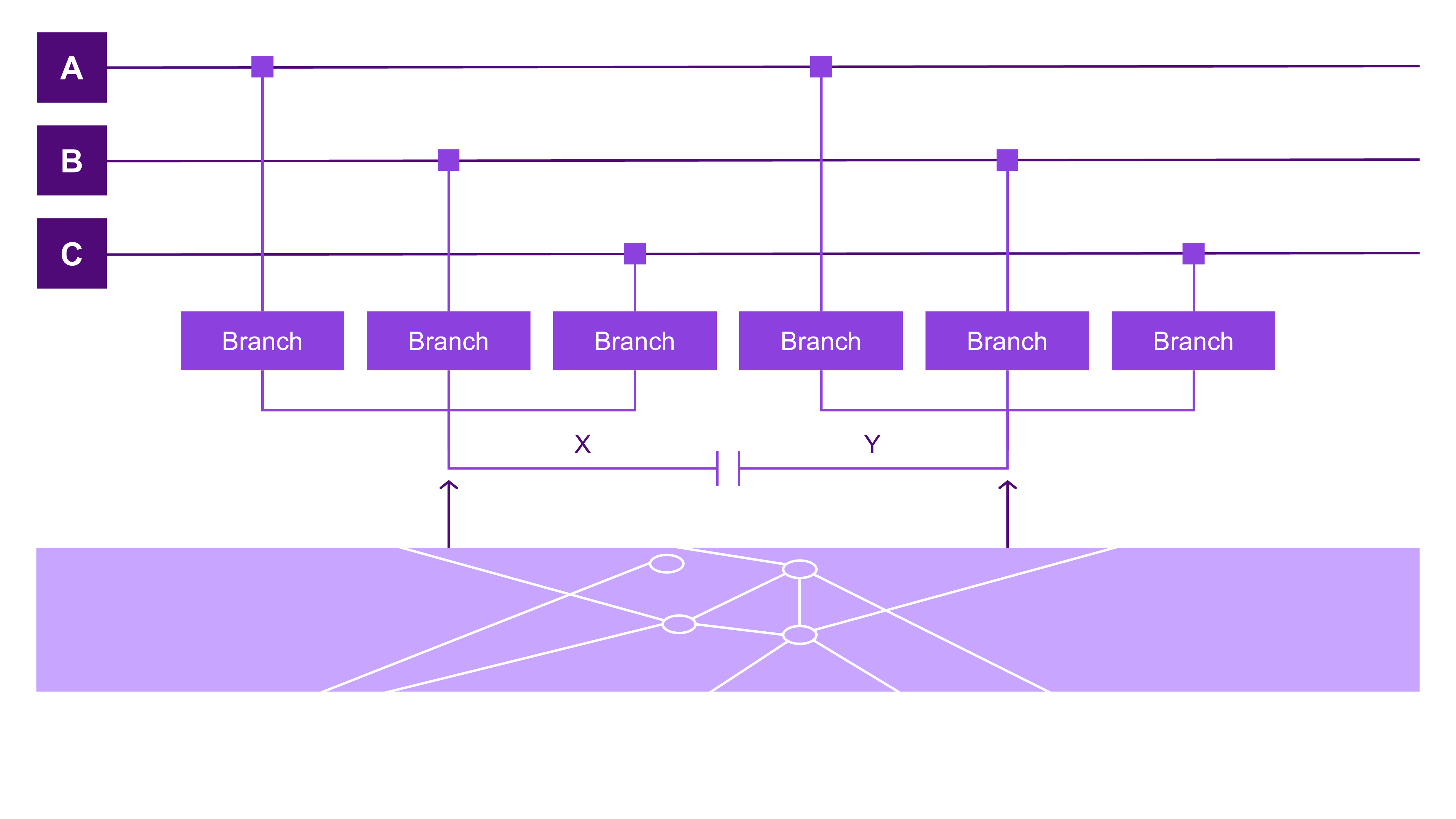
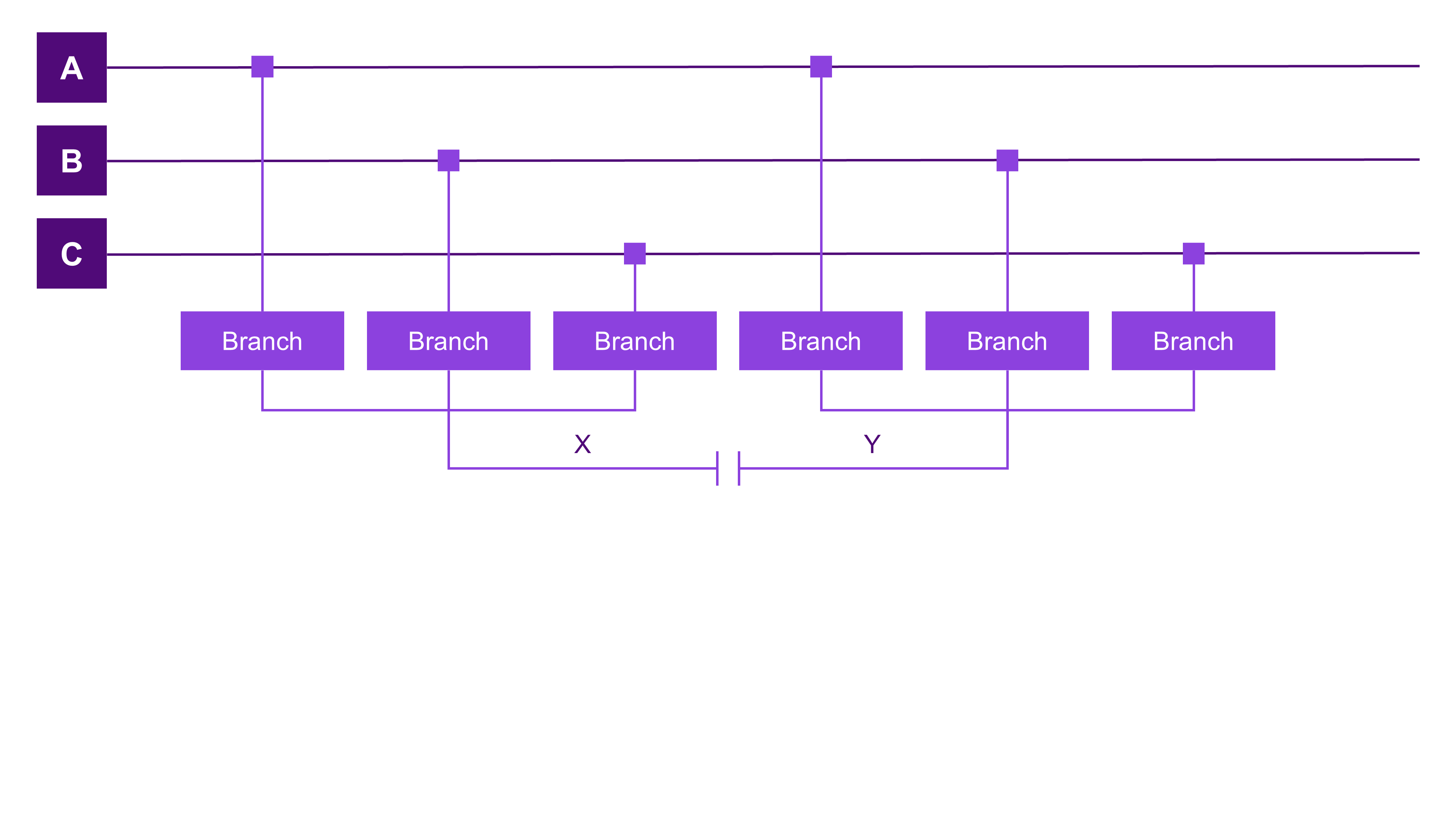
Topology | Double star / B6 | Double star / B6 + supercapacitors | Delta |
High-level description | Symmetric monopole & bipole solutions for a broad range of power transmission requirements | Superior scalability for energy storage capabilities | Flexible arrangement and scalability of SVC PLUS® branches |
Grid-forming capabilities | Inherent and instantaneous response to voltage disturbances in the AC grid | Inherent and instantaneous response to voltage disturbances in the AC grid | Inherent and instantaneous response to voltage disturbances in the AC grid |
| Stabilizing the AC grid voltage also at very low short-circuit ratio | Stabilizing the AC grid voltage also at very low short-circuit ratio | Stabilizing the AC grid voltage also at very low short-circuit ratio |
| Supporting renewable energy sources and inverter based ressources (IBRs) | Supporting renewable energy sources and inverter based ressources (IBRs) | Supporting renewable energy sources and inverter based ressources (IBRs) |
| Inertial response to frequency disturbances in the AC grid | Instantaneous response to frequency disturbances in the AC grid | - |
| Inherent damping of low frequency oscillations and harmonics, and selective damping of individual harmonic frequency in low frequency range possible | Inherent damping of low frequency oscillations and harmonics | Inherent damping of low frequency oscillations and harmonics |
| Provision of fine-tuned inertial response through power transmission capabilities – response according to system dynamics & selected inertia constant | Provision of powerful and adjustable instantaneous inertial response for frequency support | - |
Inherent active power support | Yes (continuous) | Yes (for several seconds) | No |
Dedicated energy storage | No Energy for inherent response & inertia contribution is drawn from the DC cables & DC transmission lines and the connected AC or DC grids – respecting the overall system dynamics and selected inertia constant | Yes Energy for inherent response & inertia contribution is drawn instantaneously from the DC connected supercapacitors, the solution is unrivaled in terms of instantaneous inertia | No |
Key benefits of Omterra grid-forming inverters
Omterra's grid-forming inverters offer a range of advantages that are essential for modern power systems, enhancing both performance and sustainability.
Enhanced stability and security of supply
Advanced control mechanisms ensure grid stability and consistent power delivery, maintaining a secure and reliable energy supply.
Fast and reliable response to grid disturbances
Provide quick and dependable reactions to grid disturbances, minimizing disruptions and maintaining power quality.
Increased flexibility
Seamlessly adapt to varying energy sources and demands, providing a versatile solution for diverse power generation scenarios.
Improved power quality and reduced harmonics
Enhance power quality by reducing harmonics, ensuring smooth and efficient energy flow.
Sustainability and renewable integration
Facilitate the integration of renewable energy sources, supporting a greener future and contributing to carbon neutrality and sustainability goals.
Support for distributed generation and energy storage
Facilitate the integration of distributed generation and energy storage systems, optimizing grid performance and resilience.

Get answers: FAQs on grid-forming
Grid-forming technology enables inverters to establish and maintain stable voltage and frequency in power systems, crucial for integrating renewable energy sources and ensuring grid stability. It provides the necessary inertia and resilience to handle fluctuations and disturbances, making it essential for modern energy networks.
A grid-forming inverter is a device that actively regulates voltage and frequency, simulating the inertia typically provided by synchronous generators. This capability allows it to stabilize the grid and support the integration of renewable energy sources.
Grid-forming inverters actively control voltage and frequency, providing stability and resilience, while grid-following inverters depend on existing grid conditions and require synchronization with the grid’s voltage angle.
Inertia is crucial for maintaining grid stability, as it helps absorb and dampen fluctuations in power supply and demand. It ensures a stable frequency and prevents rapid changes that could lead to grid instability.
Yes, grid-forming inverters can support black start capabilities, enabling the restoration of power systems following major outages by establishing stable voltage and frequency independently.
Grid-forming inverters are vital in microgrids, providing the necessary stability and control to operate independently or in conjunction with larger grids, facilitating the integration of distributed energy resources.
Grid-forming inverters enhance grid resilience by actively managing voltage and frequency, providing stability during disturbances, and supporting the integration of diverse energy sources.
Yes, grid-forming inverters are compatible with energy storage systems, enabling efficient energy management and enhancing grid stability and reliability.
Industries such as transmission system operators, renewable energy and microgrid operators benefit significantly from grid-forming technology, as it supports stable and efficient energy integration and management.
Grid-forming inverters facilitate the integration of renewable energy sources, reducing reliance on fossil fuels and supporting the transition to carbon-neutral energy systems.
Future trends in grid-forming technology include advancements in control algorithms, increased integration with energy storage, and enhanced capabilities for managing complex power networks.
Omterra offers a range of products with grid-forming capabilities, including advanced inverters and solutions designed to enhance grid stability and support renewable energy integration, such as HVDC PLUS®, SVC PLUS®, and SVC PLUS FS®.
Omterra ensures compatibility with renewable energy sources by developing grid-forming solutions that actively manage voltage and frequency, facilitating seamless integration and optimizing energy delivery.