DC grids: Why transmission innovation is turning to direct current
The energy transition promises cleaner electricity. But how do you move growing amounts of renewable power efficiently over long distances? Around the world, grid operators are turning to new direct current (DC) technologies to help meet the challenge.
According to the International Energy Agency (IEA), renewables are expected to increase their share of global electricity generation from around 30 percent in 2023 to 46 percent by 2030, supplying nearly half of the world’s electricity. Keeping power grids reliable, affordable, and secure while managing that transformation is driving new forms of collaboration and innovation—including a new generation of direct current (DC) technologies.
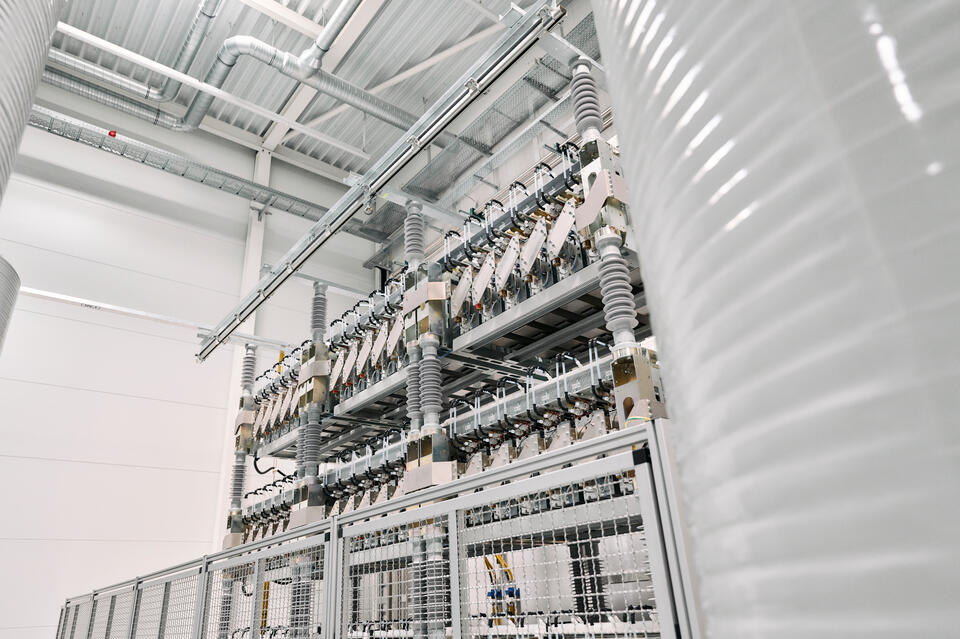
To help integrate more renewable energy into power grids worldwide, Omterra and Mitsubishi Electric are breaking away from standard industry practice to co-develop DC switching stations and circuit breakers for future multi-terminal High Voltage Direct Current (HVDC) systems. Together, these technologies could enable more robust power grids capable of integrating renewable energy from multiple sources.
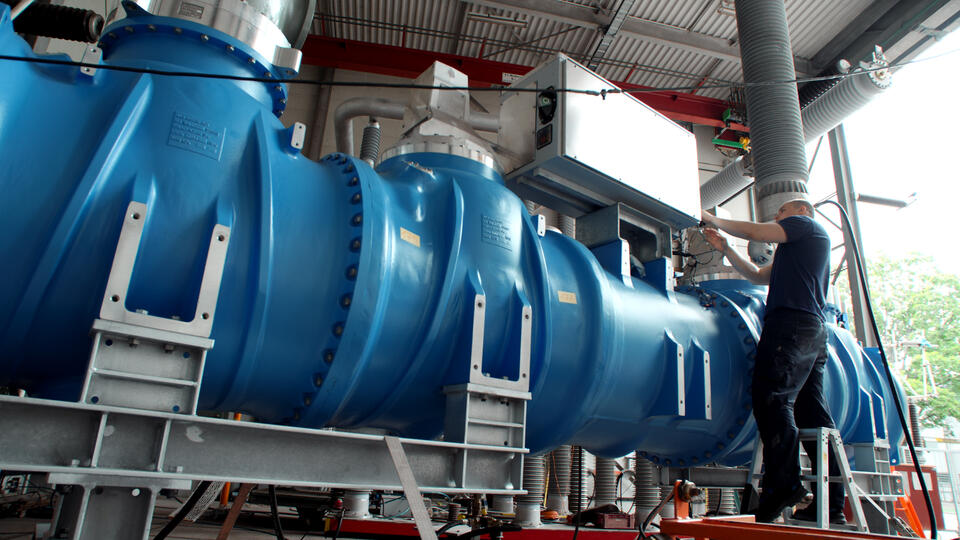
The two companies independently developed technologies for the DC circuit breaker and are currently co-developing DC switching stations. These stations will coordinate multiple DC switching units, including circuit breakers, and work with converter stations to optimize power flow in future multi-terminal HVDC grids. They will also help isolate faults without disrupting the wider network and reduce the need for additional AC/DC conversions, improving overall system efficiency.

“Our goal with Mitsubishi Electric is to develop complementary DC circuit breakers that enable the use of HVDC grids with multiple connection points,” says Matthias Foehr, Vice President of Product Management—Grid Technologies at Omterra, during a business trip to Mitsubishi Electric’s offices in Tokyo, Japan. “It’s a key component in transforming renewable energy transmission over long distances—making it more robust and affordable.”
AC vs. DC power transmission
In the late 19th century, Thomas Edison and George Westinghouse championed rival approaches to transmitting electricity in what became known as the "War of the Currents." AC ultimately became the dominant standard because it could be transmitted more efficiently over long distances. Today, however, advances in power electronics are driving renewed interest in HVDC for applications where it can transport large amounts of electricity with lower losses.
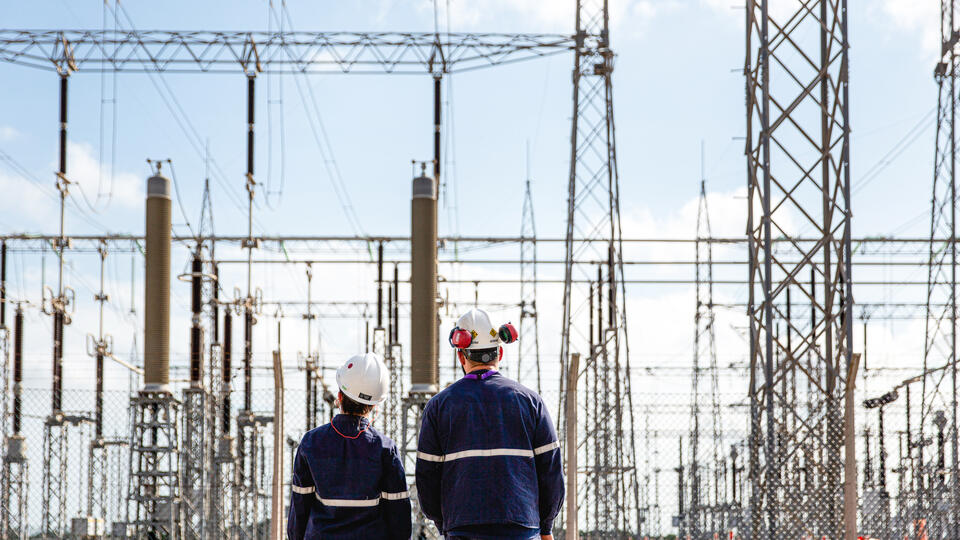
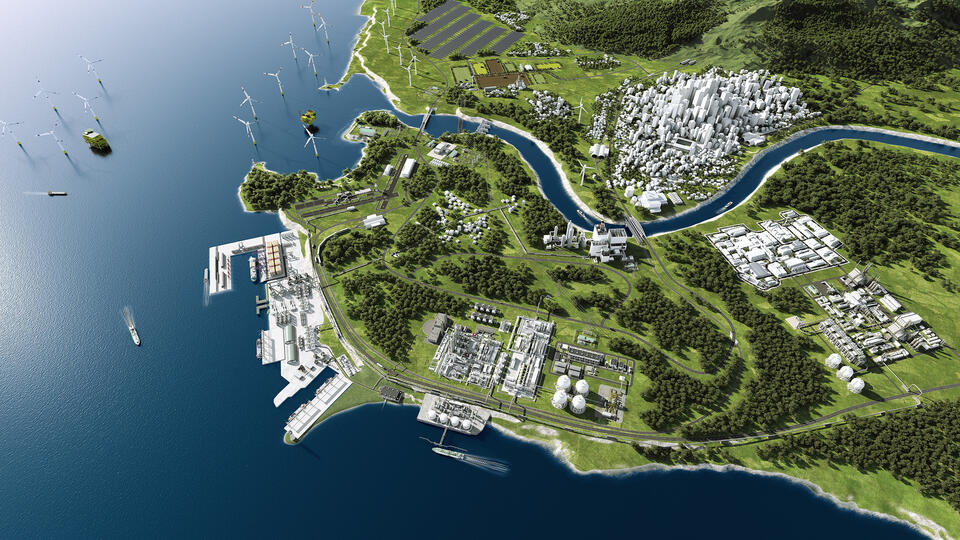
One of the main purposes of HVDC systems is to transmit electricity over long distances. This allows renewable energy generation facilities, such as offshore wind farms, to supply load centers with clean power. In the case of Germany, it would enable the efficient distribution of large amounts of power from wind turbines on the North Sea to load centers such as Frankfurt, Stuttgart, and Munich. HVDC transmission systems can also be used to connect asynchronous AC grids, improving stability and reliability, and are the preferred system for underwater cables due to lower losses and higher efficiency.
Most HVDC systems today connect one point directly to another. The next generation of HVDC networks will connect multiple transmission links through DC switching stations that act as network nodes. This enables electricity to be routed flexibly between different sources and destinations, making it easier to integrate renewable energy and deliver it where it is needed most.
From point-to-point HVDC to multi-terminal DC grids
While today’s power systems already combine AC and DC technologies, the role of HVDC transmission systems is expected to expand in applications where it delivers the greatest value. Unlike conventional AC grids, HVDC systems allow operators to actively control power flows, directing electricity where it is needed most. This provides distinct advantages for intercontinental power links, renewable energy integration, long-distance power transmission, and potentially for connecting large electricity consumers such as data centers.

HVDC is the accelerator for the energy transition.
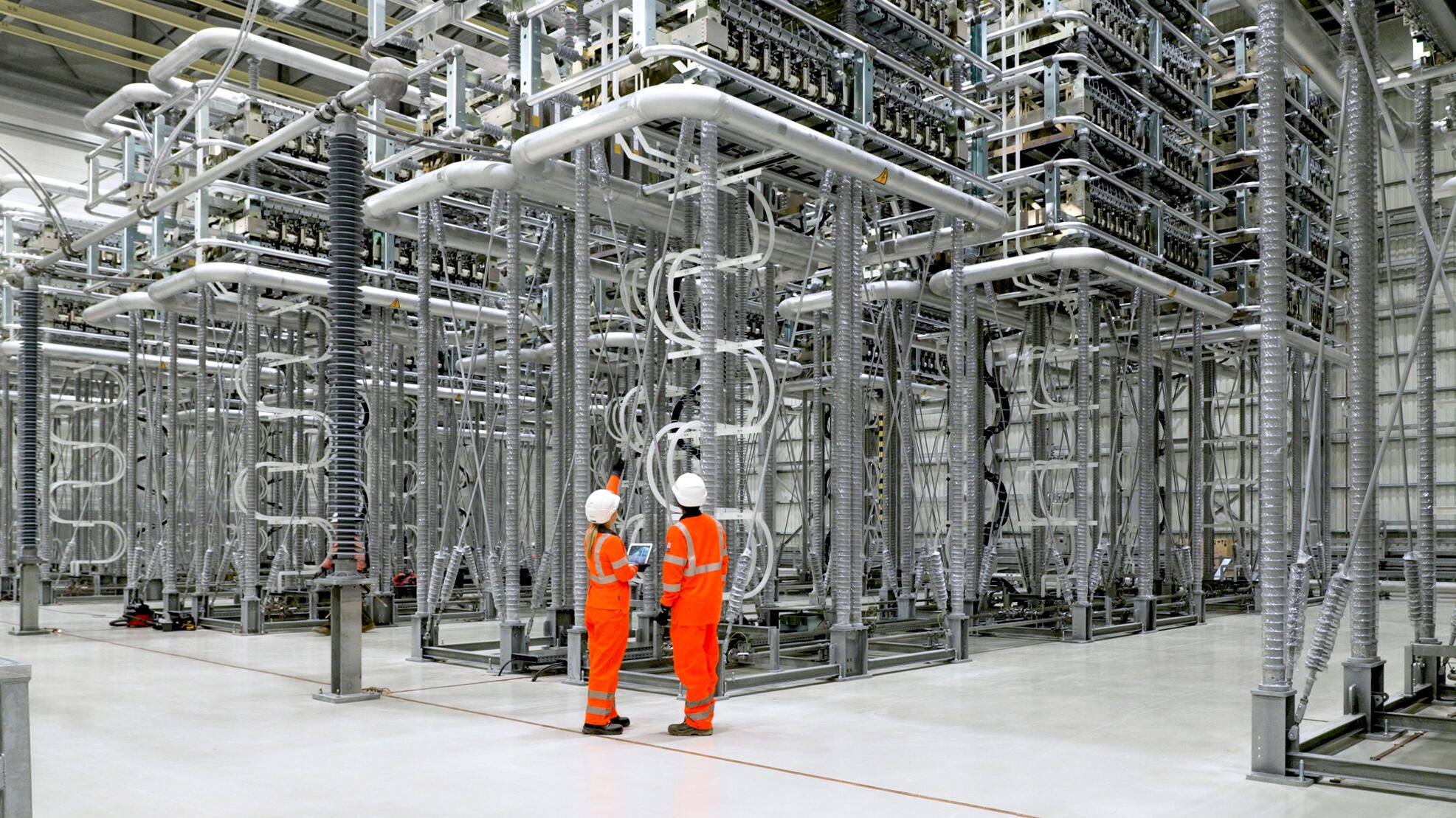
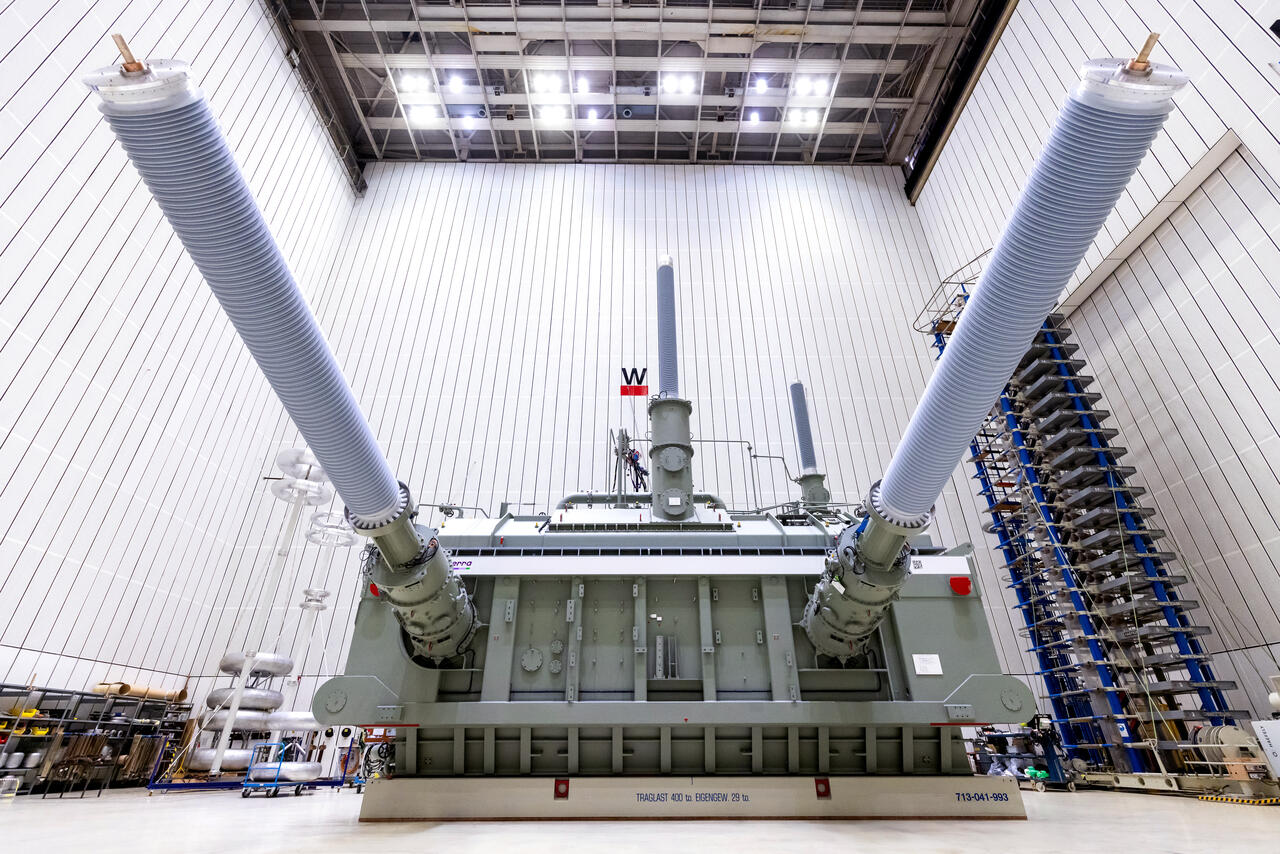
In HVDC systems, high-performance converter stations transform AC into DC for high-voltage transmission over distances of up to thousands of kilometers. Viking Link, for example, is the longest HVDC submarine interconnector in operation, spanning 765 kilometers between the UK and Denmark. At the receiving end, another converter station transforms the DC back into AC before it is distributed on the grid to the end consumer.
HVDC systems can reduce electricity losses by 30 to 50 percent compared to AC systems, making them a more sustainable solution amid climate change. For instance, if Europe wanted to build one gigawatt of offshore wind capacity, a 5 percent transmission loss would amount to 50 megawatts—equivalent to the output of roughly three to five modern offshore wind turbines.
The DC circuit breaker is the enabler to shift from point-to-point connections to multi-terminal applications.
HeideHub: Europe’s first four-terminal HVDC grid
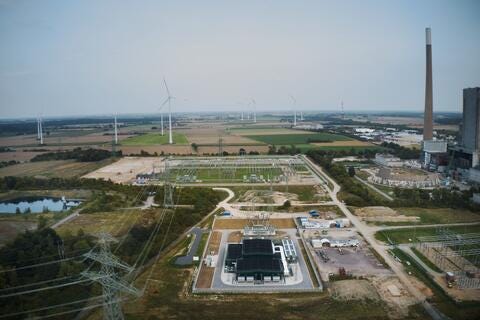
Omterra has won initial contracts with German transmission system operators TenneT and 50Hertz for two projects that are expected to include a DC circuit breaker within a central DC switching station. One of these is HeideHub, Europe's first HVDC power hub, which will connect multiple transmission links at a single hub, enabling renewable electricity to be routed flexibly to different regions. Together, the projects will form a four-terminal HVDC grid scheduled to go into operation in 2032.
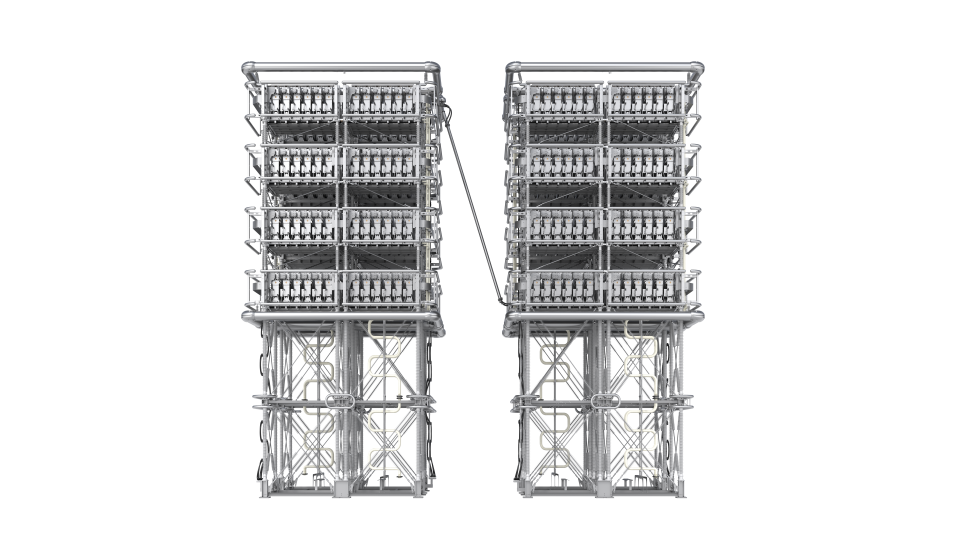
The projects also highlight the potential of combining Omterra's DC circuit breaker technology with Mitsubishi Electric's expertise in power electronics. Together, the companies aim to deliver the first DC switching station of its kind in the European market. For Mitsubishi Electric, the collaboration also marks a significant expansion of its HVDC activities in Europe.
According to Foehr, today's grid technologies are simply too complex for any one company to develop alone. Public funding programs, research institutions and partnerships with other companies all have a role to play in driving innovation across the value chain.
"The partnership is also innovative in that it could help open up an industry that has been characterized by vendor-specific, locked-in solutions from large players", says Foehr. A multi-vendor approach could also accelerate the development of common standards for future DC grids, where no equivalent of today's AC grid code yet exists. "We're just at the beginning of the journey," says Foehr. "The technology is there, it's starting to be built, and we're developing the standards together with other manufacturers and customers."
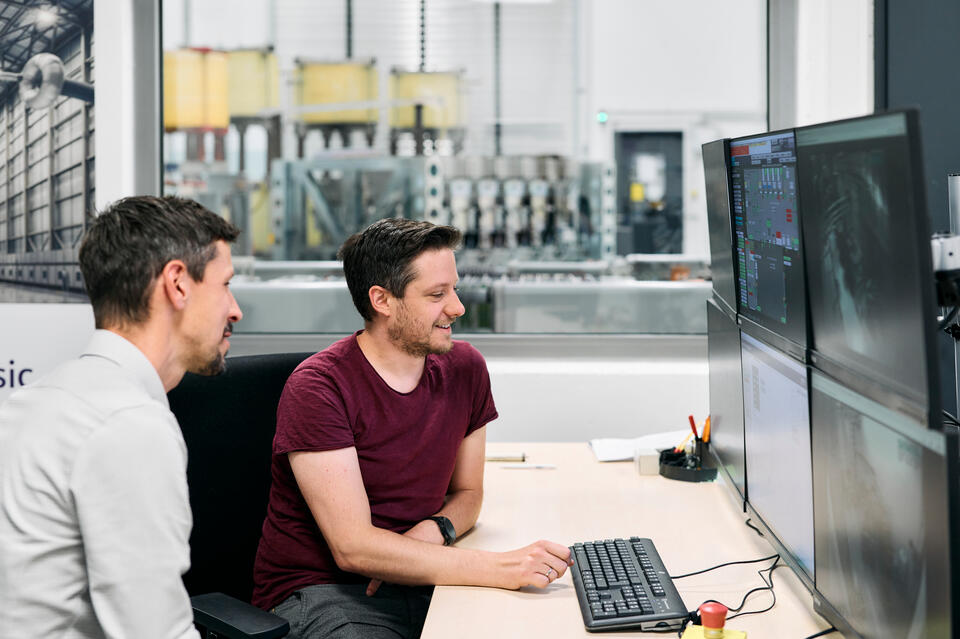
“This collaboration allows two vendors with deep technical know-how to work on the first phases of integrating this complex equipment while still maintaining their own product lineups,” says Frederick Page, DC Grid Solutions Senior Manager and Chief Engineer at Mitsubishi Electric. “In the mid-term, it should be possible to integrate equipment from either supplier and, therefore, make the rollout of a larger, multi-terminal system feasible, at least from the perspective of two vendors. The long-term aim is that this would spread to other vendors as well.”
Empowering collaboration for a cleaner future
“This combined approach between Omterra and Mitsubishi Electric marks a departure from conventional industry practice, where companies typically develop enclosed systems for the market,” says Foehr. “As power grids evolve, our work exemplifies how collaboration and complementary technological solutions are more than just the sum of their parts—and it’s partnerships like this that will get us to a more sustainable world.”
Sustainable, efficient power generation and distribution are key approaches to addressing climate change, and HVDC is a critical first step in rebuilding this vital infrastructure.
“You’re trying to reduce losses, which means reducing the amount of energy you need to produce, as well as the number of systems you need to put in place,” says Foehr. “That involves copper and steel for the housing, additional transformers, converters, and so on. So, it’s one way to reduce the amount of resources needed, as well as money and time. HVDC is the accelerator for the energy transition.”
About the author: Tim Hornyak is a Canadian writer based in Tokyo, Japan, who has worked in journalism for more than 20 years. He has written extensively about technology, science, energy, culture, and business in Japan, as well as Japanese inventors, roboticists and Nobel Prize-winning scientists.
Combined video and picture credits: Christopher Jue
Get answers: FAQs on direct current (DC) grids
A direct current (DC) grid is a network that transmits electricity using high-voltage direct current (HVDC). Today's HVDC systems are typically built as point-to-point connections between two converter stations. Future DC grids are expected to evolve toward multi-terminal configurations, connecting multiple converter stations and network nodes through technologies such as DC switching stations. This lets electricity be routed flexibly between different sources and destinations, making renewable energy easiert to integrate into the grid and deliver where it is needed. It is also called a multi-terminal HVDC grid.
Direct current (DC) switching technologies are the systems that help control and protect future multi-terminal HVDC grids. They include solutions such as DC circuit breakers and DC switching stations, which allow power flows to be managed and faults to be isolated without shutting down the entire network.
Most HVDC systems in operation today connect one converter station directly to another. A multi-terminal DC grid connects multiple converter stations and network nodes, so power can be redirected rather than only sent from A to B. This requires additional technologies such as DC switching stations and DC circuit breakers. It also means a fault on one link can be isolated without taking down the wider network, which is why DC circuit breakers are considered a key enabling technology for multi-terminal DC grids.
In a 50 Hz system, alternating current (AC) crosses zero volts a hundred times a second, and conventional breakers use those zero crossings to extinguish the arc. Direct current (DC) has no zero crossing, so interrupting it requires a different approach. DC circuit breakers detect faults and interrupt fault currents within milliseconds, isolating only the affected section of the network while keeping the rest of the grid in operation. Without a working DC circuit breaker, a fault anywhere on a multi-terminal DC grid would have to be cleared by shutting down the whole system.
HVDC systems can reduce electricity losses by 30 to 50 percent compared with equivalent AC transmission over long distances. On one gigawatt of offshore wind capacity, a 5 percent transmission loss amounts to 50 megawatts—roughly the output of three to five modern offshore wind turbines.
Omterra has won initial contracts with the German transmission system operators TenneT and 50Hertz for two projects expected to include a DC circuit breaker within a central DC switching station. One of them is HeideHub, Europe's first HVDC power hub. Together, the projects will form a four-terminal HVDC grid scheduled to enter operation in 2032.
Future direct current (DC) grids are expected to connect equipment from multiple manufacturers. Common standards help ensure interoperability between converters, control systems, protection technologies, and DC switching technologies. Future multi-terminal DC grids will require greater standardization to enable seamless integration across different vendors and technologies.