
Grid ancillary services for power grid stability
Renewable power is reshaping the energy system. As conventional generation declines, the grid loses inertia, short-circuit power, and voltage stability. Power generations can close this gap.
With grid ancillary services, generators help keep frequency and voltage stable, prevent blackouts, and restore the grid when needed. Omterra turns existing and new power plant assets into active contributors to grid stability.
Grid ancillary services from a power generation perspective
Operators face declining inertia, stricter grid codes, and volatile power flows. Renewable feed-in fluctuates, and conventional units run fewer hours. At the same time, transmission system operators (TSOs) ask connected plants for more flexibility and reliability. For plant operators, this shift creates both obligations and opportunities. The right technical solutions can turn grid requirements into a source of additional revenue, extended asset lifetimes, and stronger market position.
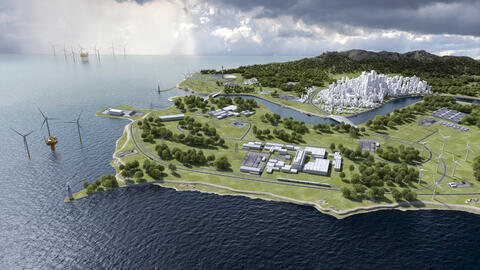
What your power plant can deliver for the grid
Power generators are no longer passive suppliers. They can actively support voltage and frequency stability, qualify for ancillary service markets, and provide critical recovery capabilities – if the right solutions are in place. Here is what we enable.
Grid code compliance and feasibility assessment
Grid codes are tightening across markets. Before investing in new equipment, power generators need a clear picture of their site's current capabilities and compliance gaps. Omterra starts with a structured feasibility assessment covering grid requirements, technical constraints, and conversion options – so you know exactly what is achievable and at what cost.
Ancillary services for power generators
Frequency response, reactive power provision, and voltage support are increasingly traded in organized markets. For power generators with the right equipment and controls, these services represent a direct and recurring revenue stream. With the Rotating Grid Stabilizer (RGS) solution, your plant can switch between power generation and grid support mode -- unlocking ancillary service income without replacing existing assets.
Black start capability
When a major outage occurs, grids depend on plants that can restart without external power supply. Black start capability is a high-value contracted grid service – and many existing plants can be upgraded to provide it. Our Qstor™ BESS-based solutions cover the full path from engineering and integration to commissioning.
Rotating grid stabilizer services
Omterra designs, installs, and maintains rotating stabilizers providing end-to-end services from initial engineering through long-term asset performance. Service agreements are tailored to the operational schedule of the plant, covering inspection, upgrade, and lifecycle optimization.
BESS integration for power generators
Battery energy storage systems transform the commercial flexibility of existing plants. Integrated with gas turbines or generators, Qstor(TM) BESS enables fast frequency response, ancillary service delivery, and black start capability - while smoothing out intermittency in hybrid configurations. The modular design fits both new and existing power plant assets.
Why grid ancillary solutions matter for power generators
Stable plants protect revenue and reputation. When frequency or voltage drifts, generation stops and penalties apply. By delivering ancillary services, operators keep their assets running, meet grid codes, and open new revenue from TSOs. Written-off assets can be reactivated and generate revenue again.
Key reasons why
- Meet rising grid code requirements with existing assets
- Support grid recovery with black start capability
- Earn additional revenue from ancillary service markets
- Reuse written-off generators for a short ROI
- Improve plant availability and reduce unplanned downtime
Your benefits

Minimum costs due to re-use of the existing generator and relevant auxiliary systems. Written-off assets can be reactivated.

Extended lifetime of a power plant generates additional revenue.

Decreased risk of blackouts as grid is in an optimum range of operation
Omterra`s approach to grid ancillary services
Omterra takes a plant-level view of grid stability. It combines rotating equipment, controls, storage, and service expertise. Teams assess each asset, define the compliant and profitable path, and cover the full lifecycle: study, integration, commissioning, and service. The goal is clear: help power producers turn their plants into reliable partners for the grid.
The approach includes:
- Feasibility and grid code studies for each site
- Integration of rotating, storage, and control assets
- Lifecycle service, from commissioning to optimization
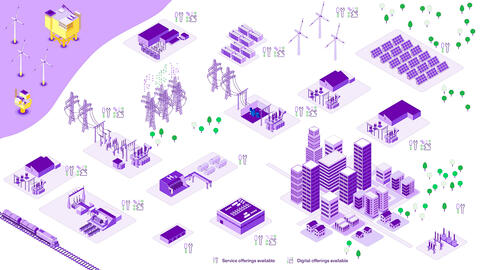
Technical benefits

Availability to start-up the power plant without an external power supply

Capability to help restore power to a national grid in the event of a total or partial shutdown

Provision of start-up power to other power stations as the system restoration progresses
Commercial benefits

Additional revenues received directly from the TSOs can help increase plant profitability through additional functionality and revenue opportunities and avoid the closing down of the plant

Avoidance of huge production losses due to blackouts and equipment being unavailable



Get answers: FAQs on grid ancillary solutions
Grid ancillary solutions are systems and services that support voltage, frequency, and power quality – ensuring grid reliability as renewables grow.
As conventional generation retires and renewables grow, grid operators need new sources of inertia, reactive power, and fast frequency response. Power generators who can provide these services face better compliance standing, additional revenue streams, and stronger long-term asset value.
Rotating equipment – such as synchronous condensers – provides the physical inertia and reactive power that grids require. Digital solutions, integrated in the Omnivise ecosystem, ensure that your plant monitors compliance, controls response behavior, and reports performance in real time. Together, they give power generators both the physical capability and the operational intelligence to meet grid requirements reliably.
Grid ancillary services start at the power plant. They focus on what a generator can contribute, not on operating or building the transmission grid.
Omterra combines grid technology, controls, and service expertise. The teams cover every aspect of grid stability – from simulation to operation.