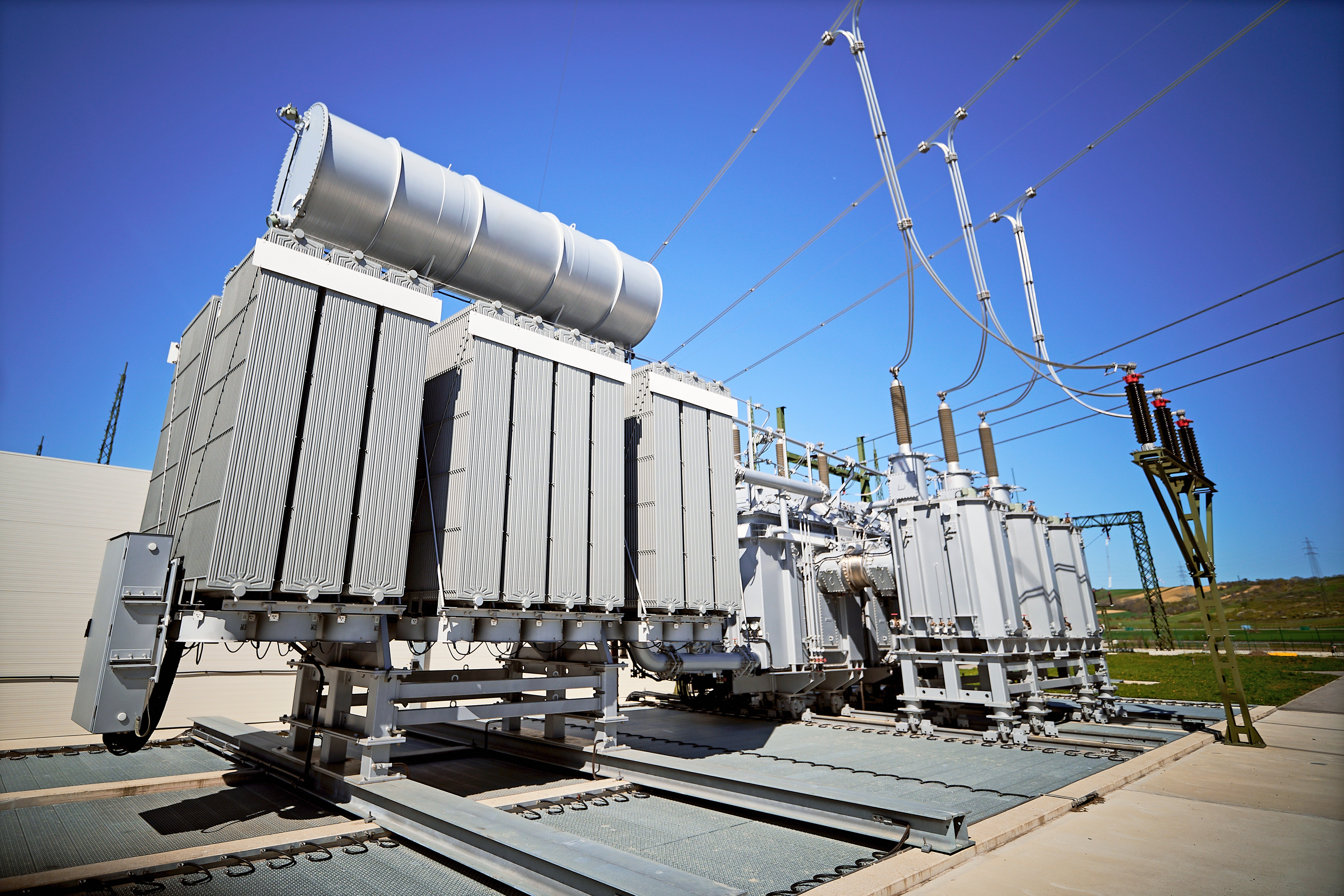
Phase‑shifting transformers
Phase‑shifting transformers enable precise control over active power flow in AC transmission networks—a capability that is becoming increasingly critical as renewable generation, long‑distance transmission, and cross‑border energy exchange continue to rise. With global congestion levels climbing and the Phase‑shifting transformer (PST) market projected to grow steadily over the next decade, utilities are turning to controllable power flow solutions to stabilize grids, prevent overloads, and make better use of existing infrastructure.
Omterra provides transformer solutions built on more than five decades of design expertise, advanced simulation tools, and rigorous quality standards to support secure, reliable, and flexible power system operation.
What is a phase‑shifting transformer (PST)?
A phase‑shifting transformer (PST) is a specialized high‑voltage power transformer designed to control active power flow in AC transmission networks. It allows grid operators to steer both the direction and magnitude of power flows on specific transmission lines without changing generation.
A PST achieves this by injecting a variable voltage component perpendicular to the line voltage, thereby adjusting the phase angle. This makes the phase‑shifting transformer a strategic tool for managing line loading, relieving overloaded corridors, and balancing parallel circuits in highly meshed transmission systems. As a result, system stability can be maintained even under rapidly changing operating conditions.
How PSTs work
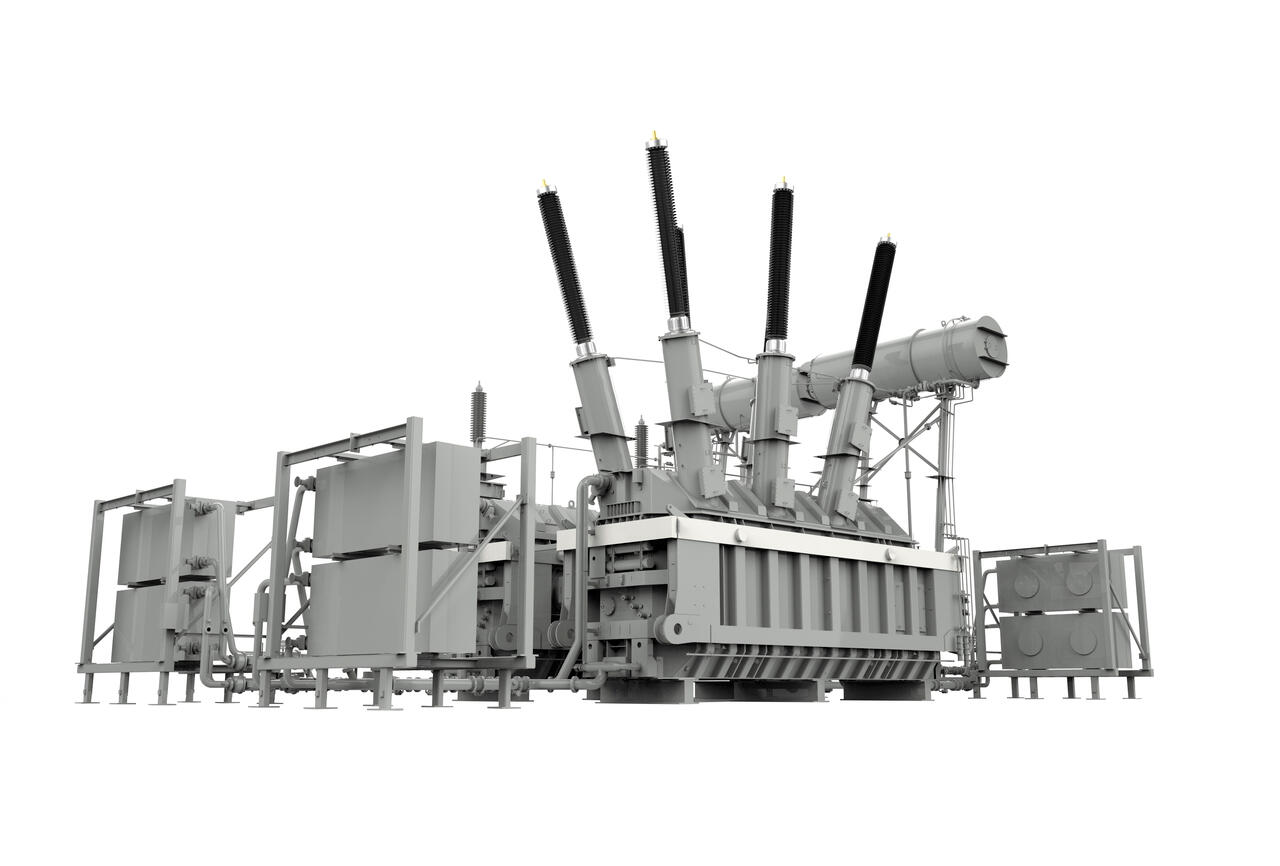
Phase‑shifting transformers influence power flow by introducing a controllable phase‑angle shift between the sending and receiving ends of a transmission line. This is commonly achieved using an indirect PST design, which combines a shunt (or tap) unit with a series unit that injects a variable voltage into the line.
Depending on system requirements, PSTs can be designed as two‑core solutions, offering high operational flexibility for large power ratings, or as single‑core solutions up to 230 kV, typically selected where space, transport, or site constraints apply.
Why PSTs matter in today’s smart grids
Transmission grids are increasingly shaped by renewable generation, meshed interconnections, and unplanned loop flows. As power follows physical laws rather than commercial schedules, congestion frequently occurs on critical transmission corridors.
Phase‑shifting transformers provide grid operators with a targeted and proven tool to manage these flows and maximize the efficiency of the existing grid. They support renewable integration, reduce redispatch measures, and help maintain system stability in highly interconnected AC networks.
Key customer challenges PSTs address

Unwanted power flows and loop flows
In meshed AC transmission networks, power flows are governed by network impedance rather than commercial schedules. This natural load distribution can lead to loop flows and unscheduled cross‑border power exchanges, where electricity takes unintended paths through neighboring systems.
Such conditions increase the risk of overloading individual transmission lines and can adversely affect adjacent grids. Phase‑shifting transformers enable grid operators to actively influence these flows, restoring controllability and predictability in highly interconnected transmission systems.

Limited transmission capacity and congestion
Rising electricity demand, renewable generation, and cross‑border trading place growing pressure on existing transmission infrastructure. In many regions, grid expansion is constrained by permitting, cost, or long lead times.
Phase‑shifting transformers help increase the usable transmission capacity of existing networks by shifting power flows toward underutilized corridors. This targeted flow control allows operators to relieve congestion and defer or avoid costly grid reinforcements, while maximizing the efficiency of installed assets.

Grid stability and security of supply
Secure grid operation requires maintaining stability under normal operation and contingency conditions. Events such as line outages or sudden changes in generation can quickly alter power flow patterns and challenge N‑1 security.
Phase‑shifting transformers support grid stability by enabling controlled power redistribution following disturbances. They contribute to improved system resilience, faster recovery after outages, and the secure reconnection of network elements in complex transmission grids.

Integrating renewables and cross‑border trading
The increasing share of renewable energy sources and the expansion of cross‑border electricity markets add variability and complexity to transmission system operation. Market coupling further intensifies power exchanges across national boundaries.
Phase‑shifting transformers act as an enabler for large‑scale renewable integration and cross‑border power trading. By providing precise control of active power flows, they support secure system operation while facilitating efficient and reliable market‑based electricity exchange.

“Phase‑shifting transformers support grid operators in maximizing the capacity of the existing grid while maintaining system stability.”
When is a phase shifting transformer the right solution?
When is a PST the right solution?
| Grid situation | Typical challenge | How a PST helps |
|---|---|---|
| Persistent congestion on specific corridors | Certain transmission lines are regularly overloaded while parallel paths remain underutilized | Actively redistributes power flows to relieve congestion and balance line loading |
| Unplanned power flows in meshed or cross border grids | Power follows impedance rather than commercial schedules, causing unscheduled cross border exchanges | Restores controllability of power flows and limits unintended impacts on neighboring systems |
| Limited options for grid expansion | New lines face permitting, cost, or time constraints | Maximizes the efficiency of the existing grid and defers or avoids costly reinforcements |
| High redispatch or curtailment volumes | Frequent operational interventions increase system and market costs | Reduces the need for redispatch and curtailment through targeted flow control |
| Increasing renewable integration | Variable generation leads to rapidly changing flow patterns | Supports secure integration of renewables by (re)balancing active power flows |
| Growing cross border power exchange and market coupling | Higher transfer volumes stress interconnected networks | Enables controlled cross border exchanges while maintaining system security |
| Strict N-1 security requirements | Line outages or contingencies challenge system stability | Supports N-1 compliance by enabling controlled power flow |
Benefits of Omterra phase‑shifting transformers

Operational and grid benefits
Phase‑shifting transformers provide active power flow control to optimize the loading of parallel transmission lines and network sections. By mitigating loop flows and reducing congestion, they improve asset utilization and restore controllability in meshed AC transmission networks. This enhanced flow control increases grid stability, operational flexibility, and system independence for transmission system operators and interconnectors.

Economic and strategic benefits
By making better use of existing infrastructure, phase‑shifting transformers help avoid or defer costly grid reinforcements. They increase usable transfer capacity on critical corridors, supporting higher trading volumes and revenue potential on interconnectors. In addition, optimized power flows contribute to lower system losses and improved overall network efficiency.

Sustainability and energy transition
Phase‑shifting transformers enable higher shares of renewable energy by directing power flows away from congested nodes and toward available transmission capacity. They support secure, efficient, and climate‑friendly transmission planning, helping grids adapt to increasing variability while advancing the energy transition.
Omterra portfolio and technical capabilities
Design variants and ratings
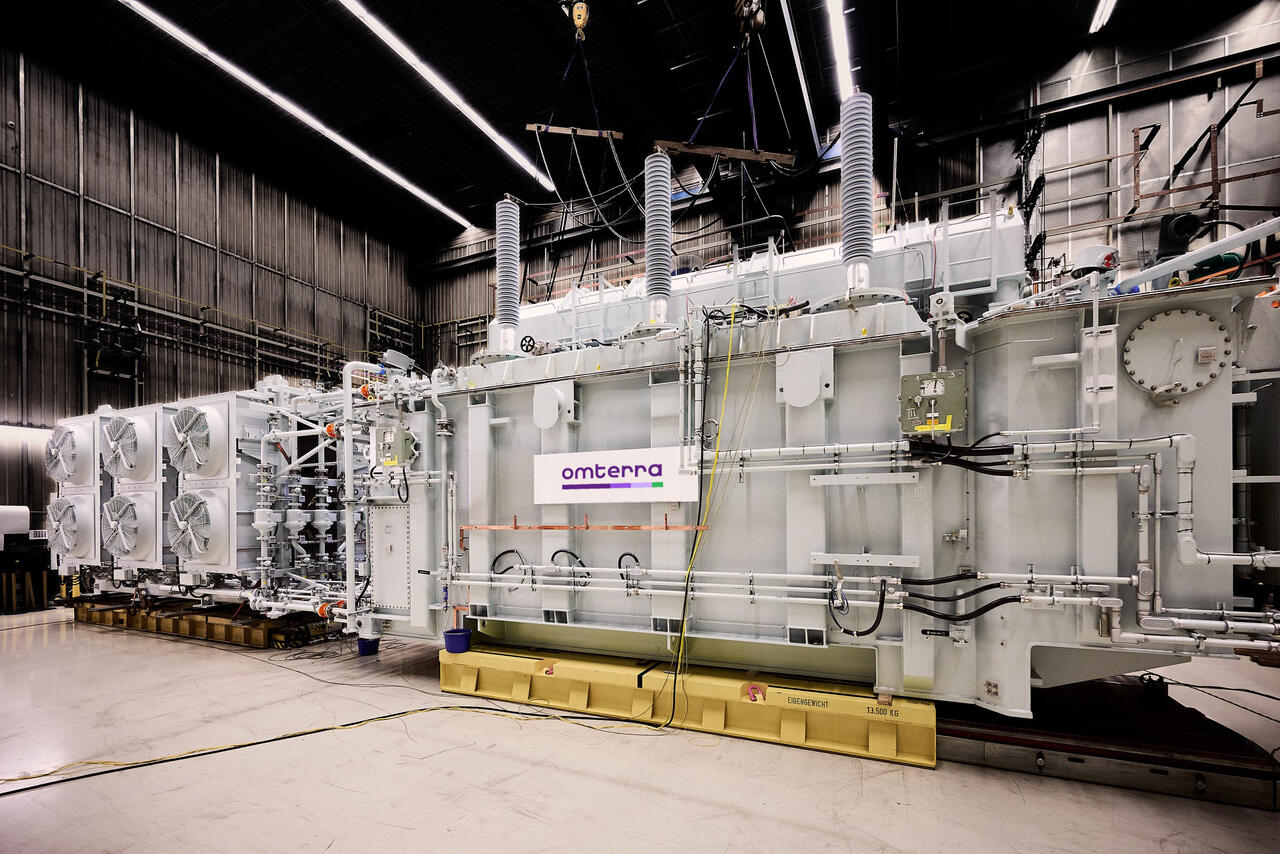
Omterra phase‑shifting transformers are available in single‑core and two‑core designs, with three‑phase execution and multiple configuration options to suit different grid topologies and site constraints. The selected design concept is driven by system requirements such as operational flexibility, space availability, transport limitations, and redundancy needs.
Phase‑shifting transformers are engineered for high‑voltage transmission applications, covering a wide range of voltage levels and power ratings. Typical solutions address transmission systems up to the highest voltage classes and very high-power ratings, with high phase‑shift capability, fine tap resolution, and a broad operating range to support precise power flow control under varying network conditions.
Key technical features
Omterra phase‑shifting transformers combine compact mechanical design with options for low‑noise execution, ester insulation, and advanced cooling concepts, supporting both environmental and site‑specific requirements.
They are designed for high reliability and long‑term operation, featuring robust mechanical construction and compliance with international standards for transmission applications. Where required, phase‑shifting transformers can be equipped with digital monitoring and online diagnostics, supporting condition‑based maintenance and integration into modern substation automation environments.
Application configurations
Phase‑shifting transformers can be implemented in in‑line or by‑pass arrangements, depending on operational philosophy and network topology. These configurations allow targeted control of active power flows while maintaining flexibility for maintenance and contingency operation.
Typical applications include interconnectors between control areas, tie‑lines between transmission systems, and internal corridors affected by persistent congestion. In each case, PSTs provide grid operators with a controllable element to manage power flows in complex and highly interconnected AC transmission networks.
Omterra’s consultative approach
Grid studies and specification support
Co‑creation of cost-optimized specifications
From design to energization
Typical use cases and reference scenarios
Cross‑border interconnectors
Phase‑shifting transformers are widely applied on cross‑border interconnectors to control active power exchange between control areas. They help limit unscheduled flows, support market coupling, and protect neighboring transmission systems while maintaining secure operation.
Congested internal corridors
Within national or regional grids, PSTs are used on persistently congested internal corridors to redistribute power flows. By steering power toward underutilized paths, they relieve bottlenecks and maximize the efficiency of existing transmission infrastructure.
Renewable integration hubs
At locations with high concentrations of renewable generation, phase‑shifting transformers support the integration of variable power sources by directing flows away from congested nodes. This enables higher renewable penetration without compromising grid stability.
Blackout prevention and system restoration support
Phase‑shifting transformers contribute to system security and resilience by supporting controlled power flow during contingencies. They play a role in blackout prevention, post‑fault stabilization, and the safe reconnection of network sections during system restoration.
Keeping PSTs performing at their best
Omterra supports PSTs throughout their lifecycle with preventive and corrective maintenance, spare parts, emergency support, condition monitoring, and expert services. Data-driven diagnostics and asset health insights create greater transparency, helping operators optimize maintenance, support reliable operation, and sustain long-term transformer performance.

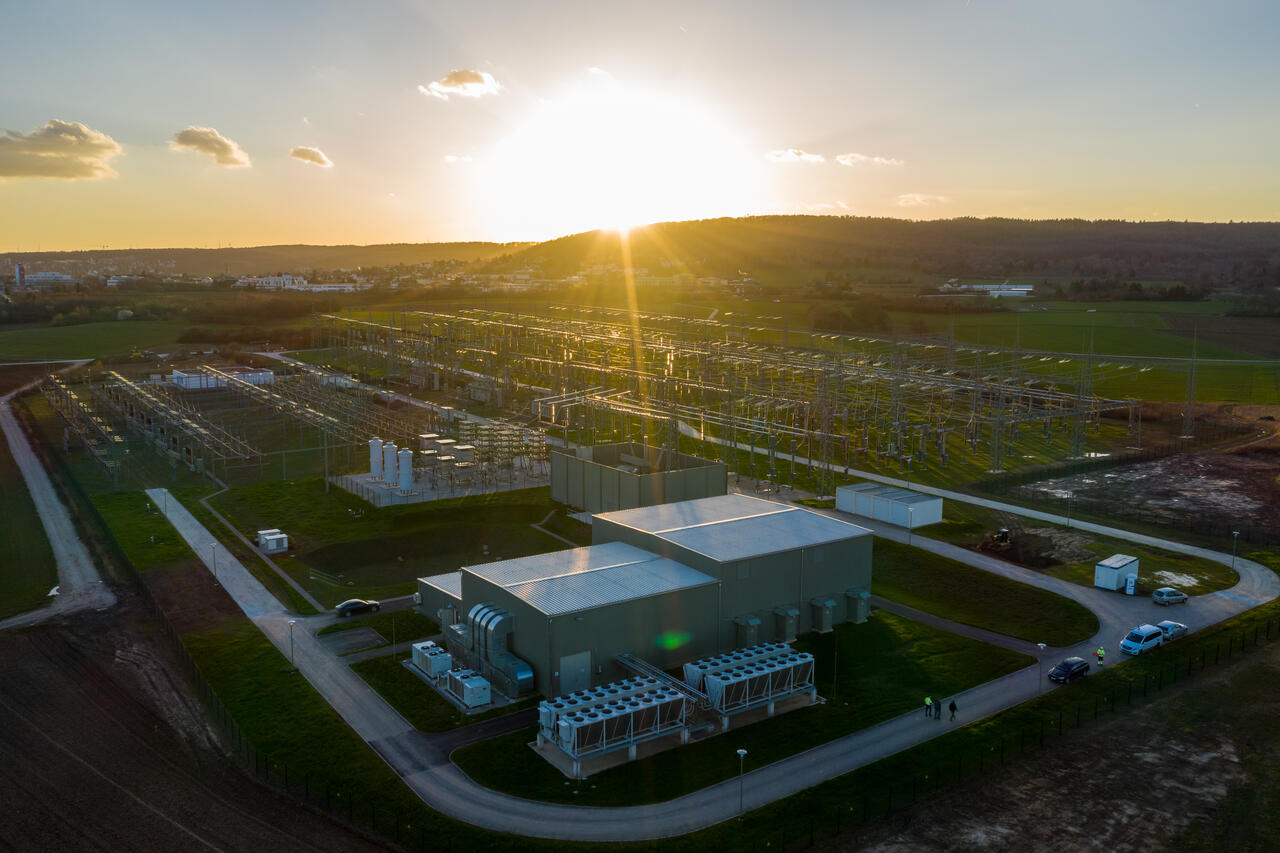
These resources provide additional context on how phase‑shifting transformers complement Omterra’s broader grid technologies portfolio.
Let’s discuss your next project
Omterra provides comprehensive expertise in phase‑shifting transformer applications, supporting utilities and grid operators across the full project lifecycle. This includes application assessment, grid and system studies, engineering, commissioning, and service, enabling reliable power flow control, optimized use of existing transmission assets, and stable grid operation under evolving network conditions.
Get answers: FAQs on phase-shifting transformers
A phase‑shifting transformer (PST) is a sophisticated high‑voltage transformer designed to actively steer the direction and magnitude of power flows in AC transmission networks. It does so by injecting a variable voltage perpendicular to the line voltage. Thus a PST determines how much active power moves along a specific line — effectively turning it into a strategic tool for shaping load flows in highly meshed transmission systems.This capability allows operators to relieve overloaded corridors, balance parallel circuits, and maintain system stability even under rapidly changing operating conditions.
Modern transmission systems face rising complexity: cross‑border energy trading, fluctuating renewable generation, and the interplay of long‑distance transmission corridors all intensify the need for precise power‑flow management. PSTs offer exactly that. By redirecting power into desired paths, they:
- reduce congestion in critical grid sections,
- support more efficient use of existing infrastructure,
- help align physical flows with market‑driven schedules, and
- enhance operational security during disturbances or outages.
Their robustness and controllability make PSTs a central element in strengthening grid resilience—especially in regions with dense interconnections and high transit flows.
The energy transition introduces strong regional generation patterns and highly variable feed‑in profiles, particularly from wind and solar. PSTs provide the flexibility transmission system operators need to keep the grid stable while integrating large shares of renewables.
They enable:
- targeted routing of renewable electricity from production hubs to load centers,
- effective congestion management without immediate grid expansion,
- greater operational flexibility in hybrid AC networks, and
- a more resilient system architecture capable of handling dynamic power flows.
In short, PSTs help ensure that the grid becomes smarter, stronger, and future‑ready – supporting a secure transformation toward a decarbonized energy system.
Phase‑shifting transformers are installed in high‑ and extra‑high‑voltage transmission systems, particularly in meshed networks and parallel transmission corridors where power flow paths need to be actively managed.
A PST enables targeted power flow control, improves use of existing grid capacity, and helps reduce congestion without grid expansion.
Phase‑shifting transformers are large, highly customized units that require detailed planning and system studies. Their impact is dependent on network topology, and they are primarily suited for steady‑state power flow control, not fast dynamic regulation.
Phase‑shifting transformers provide an effective solution for long‑term power flow control, particularly where grid constraints are structural. Other technologies may offer faster response, but often with increased complexity and higher lifecycle costs.
While a conventional transformer adjusts voltage levels, a phase‑shifting transformer modifies the phase relationship between voltages, directly influencing active power flow in the transmission system.
For transmission applications, phase shifting transformers are designed for three phase systems to ensure symmetrical operation and controlled power flow. Single phase use is not common in practical grid applications.
A feasibility study typically requires grid models, power flow and contingency analyses, short‑circuit data, and operational targets to assess whether a PST can deliver the required system benefits.