Can the energy transition leave room for nature?
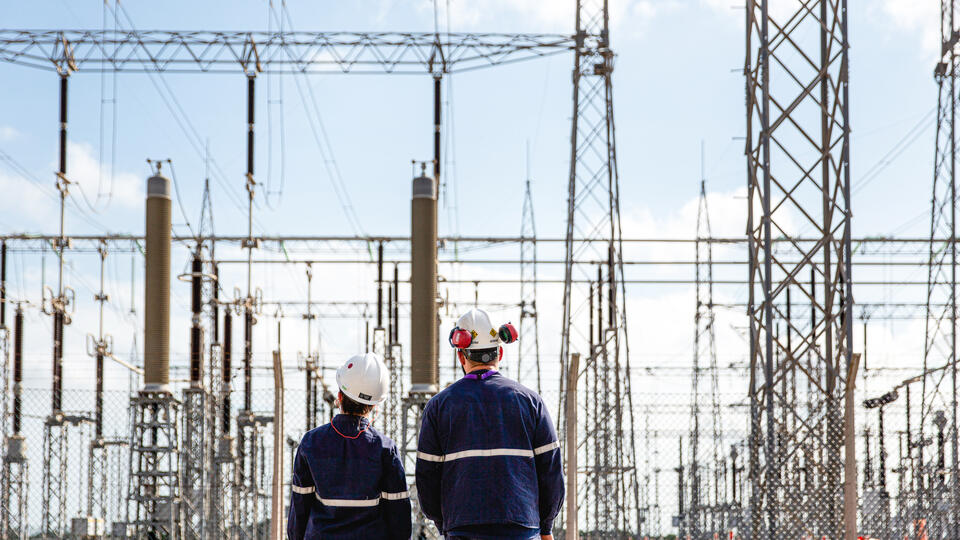
Reaching net zero will require unprecedented grid expansion: the IEA projects more than 80 million kilometers of new and replaced power lines by 2040—doubling today’s global grid. Omterra’s new factory in Wollsdorf, Austria, is a major milestone in this effort, but also captures a dilemma at the heart of the energy transition. Can the energy transition expand without eroding nature?
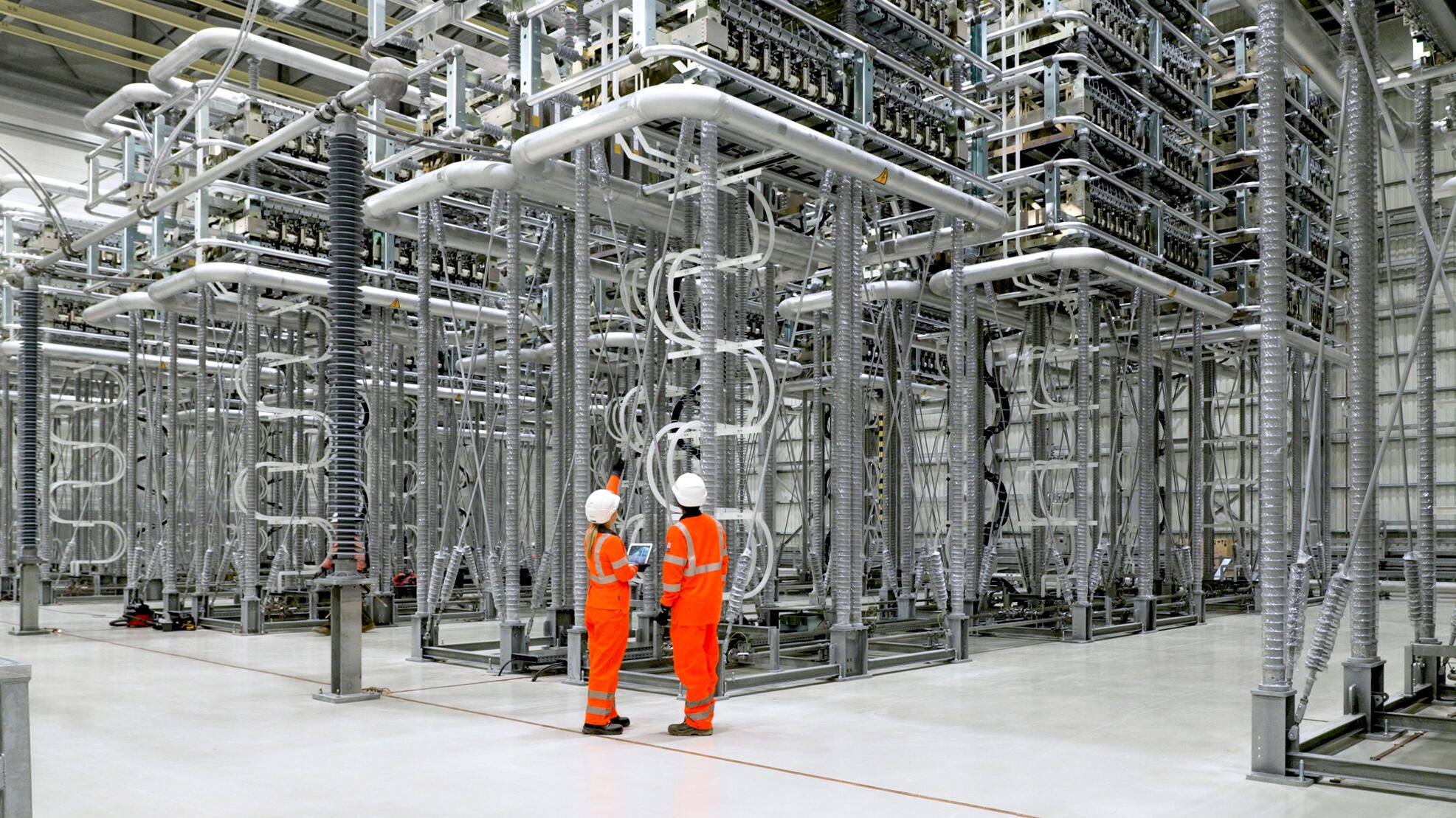
One of only two Omterra, formerly Siemens Energy, plants dedicated to wind transformers, the new Wollsdorf site will supply up to 2,000 units per year—tripling the company’s production capacity just as offshore wind installations are projected to double by 2030. These transformers play a critical role in stepping up clean power from offshore wind turbines to the electrical grid. Yet the factory was set to be built on an industrial site including a small area of scrub and forest land, sparking concerns over biodiversity loss. This is where Wollsdorf breaks new ground.
Not only does the Wollsdorf wind transformer factory run entirely on renewable energy, utilize district heating (resulting in a 450-ton reduction in CO2 emissions per year), and include a 2.3-megawatt solar array—it is also one of the first manufacturing projects tied to the energy transition that treats biodiversity as an imperative.
Why biodiversity matters for ecosystems
But how do you measure biodiversity? In planning the Wollsdorf site, Omterra engaged two specialized consultancies with years of experience in evaluating and managing biodiversity risks: Kuyua, co-founded by engineer Christian Dietrich and biodiversity strategist Myriam Rapior, provided technology-driven risk mapping. And auf!, Germany’s first biodiversity consulting agency, conducted on-site evaluations.
“Are three polar bears equivalent to one hectare of tropical rainforest?” asks Frauke Fischer, biologist and founder of auf!. “There’s no way to calculate this.” Fischer has spent decades explaining that species and ecosystems can’t be measured with carbon accounting.
“Everything you do for biodiversity protects the climate,” says Fischer. “But not everything for the climate protects biodiversity.” For years, many companies dismissed it as the “government’s job”. But the pandemic changed that calculus. “The question is not how we’ll live in the future,” stresses Fischer, “it’s whether we’ll live. Biodiversity must come first: this is a scientific fact, not opinion.”
The question is not how we'll live in the future, it's whether we'll live.
Balancing nature and clean-energy manufacturing
Wollsdorf sits in a region of exceptional ecological value: “There's a remarkable richness of species,” says Myriam Rapior, who was also involved with the project as expert in biodiversity, “To build the new factory, it was clear that trees would have to go, remaining woodland could be used to form wildlife corridors connecting fragmented ecosystems. If species accept these habitats and can move between protected areas,” explains Rapior, “that helps genetic diversity.”
Measures implemented in Wollsdorf include many different solutions, as Sabrina Manschek, Vice President for Renewables and Traction at Omterra, explains: up to 90 trees planted along the facility perimeter, retention basins managing stormwater while providing water access for wildlife, and strategic habitat creation. The site also includes sandy areas for ground-nesting insects, varied structural layers for birds, and native plantings to recreate the forest understory.
Opening the doors to build trust
Active communication also matters: When local newspaper coverage raised concerns about tree felling, Omterra responded with transparency, inviting neighbors to tour the facility. The turnout exceeded all expectations: around 5,000 people attended. “People wanted to see what was happening inside these massive halls,” says Manschek. The feedback was positive and eased concerns. “We could show them that we’re actively shaping the energy transition.”
She acknowledges that even the best interests can sometimes compete with each other. “There is always a trade-off between value creation and environment,” she adds. The plant creates 120 jobs and enables renewable energy globally, but it leaves an unavoidable environmental footprint. It is fundamental to explain to the broader public why this was necessary, and what’s being done to mitigate the impact—turning principles into site-specific action.
A blueprint for nature-positive industry
Following Kuyua’s risk assessment of all Omterra Grid Technologies sites worldwide, the Business Area now knows which locations face nature-related threats. But each site demands a tailored investigation. “Biodiversity is regional,” Manschek notes. “You can do remote analysis, but concrete measures require local expertise”—and specific local solutions is precisely what was done in Wollsdorf.
The Wollsdorf site includes vertical greening of the façade, which helps insulate the building and provide habitat for birds and insects. Additional habitats are also being created with new shrubbery and trees planted along the facility’s perimeter, restoring the forest that previously stood there. Meanwhile, other parts of the forest have been strategically preserved as ecological corridors, connecting valuable biodiversity zones around the site. To protect the natural balance of water and heat in the ground, the site has minimized sealed surfaces and added rainwater retention basins that collect and slowly release runoff, preventing flooding and supporting small ecosystems.
As Omterra’s Sabrina Manschek points out, these measures reflect a key learning: “Everything we consider from the beginning can actually have a major positive impact on biodiversity with relatively little additional cost. There are no perfect solutions, but there is a constant learning process.” While local solutions are key, what is being done at the Wollsdorf plant can serve as a role-model for the future, according to Manschek. Her recommendation is to incorporate biodiversity from the outset and think holistically—from roof design to stormwater management to reducing sealed surfaces.
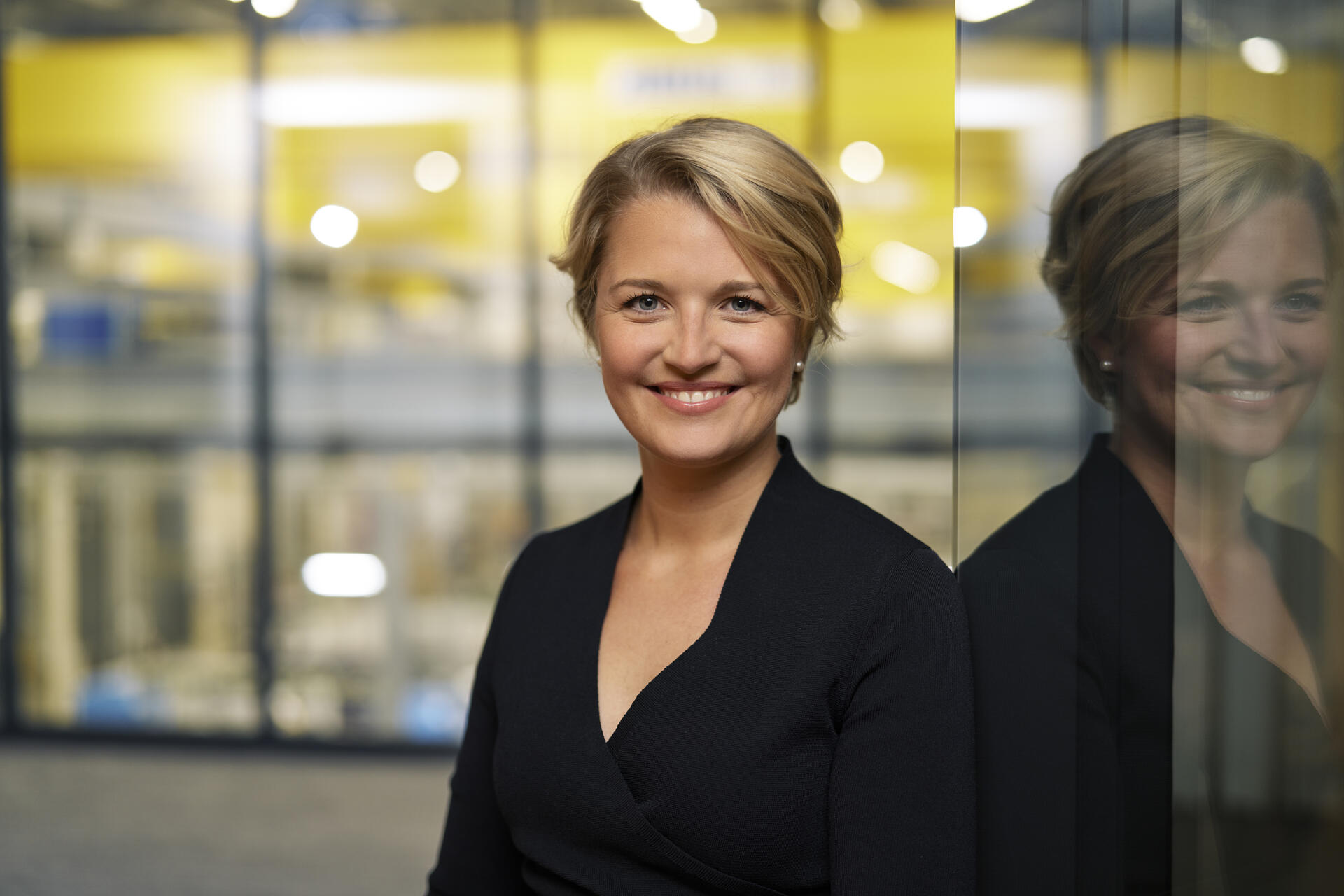
Everything we consider from the beginning can actually have a major positive impact on biodiversity with relatively little additional cost.
As transformers roll off assembly lines bound for wind farms across Europe, the facility is proving something larger: industrial growth and nature protections don’t have to be opposing forces. What began as a cautious ecological pilot project is already pointing the way for a new industry standard.
About the author: Florian Bayer is a freelance journalist based in Vienna, Austria, where he has written for Zeit Online, Der Standard, and Wiener Zeitung.