Ensuring voltage and frequency stability in Estonia's grid
The Baltic region is undergoing an energy transition, increasing investments in wind and solar power while integrating with the European grid. To achieve frequency and voltage stability synchronized condensers, or SynCons, are used – massive rotors, providing inertia and thus stability to the grid.
In early 2025, Estonia successfully decoupled its energy grid, integrating into the Continental Europe Synchronous Area (CESA). This fact, together with Estonia’s ambitious goal to produce 100-percent sustainable energy by 2030, means it faces the huge challenge of investing in new energy production. Omterra has a key contribution to make in this endeavor: SynCon technology.
Joining CESA places Estonia in the far northeastern corner of the European energy grid. The switch to the new grid also means joining a more complex grid with a lot of diversity, in energy sources as well as in user categories.
Integrating renewables
“Connecting Estonia to this new grid means Elering now has a responsibility to keep the grid stable,” says Arno Raadom, project leader for SynCon technology within Elering, the state-owned energy systems operator in Estonia. “The former grid was powered largely by coal-fired power plants, which made it easier to maintain a stable and reliable grid. With more and more solar and wind power in the Estonian energy mix we need to build grid stability in a new way.”
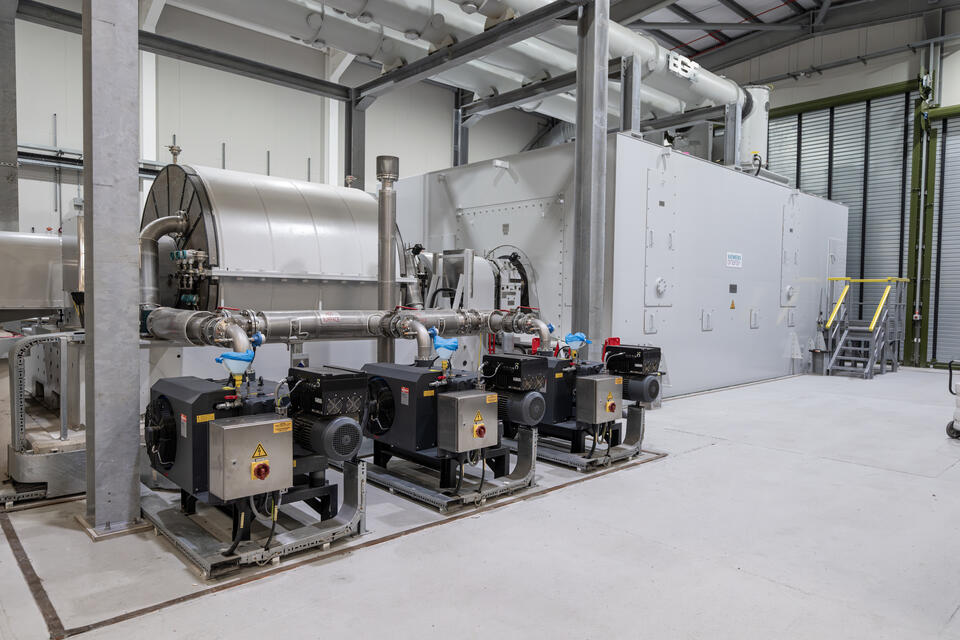
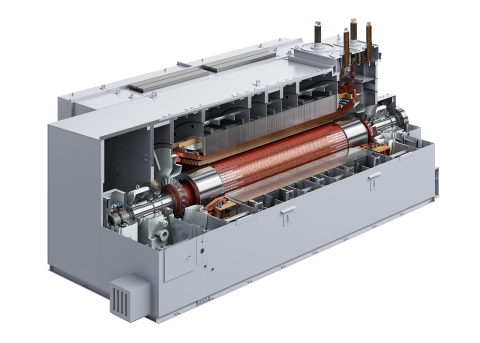
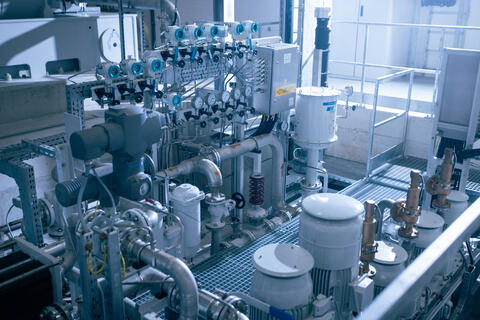
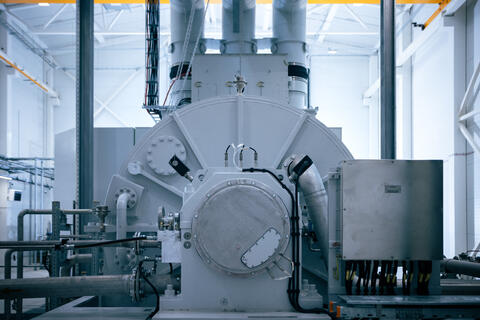
The new way to achieve grid stability in Estonia are synchronous condensers, or SynCons. These are massive rotors, each weighing significantly more than 100 metric tons. When a SynCon spins at 3,000 rpm it provides inertia and thereby stability to the grid. In Estonia, three such facilities have been built along the north coast. In May 2025 representatives from Omterra Grid Technologies visited the most western SynCon facility in Estonia, located close to Kiisa, 25 kilometers south of the capital Tallinn, to meet up with Raadom and the local Omterra General Project Manager, Peeter Schultz.
On schedule despite challenges
Thinking back a few years, we can appreciate this project hasn’t been without its challenges. “The outbreak of the pandemic in 2020 led to a lot of planning and precautions, but we managed this very well,” says Schultz. “A bigger challenge came with the war in Europe.The ongoing war in Ukraine has created significant challenges in procuring steel and other materials, particularly for the auxiliary systems. The SynCon itself was constructed and built in Germany, so that part of the project was not directly affected by the war.”
So, why was Omterra chosen as Elering’s partner in this project? “As a state-owned company, Elering has very strict rules and routines to follow,” says Raadom. We made a very thorough review of the possible suppliers. Omterra came out as the best option, and the implementation of the project has worked very well. Despite challenges such as the pandemic and the war in Ukraine, the time schedule has been kept.”
A slightly surreal visit
Visiting the facility in Kiisa is a slightly surreal experience. There are no people – anywhere. Everything is new, from the SynCon, enclosed in a huge steel cover, to the driveways and fences outside, but the whole area looks as if it has been suddenly abandoned by humans.
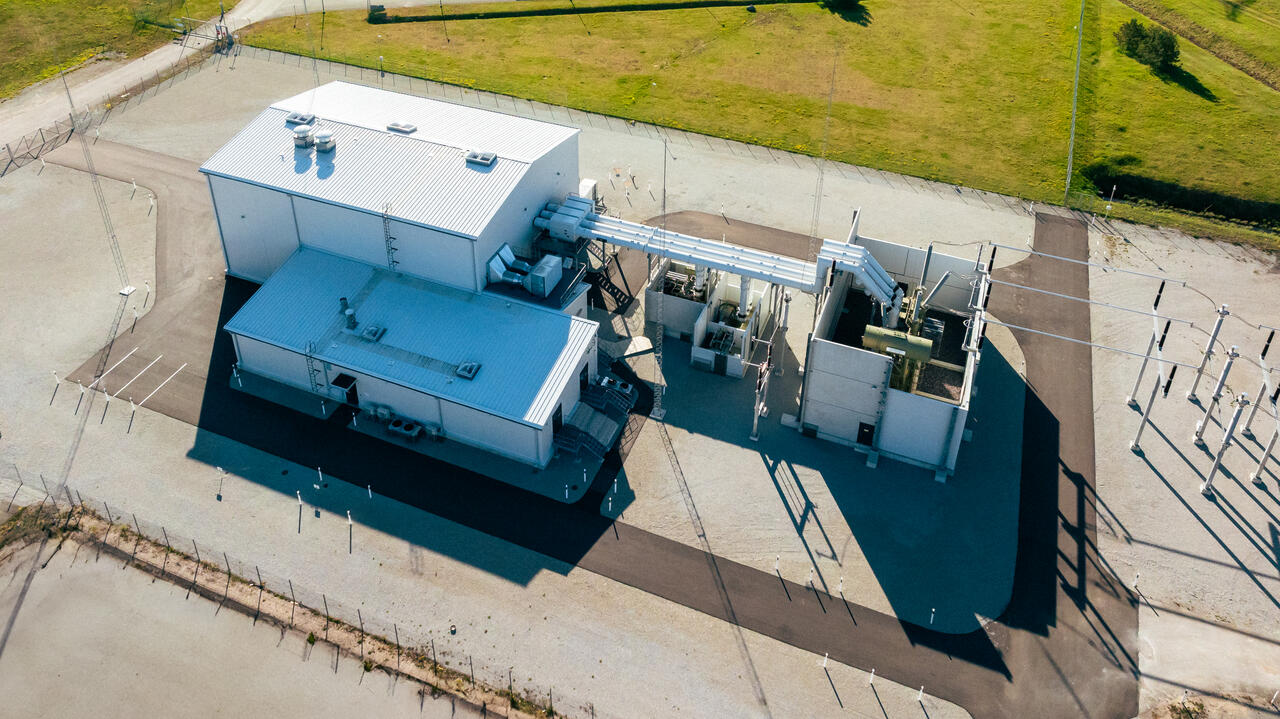
“The control room is in Tallinn,” Raadom explains. “Almost all potential adjustments can be made online from Tallinn. If something needs to be checked or adjusted on site it is only 20-30 minutes’ drive to come here, but it rarely proves to be necessary.”
The Estonian plan to “go sustainable” in energy in just a few years is indeed a very ambitious one. The government is currently working on a survey to get a clear map of what it needs to do between now and 2030. Wind turbines will be one of the key elements in the new energy mix. For example, there might be a major wind farm built on the island of Saaremaa, in the Baltic Sea, west of mainland Estonia.
Flexibility in the energy mix is also provided by the link between the Estonian grid and Finland. But this does not change the plans for more Estonian sustainable energy production. “The political stance is to produce as much sustainable energy as the total energy consumed in Estonia,” says Raadom.
“Today we can state that the SynCon project in Estonia is very successful. We started discussions in 2019, signed the contract late in 2020 and delivered the three SynCon facilities in 2021-2024."
Global demand rising
SynCons to stabilize the grid are not only necessary for Estonia. In total six SynCon facility of this kind are being implemented in Estonia’s neighboring countries, Latvia and Lithuania. Omterra is responsible for delivering all the SynCons to these projects, and aims to complete the projects in 2025.
Sustainable energy is a future endeavor for the rest of the world too, and as sustainable energy sources as a rule result in less stable energy grids, further massive investments in SynCons are likely to be needed in future. “While moving forward along the way to a greener energy landscape, the grid infrastructure needs to become more resilient, more sustainable, and better equipped to integrate renewable energy sources on a large scale. Grid stabilization projects with synchronous condenser plants are gaining in importance,” says Eric Brueckner, Generator and SynCon Project Manager at Omterra. “With our proven technology, we are ready to meet the challenge and boost stability and resilience of electrical grids.”
Author: Nils Lindstrand is freelance journalist based in Stockholm.
Combined picture and video credits: Matti Immonen