Sharing expertise for fusion power
It used to be the stuff of sci-fi novels: nuclear fusion illuminating entire cities with the energy of stars. Now, it’s getting closer to becoming a commercially viable technology. In fact, it’s an emerging industry worldwide. Startups, investors, and industrial partners are involved in a global race to achieve commercial viability.
Global investments in fusion technology
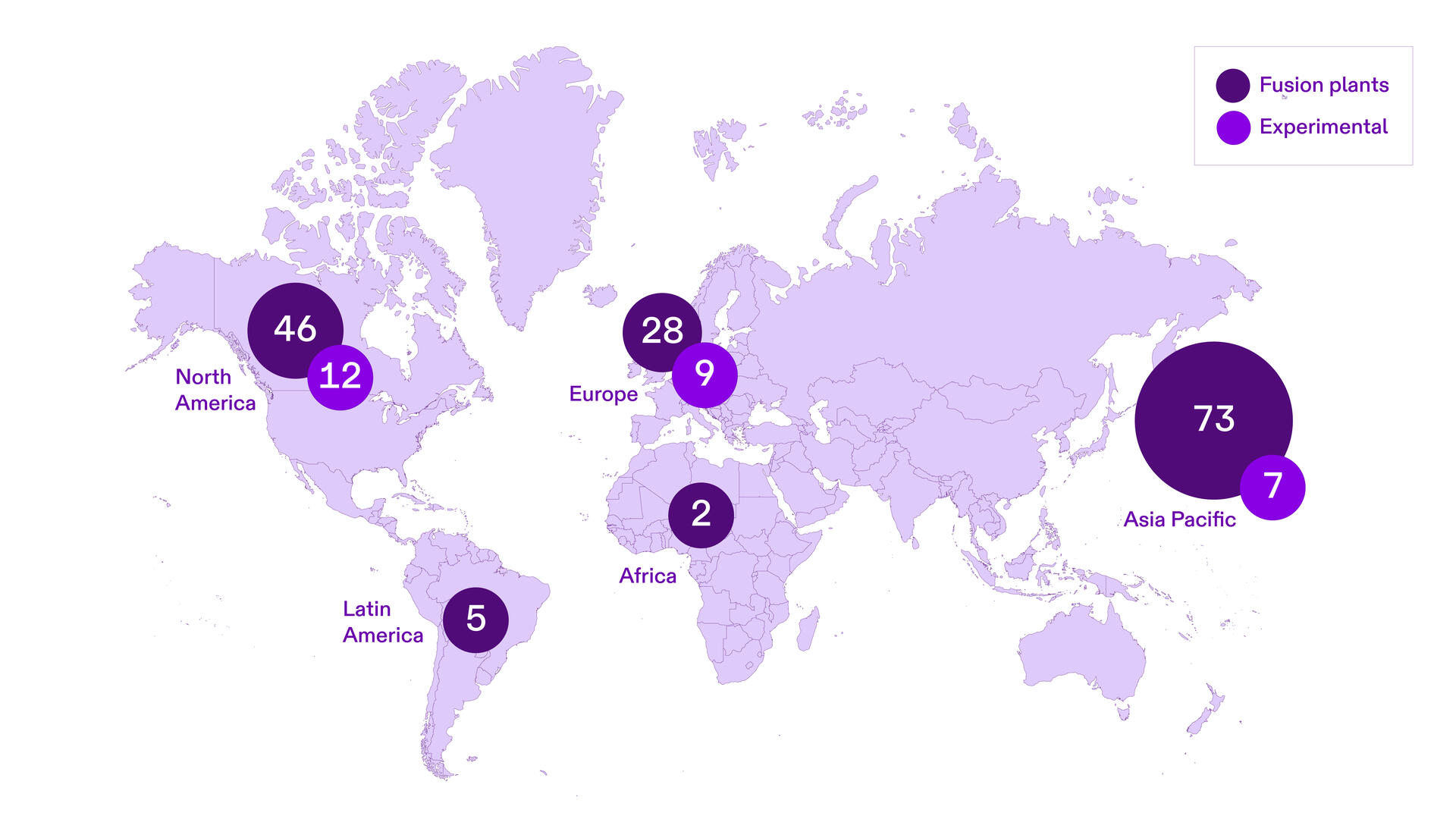
According to the Fusion Industry Association (FIA), private funding for fusion has grown to nearly $10 billion worldwide by now. Dozens of new companies across Europe, the United States, China, and other regions are exploring different approaches—magnetic, laser-driven, and even hybrid.
Industries have taken notice. Supplying carbon-free, reliable power to data centers, generating industrial heat, or producing hydrogen are applications that have generated broad interest. Unsurprisingly, stakeholders such as utilities and other industrial corporations are working with startups by investing in them and sharing their expertise.
Omterra’s partnerships
One of these stakeholders is Omterra. The company acts as a strategic, technology-neutral observer and facilitator of transformative innovations in the energy sector and is contact with several fusion startups in the effort to integrate fusion power into real-world energy infrastructure and design of nuclear fusion power plants.
In 2020, for example, Omterra entered a technical and industrial partnership with Marvel Fusion, a Munich-based startup that is developing laser-driven fusion technology. In 2025, they also invested in a Series B funding round for Marvel Fusion. Additionally, Omterra is a partner in a German research project called ReFus (“Regulatorik für Fusionsanlagen”), which focuses on creating a future regulatory framework for fusion power plants in Germany.
How fusion works
So why do so many people see a future in nuclear fusion? Let’s look first at how fusion works. Physically, fusion is the process of small atomic nuclei “fusing” to form heavier nuclei, releasing vast amounts of energy – the same reaction that powers stars.
To recreate fusion power on Earth, there are two main approaches: laser-based fusion, which uses high-intensity laser pulses to compress and ignite tiny fuel targets. In a second one, ultra-hot plasma is confined by strong magnetic fields and heated, for example with microwaves, until fusion takes place. (see info box). Additionally, there are hybrid methods combining both techniques. Unlike nuclear fission, fusion produces no long-living radioactive waste and poses no risk of meltdown.
When fusion ignites: Reliable energy for the future
In contrast to intermittent renewable generation, future fusion reactors deliver energy when needed in a controllable manner. With favorable safety characteristics compared to fission, it can also be used to generate power close to the location where it is required. For example, in densely populated areas or energy-intensive industrial sites, while maintaining the advantage of being almost CO2-neutral for operation.
Major large-scale experiments have already shown that fusion is achievable. Since 2022, lasers at the National Ignition Facility (NIF) in California have reached “ignition” multiple times, producing more energy from fusion reactions than was supplied to the target. In Great Britain, the Joint European Torus (JET), concluded its scientific operations in December 2023 Yet in its final run, it released 69 megajoules (MJ) of fusion energy, the highest ever amount of fusion energy achieved during research for power plants.
Venture capitalists, strategic investors
Although not yet operational, the “International Thermonuclear Experimental Reactor” (ITER) in Southern France is on track to demonstrate that fusion power is technically feasible at reactor scale, with operations scheduled to begin in 2039. It will deliver valuable insights into all aspects of fusion technology, including cost and reactor design.
The growing confidence in the commercial viability of fusion energy is also reflected in the money flowing into fusion startups, alongside public funding, venture capitalists, and strategic corporate investors such as Omterra. And it shows.
- In the U.S., Commonwealth Fusion Systems (CFS), spun out of MIT in Cambridge, Massachusetts, to commercialize high-temperature superconducting magnet technology. It’s currently building its demonstration nuclear fusion reactor, SPARC, a “tokamak” reactor that magnetically confines the plasma in a doughnut-shaped ring.
- TAE Technologies in California is developing a magnetic fusion system that uses hydrogen and boron as fuel.
- In Asia, China’s ENN Science & Technology Development Co. is advancing its own magnetic confinement program.
- Japan’s Kyoto Fusioneering is working on a wide range of fusion-enabling engineering technologies such as plasma-heating systems that support next-generation fusion reactors.
Companies developing fusion technologies in Europe
Across Europe, companies such as Tokamak Energy (UK), First Light Fusion (UK), or Renaissance Fusion (France) are exploring various methods to control fusion reactions - from strong magnets to high-speed lasers that compress fuel targets to innovative confinement techniques using advanced superconducting materials.
Germany, traditionally known for its focus on fusion power research rather than commercialization, is now emerging as one of Europe's most vibrant centers for industry driven fusion innovation. Notably, four of the leading fusion startups are headquartered in Germany.
- In 2025, Proxima Fusion, spun out of the Max Planck Institute for Plasma Physics, raised $130 million in Series A funding to advance its stellarator technology, which stabilizes hot plasma using complex magnetic fields.
- Gauss Fusion is also working on stellarator technology with an industry-driven approach.
- Focused Energy invented a two-step approach to laser ignition: one laser compresses the target, and the second ignites it.
- Munich-based Marvel Fusion is partnering with Colorado State University on the $150 million ATLAS facility in Colorado, designed for high repetition rates to create a process scalable for industry. Marvel Fusion’s goal is to develop a prototype by 2032 and establish a commercial plant by 2036.
Who builds the world’s first commercial fusion reactor?
In October 2025 the German Federal Government announced the aim to host the world’s first commercial fusion power plant in Germany. Funded through its “Fusion 2040” program, it plans to invest over €2 billion in fusion research and technology demonstrators by 2029.
The argument for fusion isn't just about promising lands flowing with milk and honey. As global electricity demand increases, the world is learning that decarbonization involves not only expanding renewable energy sources but also balancing them. A controllable baseload source would be invaluable in stabilizing power grids.
Challenges ahead
- Laser systems need to become much more efficient and operate at high repetition rates to generate sufficient energy for sustained fusion reactions.
- Materials have to be developed to withstand years of operation. Omterra is participating in this research.
- Fusion systems must develop engineering solutions to generate tritium fuel within the reactor, as this hydrogen isotope is essential for fusion but is rarely found in nature.
- Precisely machined and huge superconducting magnets running at cryogenic temperatures are necessary.
- Finally, the economics must work out – meaning capital costs, maintenance, and supply chains must prove competitive.
Yet, tackling these challenges also creates new high-tech industries that manufacture the components needed for fusion power plants.
Fusion for the future?
Fusion doesn’t have to replace wind and solar, though. Its role could be complementary, providing a stable backbone for a decarbonized and electrified economy. “That should be far more resilient than an energy system that relies solely on weather,” says Fleischer.
Certainly, fusion power won’t happen overnight. Commercial fusion is unlikely before the 2040s. Additionally, governments need to establish clear regulatory frameworks, as those decision makers for the German ReFus research project are pursuing. Finally, any prototype will require systems - such as heat extraction, power conversion through turbines, and grid integration - that meet industrial standards from the get-go. These demands also explain why startups work with companies like Omterra, which can share expertise with their existing portfolio in designing and operating power plants.
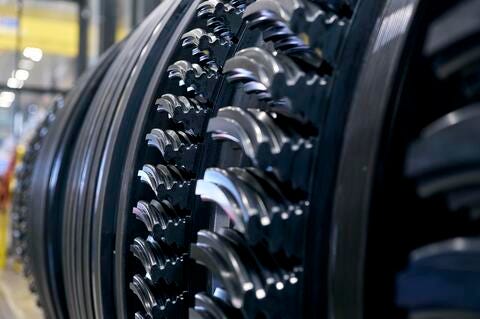
Magnetic fusion and laser fusion use fundamentally different approaches to force atomic nuclei to fuse. Yet in the end, whether using magnetic or laser fusion, the released energy is converted into heat, which, like in most thermal power plants, drives a steam turbine to generate electricity.
Key features
| Main engineering challenges
|
Heating plasma containing deuterium and tritium to extremely high temperatures
| Plasma control
|
Using strong magnetic fields to keep it contained for longer durations
| Superconducting magnets
|
Radioactivity during the fusion process | Materials resistant to continuous neutron exposure from fusion reactions
|
Key features
| Main engineering challenges
|
Short, intense laser pulses compress and heat tiny fuel targets within milliseconds, triggering brief fusion events
| Laser efficiency |
Reactor design focused on reaction chambers, ultra-precise laser systems, and automated target injections at high repetition rates
| Target fabrication and repetition rate |
Radioactivity during the fusion process | Chamber materials durability
|
How 2026 ignites fresh momentum for fusion energy
At the beginning of 2026, collaborative efforts on the future of fusion technology gained new momentum.
With the kick-off of KONZEPT at the Omterra Innovation Center in Berlin, a project funded by the German Federal Ministry of Research, Technology and Space (BMFTR) under the Fusion 2040 program has officially begun. Led by Omterra, partners from German industry, research, and academia are collaborating to conceptually design, model, and assess a future laser-driven inertial fusion power plant - identifying system requirements, cost drivers, and development gaps to support a potential first-of-a-kind facility in the 2040s.
The ministry also hosted the “BMFTR Congress: On the Path to a Fusion Power Plant” in March 2026. At the event, current topics related to fusion were discussed with representatives from politics, business, academia, the fusion research community, and the press and media.
About the author: Hubertus Breuer is a science and technology journalist based in Germany.