Germany’s bold move to reinvent grid stability
What happens to the grid as coal and nuclear fade away? For decades, their massive turbines kept Europe’s electricity steady. Switch them off, and something vital disappears: stability. Without it, lights flicker, equipment breaks, and blackouts loom. At Mehrum, Germany has built its answer: the world’s first E-STATCOM in this configuration, developed by Omterra, formerly Siemens Energy, and TenneT Germany as a blueprint for renewable-ready grids across the globe.
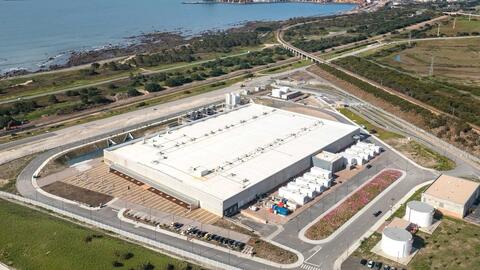
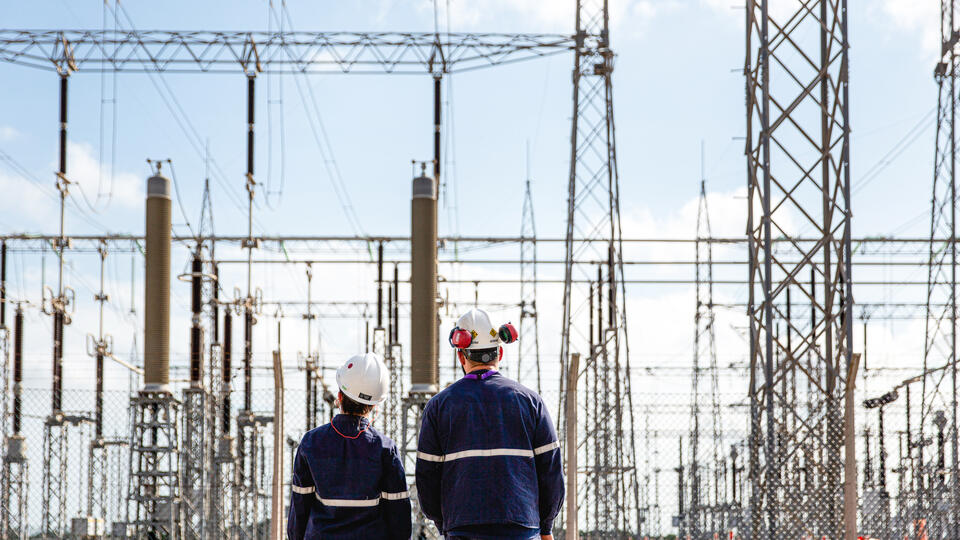
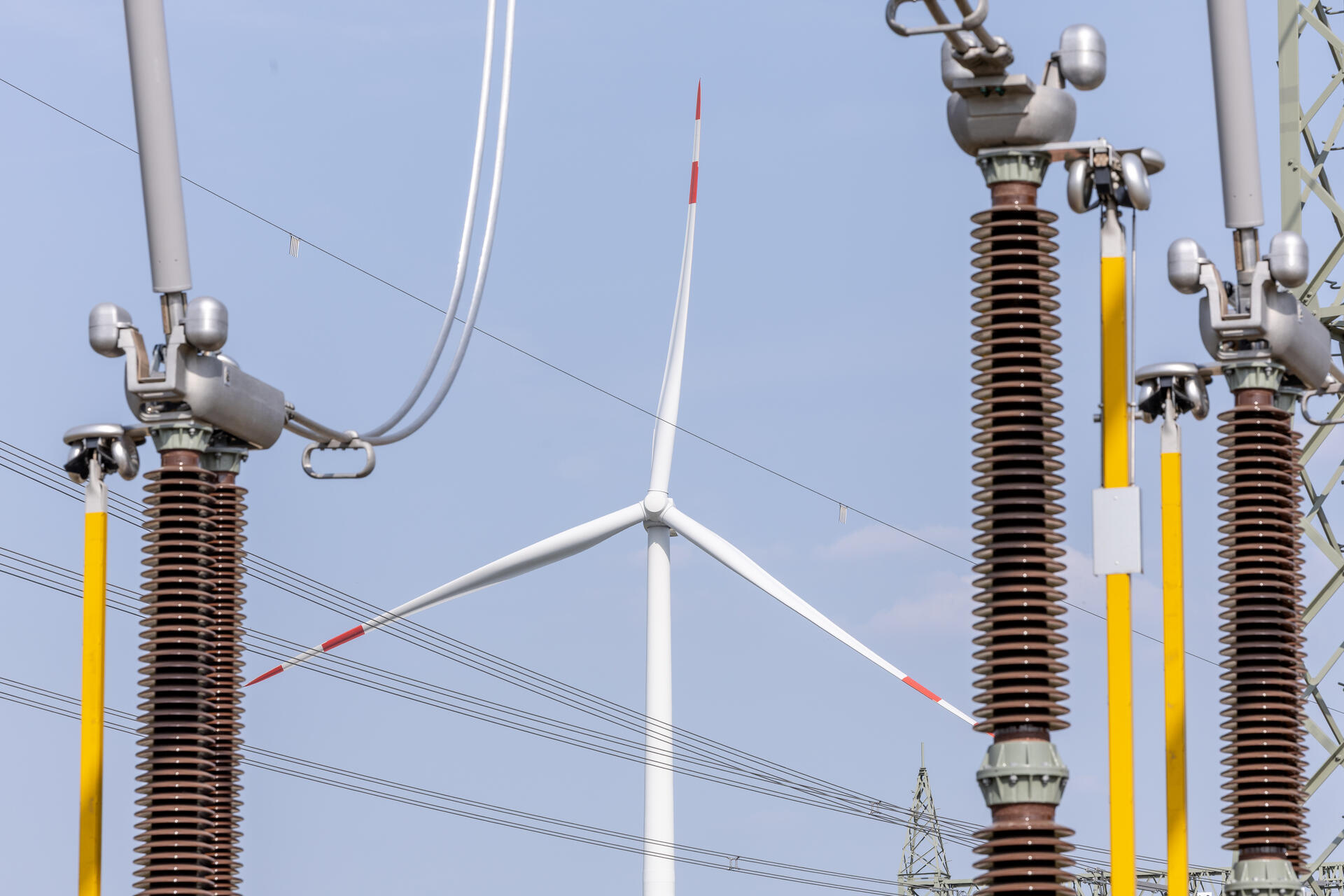
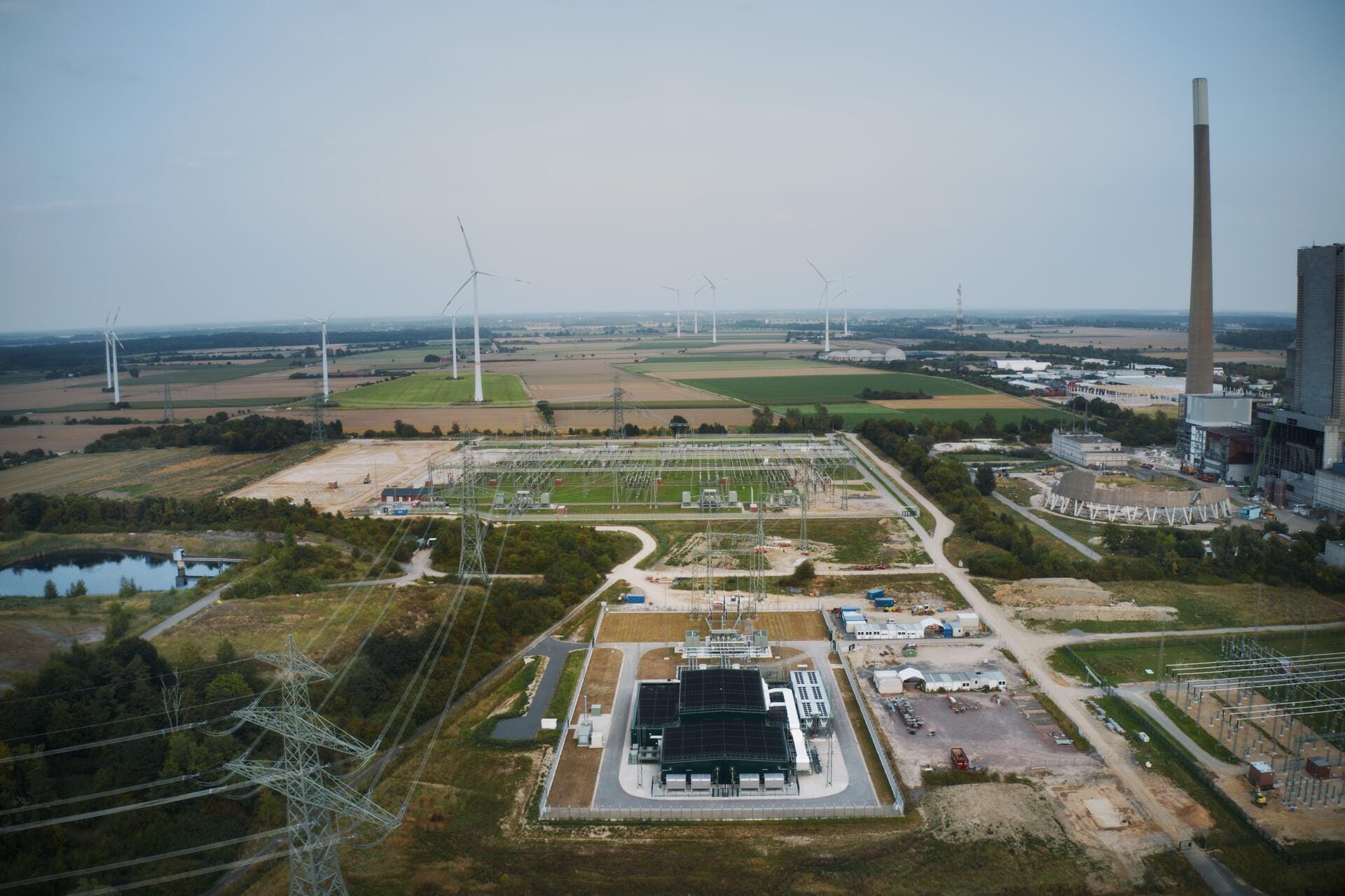
In the wide flatlands of Lower Saxony, where wind turbines punctuate the horizon, something revolutionary in the energy transition is taking shape. Here at Mehrum, the smokestack of a decommissioned coal plant still stands, while fenced in next to it are the silver-clad halls of the E-STATCOM facility, a Static Var Compensator with supercapacitors, also known as SVC PLUS FS®, capable of both voltage and frequency stabilization. Side by side, the two structures embody a turning point: one era fading, another beginning.
Why grid stability is under pressure
For decades, traditional power plants, such as coal and nuclear, provided more than electricity. Their massive spinning generators acted as stabilizers, keeping grid frequency locked at 50 hertz. If demand spiked or a generator tripped offline, the kinetic energy of these spinning masses provided a buffer, like a shock absorber, giving grid operators precious seconds to respond.
Those seconds often meant the difference between a stable grid and equipment damage, cascading outages, or even a nationwide blackout. But now, as Europe and the world race toward carbon neutrality and phase out conventional plants, that stability has become harder to maintain.
“The energy transition means moving from conventional power plants with heavy rotating machines to inverter-based sources like wind and solar,” explains German Kuhn, who has spearheaded the E-STATCOM project at Omterra since 2012. “These renewables don’t provide inertia—and that makes grid frequency less stable. That’s where E-STATCOM comes in.”
Engineering grid stability with artificial inertia
More than a decade in the making, beginning at Omterra R&D, E-STATCOM stabilizes the grid by using supercapacitors to deliver short bursts of power within milliseconds, creating “artificial inertia”.
“The grid is like the human circulatory system: voltage is the blood pressure, current is the blood, and frequency is the heartbeat,” says Hans-Günther Platz, Project Manager at Omterra. “By adding supercapacitors, E-STATCOM can stabilize both voltage and frequency—two parameters instead of one.” Platz also points out that this stability isn’t occasional, but constant. “Because it’s fully automated, it runs 24/7,” he says. “This plant will take care of the grid while we sleep.”
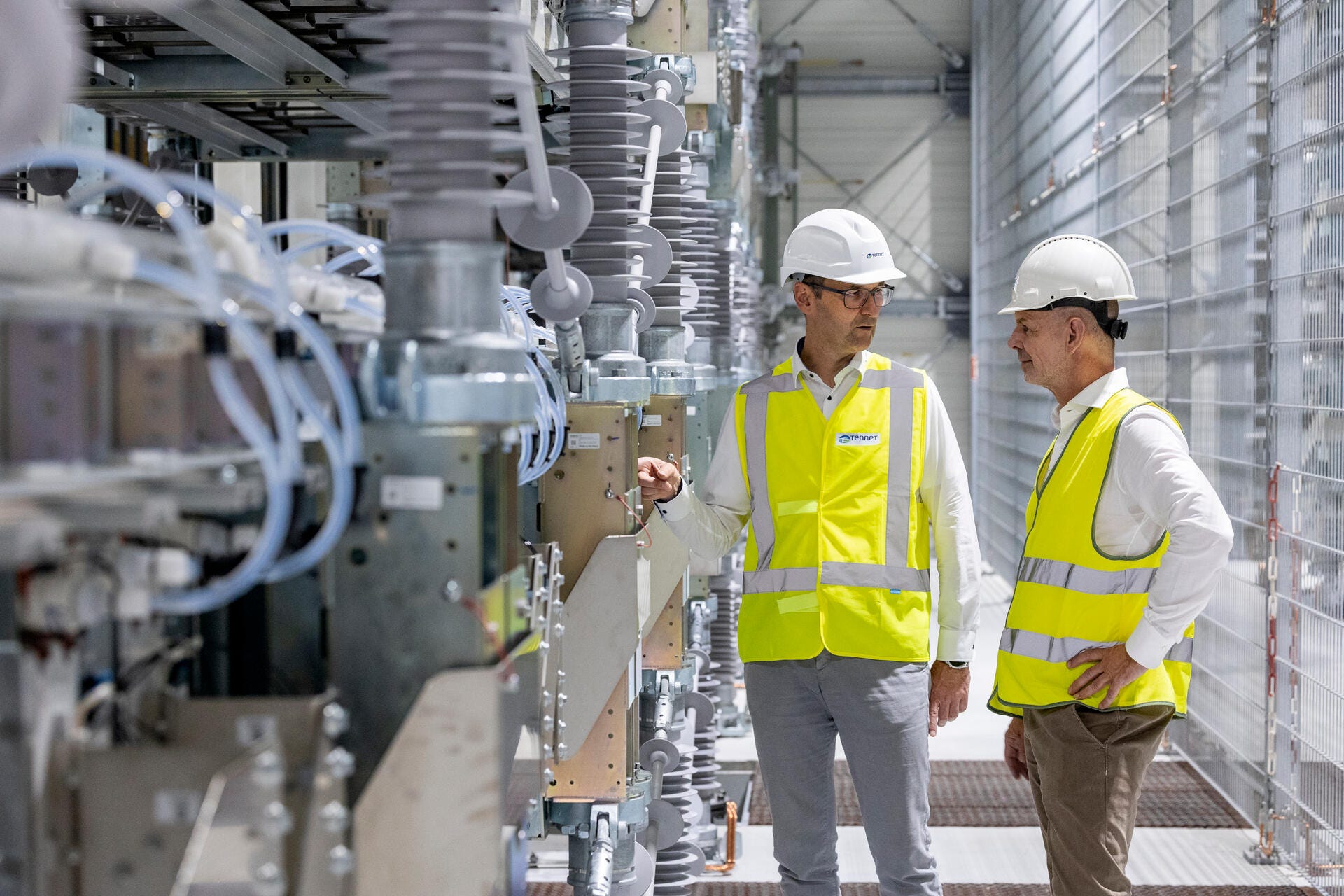
“With this E-STATCOM, we can mitigate key challenges in the grid—and ultimately help prevent blackouts,” says Florian Martin, Director of Asset Management at TenneT Germany. “It provides the auxiliary services of frequency stabilization and voltage support, while reducing costs thanks to lower maintenance. We’re in the middle of the energy transition, and everything is crucial from a time perspective—so building these systems quickly is essential.”
Inside our world's first E-STATCOM
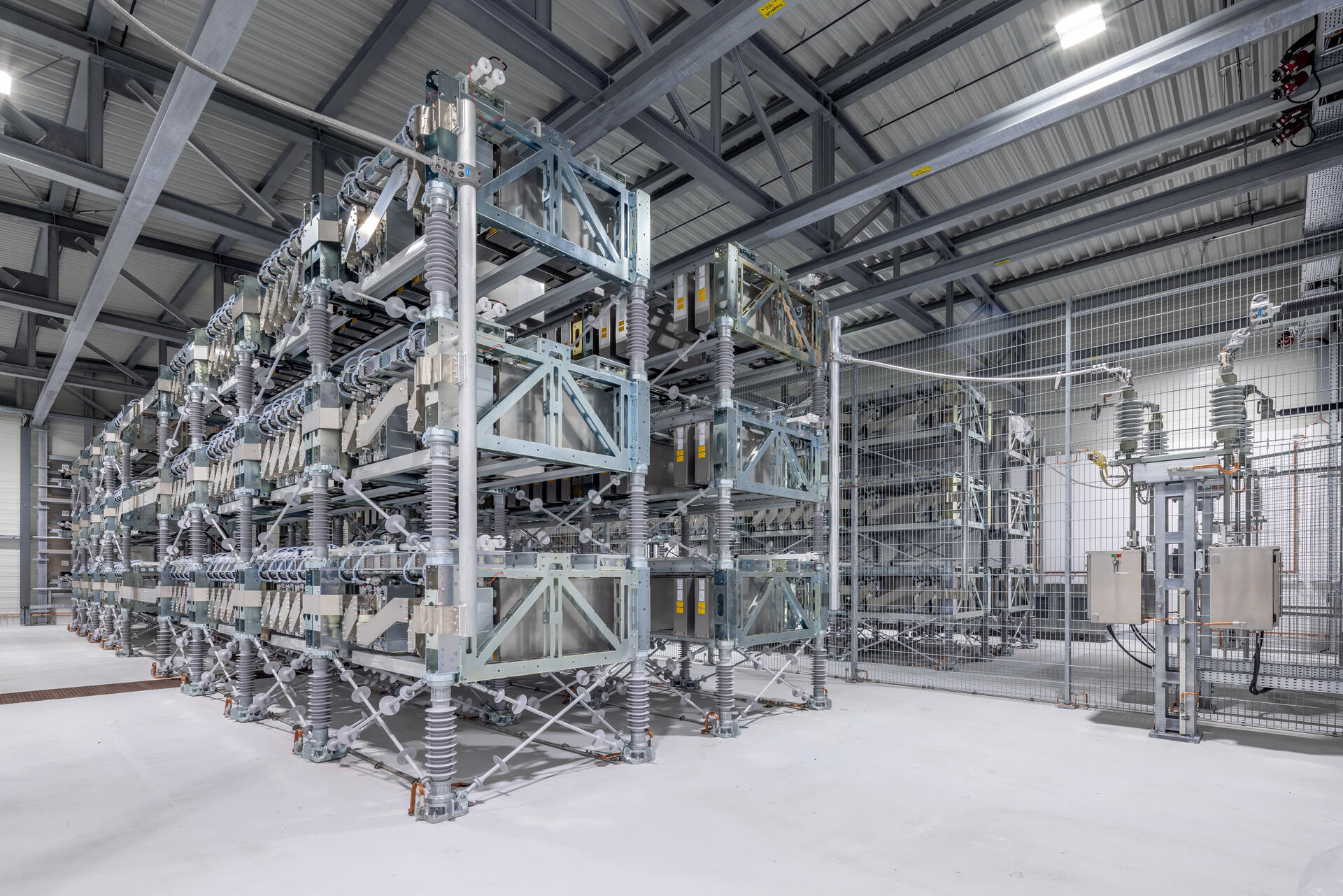
Construction of the E-STATCOM facility in Mehrum took three years. Today, the new facility stands secured behind NATO-grade razor wire and intrusion protection systems. Step inside Mehrum’s climate-controlled halls and the scale of the solution becomes clear.
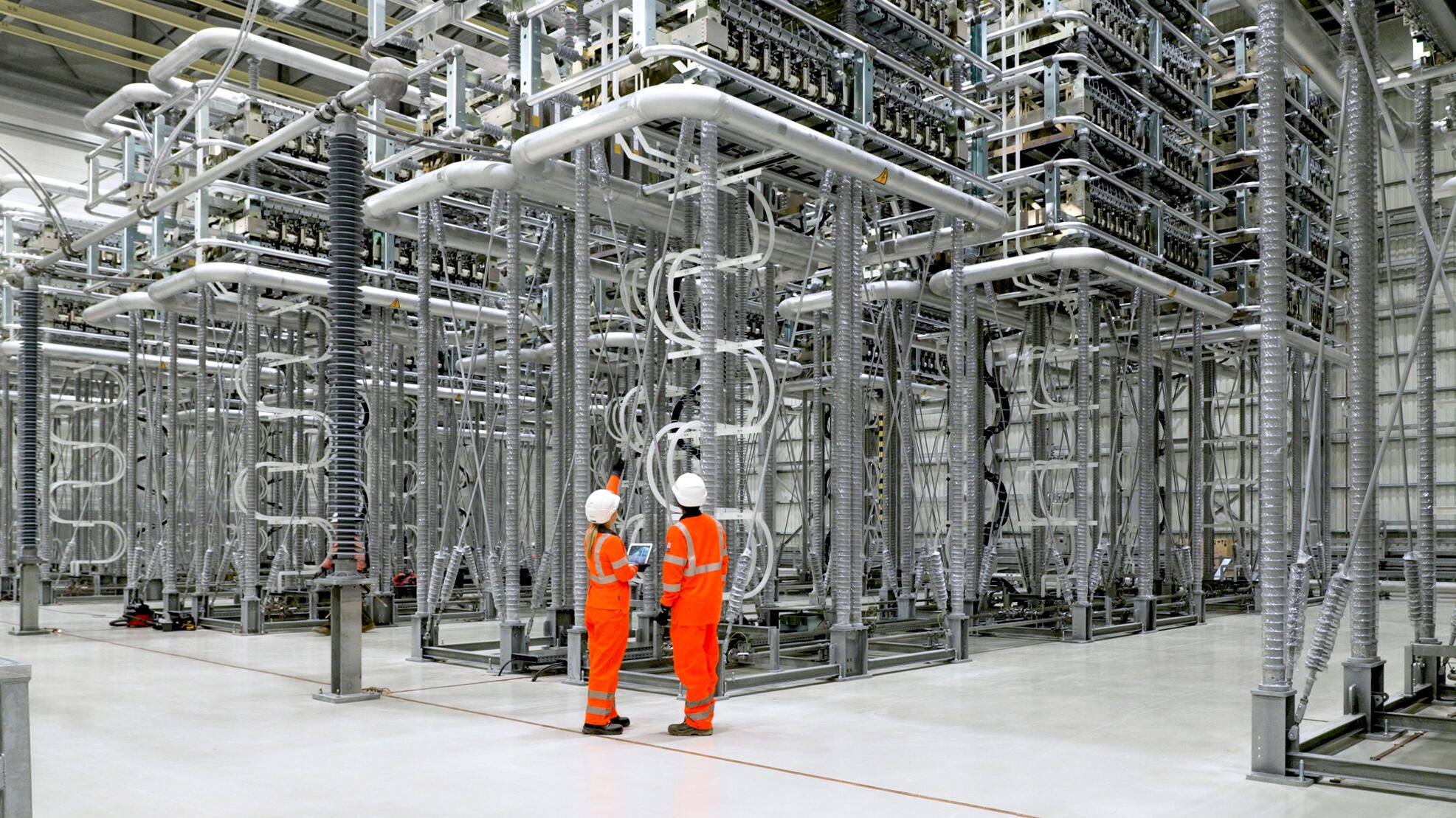
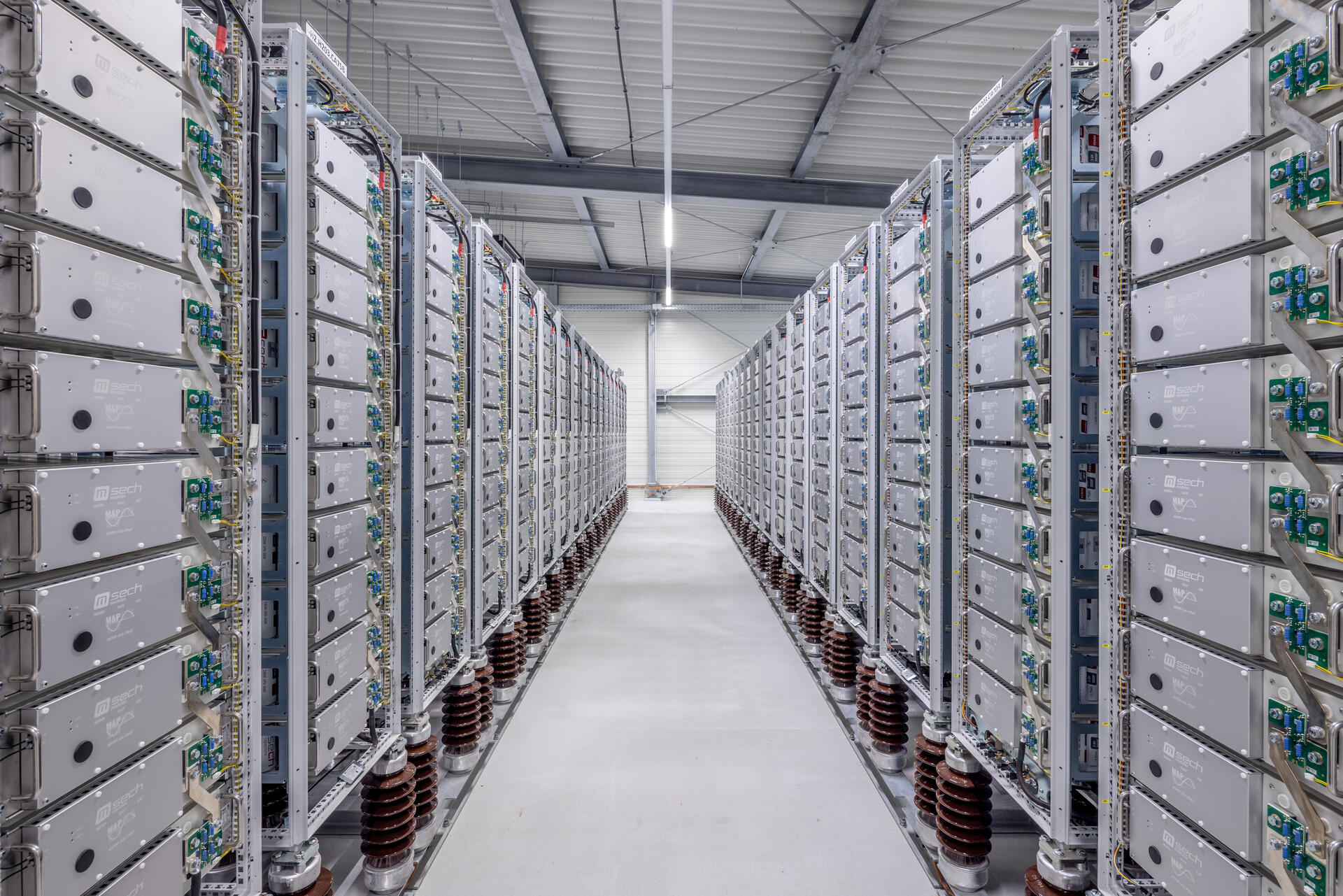
In one room, individual supercapacitor cells (each the size of a soda can) are stacked in towers, forming a reservoir of instant electrical energy that can be injected into the grid as artificial inertia. Unlike batteries, which rely on chemical processes, supercapacitors store electricity directly and can deliver bursts of power in milliseconds.
Next door, converters built from submodules manage those bursts, switching vast currents in microseconds, their systems cooled by deionized water and pink antifreeze circuits. In the control room, banks of monitors display the facility’s vital signs: temperature readings, system status, and a virtual reservoir filling and emptying as the system reacts to grid events. And thanks to advanced control systems and surveillance, the whole facility operates automatically, monitored and controlled entirely remotely.
Why Mehrum matters for Germany
The significance of this project lies not only in what it does, but in where it is built. Germany’s energy landscape is split: with renewables now clustered in the north and demand concentrated in the south, Germany’s grid faces strains from enormous transmission flows. The phase-out of nuclear and coal plants has accelerated this challenge, removing predictable baseload generation and stability. Electrified vehicles and electrified industry add further stress.
“Mehrum lies exactly between two north–south corridors that are interconnected here. From this point, we can influence grid stability on both corridors,” says Florian Martin. That made it an obvious choice to build the first E-STATCOM here.
Martin notes that as wind energy in the north—particularly around the North Sea—becomes increasingly important to Germany’s energy mix, it will mean little without the network to carry it: “Without a modernized grid, we can’t support the energy transition. You can compare it to roads—you have smaller transmission systems like local streets leading to houses and buildings, but you also need a larger highway system for transmitting bulk power. E-STATCOM gives us the artificial inertia and the auxiliary services we need to keep that system stable and enable it to transport more energy.”
Omterra and TenneT: Collaboration at the core
Building the world’s first E-STATCOM in this configuration was not simply a matter of engineering. It required two organizations—Omterra and TenneT Germany—to work as one. For Hauke Jürgensen of Omterra, that cooperation was decisive: “You can have the greatest technology, but if the teams don’t work together, it won’t succeed. What made Mehrum possible was excellent cooperation and trust.”
Martin echoes the point from TenneT’s side. “If you work together, you’ll always find some issues,” he says. “But if you solve them together, you reach your target—and that’s exactly what we achieved together with Omterra.”
The partnership blurred the usual lines between supplier and customer. Engineers from both companies met regularly to align on design and solve problems in real time. For Project Manager Ilka Keller, the breakthrough became tangible the day she walked into Omterra’s factory hall: “It was amazing to see all the supercapacitor towers lined up in front of me. That was the moment years of development crystallized into reality.”
For Keller and the rest of the team, the meaning of the project goes beyond the factory floor. She sees her role as part of something larger—helping to shape the future of the grid and open the way for renewables. “If this works—and I’m sure it will—then my work is a small piece of the future. Every installation like this means a smarter grid and the chance to use more green energy.”
A blueprint for renewable-ready grids
While Mehrum is just one site, its implications extend well beyond Germany. Omterra has already received inquiries from the United States, Canada, and Australia. TenneT Germany estimates that approximately 30 similar facilities will be needed in Germany alone, with additional installations already under contract.
“Mehrum is really a benchmark project to show that the global energy transition is feasible—and the right thing to do,” says Jürgensen. “Our first E-STATCOM was a very high-priority project, and looking at what the teams accomplished is really something to be proud of.”
Martin shares that sense of achievement: “As Director of Asset Management, it makes me proud to see what we’ve developed with Omterra. It’s a worldwide first—but also essential for the future energy system.”
With construction complete, the project is now entering its final phase. The installation will undergo months of testing before entering commercial service, gradually proving that artificial inertia can replace the mechanical stability that fossil plants once provided.
From the roadside, with its fortress-like security and unremarkable appearance, Mehrum might seem an unlikely symbol of the energy transition. But beneath its industrial exterior, TenneT Germany and Omterra are rewriting the rulebook for grid stability—proving that our grids can evolve as dynamically as the wind and solar farms feeding them—and creating an urgently needed new template for renewable-ready grids.
About the author: Florian Bayer is a freelance journalist based in Vienna, Austria, where he has written for Zeit Online, Der Standard, and Wiener Zeitung.
Combined picture and video credits: Omterra, photography of Martin Stührk