
Test laboratory for transformer materials
Transformer oil testing helps utilities, industries and energy operators improve transformer reliability and service life. Omterra’s, formerly known as Siemens Energy, test laboratory provides diagnostic and analytical services for insulating oils and solid materials, delivering insights that support informed maintenance and operating decisions, identify risks early and help extend transformer service life.
As part of comprehensive transformer services and power transmission services, these insights help operators maintain reliable transformer performance throughout the asset lifecycle.
Why transformer oil testing matters
Transformers rely on insulating oils for electrical insulation, cooling, and protection against corrosion. Over time, transformer oil degrades due to thermal, electrical, and environmental stresses, producing gases, acids, sludge, and moisture that compromise dielectric strength and accelerate aging of both the oil and solid insulation materials.
Insulation health
Asset longevity
Early detection
Risk reduction
Regular transformer oil testing reveals critical information about the internal condition of the transformer, allowing early detection of faults such as overheating, arcing, and moisture ingress.
Transformer oil testing services
During the natural aging process of the oil and insulating parts, especially in the case of thermal or electrical failures, cracked gases form, and are dissolved in the oil. The rate of decomposition and the type of gases change during defective operation, which could be a result of thermal overloading and/or electrical faults. Based on the quantity or type of fault gases, the gas increase rates and the proportions between the gases, the type of failure can be deduced.
Partial discharges with lower energy mainly lead to the formation of hydrogen and methane, as well as small quantities of ethane. Thermal overheating results in the pyrolysis of hydrocarbons. In temperatures between 300-700°C ethylene and propylene accompanied by larger quantities of CO and CO2 prevail. Over 700°C mainly ethylene, propylene and hydrogen form, and above 1000°C acetylene are also formed. Electrical discharges (arcs and spark discharges) cause separation of hydrogen and acetylene, as well as methane and ethylene. By thermal-oxidative cellulose degradation, larger quantities of CO and CO2 are formed.
Through DGA mainly slowly developing faults can be detected. The gradual development of gas concentration allows for a trend analysis, which in turn makes it possible to make a prognosis on the lifespan of the transformer. The following failure sources can also be understood by means of DGA:
- Identification of Hot spots
- partial discharges and discharges
- formation of pollution layers on contacts
- abnormal cellulose degradation
- localized metal overheating
- saturation of the transformer oil with air, which can cause the BHR to trip, without a transformer failure
- Catalytic effect of coatings and other transformer materials
- The analysis of Buchholz gases gives additional information about the damage – acute or subtle
- Leaking diverter switch
The following cannot be detected by means of DGA:
- the fault location
- acute faults, that develop within seconds or minutes
- temperatures, that are below 150°C degrees for a long time, e.g. caused by faulty cooling operation and leads to the degradation of the paper and oil.
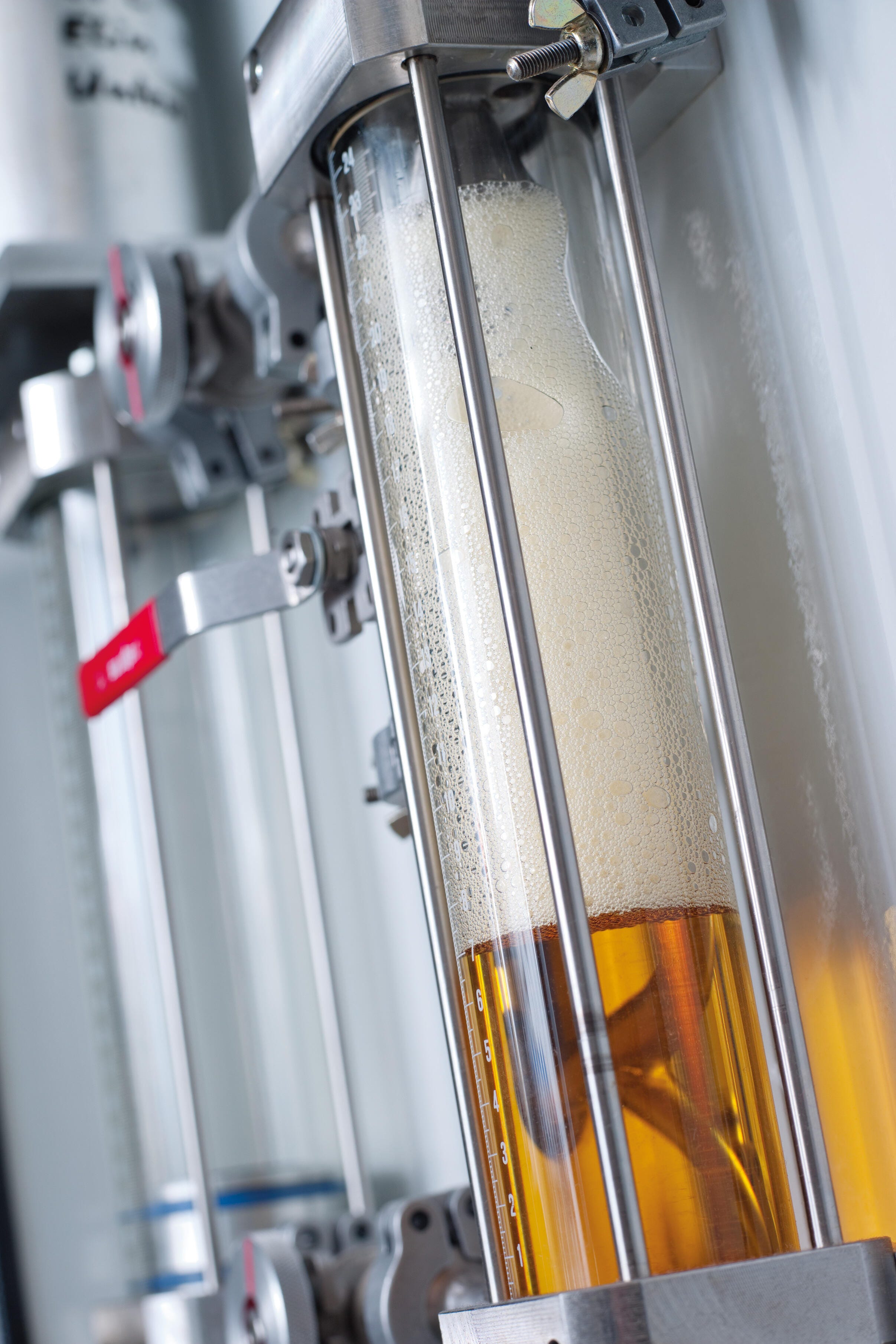
The maintenance of insulating liquids is based on IEC norm, VDE 0370 part 2 (= IEC 60422). This norm is valid for oils that are already contained in transformers. For new oil the norm VDE 0370 part 1 (= IEC 60296) is valid.
The following oil values are decisive for the regulation of measures:
- Color and appearance
- Breakdown voltage
- Water content
- Neutralization value (acidity)
- Loss factor
- Interfacial tensions
- Inhibitor content
The color and appearance of transformer oil are useful for comparative evaluation: a quick color darkening or dark oil is a sign of oil ageing. The analyzed oil color is assigned a number ranging from 1 to 8, whereby the level of discoloration is indicated by means of the rising color number.
By analyzing the appearance, undesirable by-products can be detected. Cloudiness or sediment indicate free water, insoluble sludge or dirt particles. If these are present, then also the breakdown voltage and/or the loss factor and eventually also other oil values are out of the norm and measures must be taken.
The breakdown voltage (Ud) indicates how well insulating oil can withstand an electrical load and is therefore decisive for the operational efficiency of a transformer. The breakdown voltage is measured according to VDE 0370 part 5 (=IEC 60156). The initial measures to be taken in case of a drop below the insulation voltage limit values of the relative transformer type, depend on the values of the other characteristic oil values.
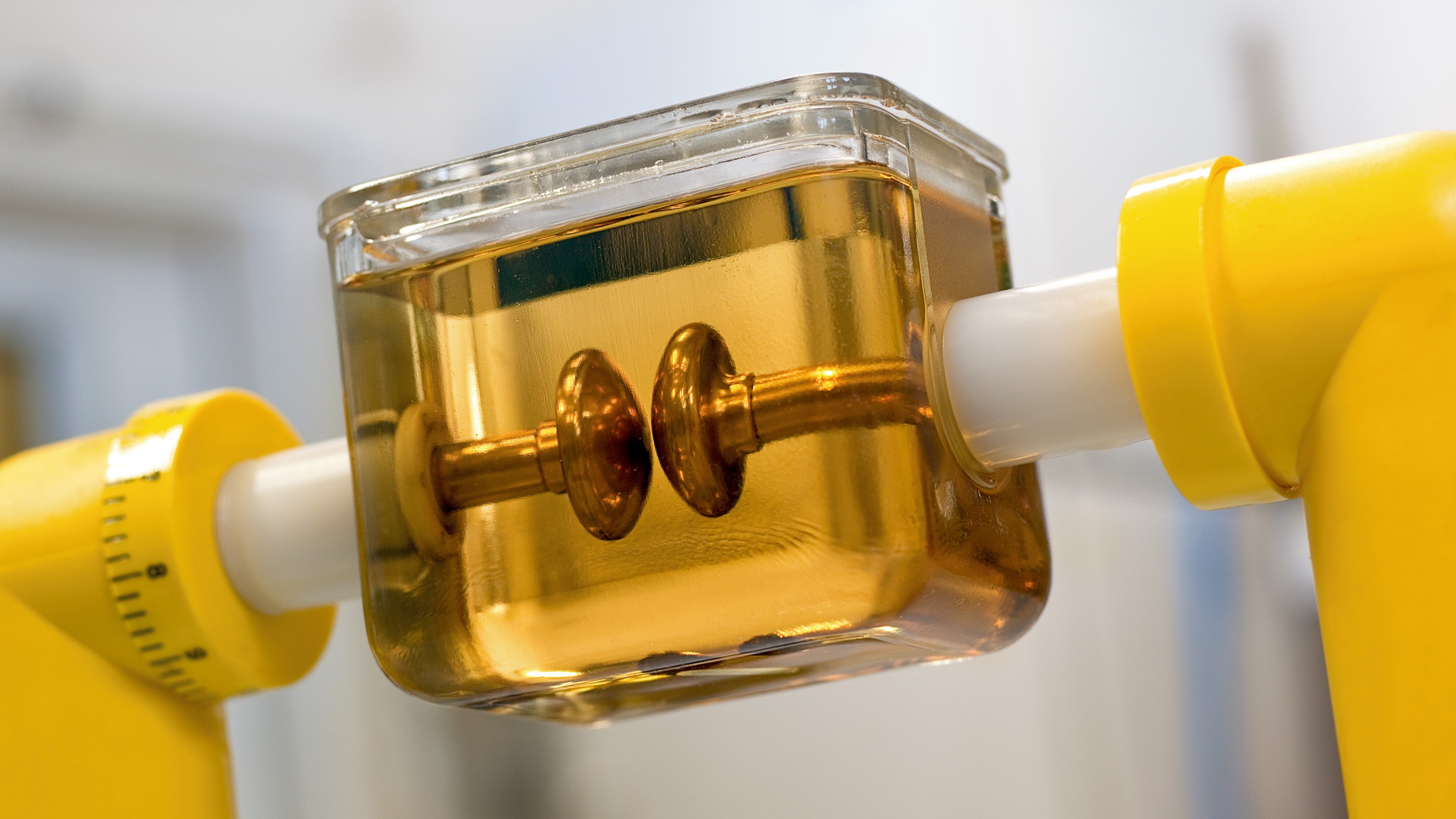
Water formation is caused by the ageing of cellulose- insulating material (paper, pressboard, laminated wood), ageing of oil and infiltration of humidity from the environment by means of badly maintained air dryers and/or defective sealing systems.
There is an equilibrium between the water content in oil and the moisture content in the solid insulation, it reduces the breakdown voltage and accelerates the ageing process. This equilibrium though, is temperature and time-dependent.
As there is never an even temperature in an operating transformer, -oil temperature in the tank is much higher at the top than at the bottom, and the same counts for the temperature distribution in the windings – the moisture distribution curves are only a rough estimate. In the moisture distribution curves the water content in the oil can theoretically be distinguished from the moisture content in the cellulose, based on the temperature. This is however valid only for insulation paper and not for pressboard and laminated wood. A precondition is constant temperature and a set equilibrium.
Through progressive ageing (Oxidation) of the oil, polar decomposition products develop. These deteriorate the dielectric properties of the oil. The result of far advanced oil ageing is sludge formation. Sludge greatly compromises the windings because it leads to the formation of sediments, which prevent heat removal. This heat accumulation in turn causes the winding paper to age intensely. A timely diagnosis of the incipient acid formation is therefore important, so that timely counteractive measures can be initiated.
Literature: Cigre Brochure D1.30 – „Oxidation Stability of Insulating Fluids“
The dielectric dissipation factor of an insulating material is the tangent of the dielectric loss angle.
The dielectric loss angle, is the angle in which the phase difference between the applied voltage and consequential current diverges from π/2 rad, when the capacitor's dielectric comprises only of insulating material.
A rising dissipation factor is an indication of oil ageing or oil contamination. The dissipation factor is strongly influenced by polar components and is therefore a very sensitive parameter.
In addition to the neutralization value and the dissipation factor, interfacial tension is another indicator of sludge formation in the transformer. This test measures the concentration of polar molecules in oil, which form during the ageing process. The higher the concentration, the lower the interfacial tension and the likelier it is for the insulating oil to form sludge.

Inhibitors are age protecting agents which delay the decomposition of the insulating oil. The IEC 60296 accredited inhibitor DBPC (Di-tertiary-butyl-para-cresol), with a weight percentage of 0.25 ± 0.040 , is used. Inhibited oils are preferred for transformers > 200 MVA, for heavily loaded transformers such as traction transformers, for oven transformers or at special customer request. When the accelerated oil ageing process is caused by a transformer malfunction, the original inhibitor content (0,3), can be restored by adding a calculated amount of DBPC in powder form, once the failure has been fixed. Even in the case of normal DBPC- deterioration, the oil can be re-inhibited, although an oil change would be less expensive. This decision can be made only based on the results of the other oil value tests: if these are normal then a re-inhibition can be successful. The inhibitor content is determined using infrared spectrometry or gas chromatography with MS-detector.
The decomposition of paper is caused by the processes of hydrolysis, pyrolysis and oxidation. The degree of polymerization (DP-value) of paper was defined by IEC 60450 and it counts the number of polymerized glucose rings. During the paper decomposition, the DP-value is reduced and the tensile strength decreases. New cellulose has a DP-value of 1000-1100, aged cellulose on the other hand has a value of only 150-200, which means the end of the transformer's lifespan.
As it is not possible to take paper samples during running operation, the condition of the solid insulation is estimated based on the cellulose decomposition products (2- Furfural). For this purpose a regular trend analysis is necessary.
The furan content in oil depends on:
- Oil temperature
- Neutralization value
- Sludge content
- Oil/paper ratio
- Type of oil (inhibited, non-inhibited)
- Type of paper (thermostabilized, non thermostabilized)
An exact link between the furan content and DP-value cannot be deduced at present. However it is possible to make a trend analysis: based on the change of the furan content, information about thermal conduct of the solid insulation over the years can be obtained.
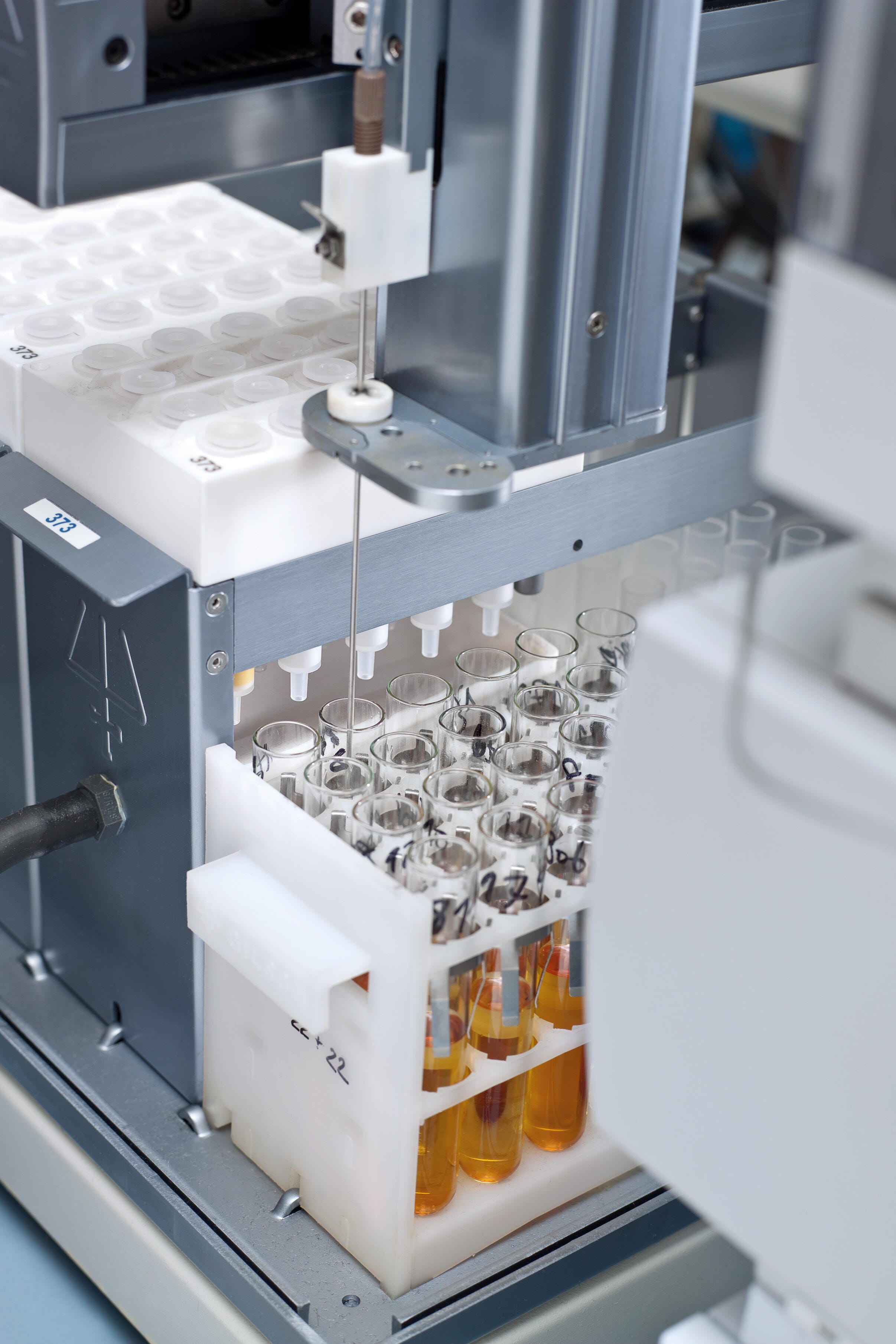
The testing and approval of new insulating liquids, or mineral oils, synthetic or natural ester or silicone liquids is also part of the laboratory's work.
Using Omterra computer controlled and monitored oxidation equipment we are able to set and monitor the test conditions much more precisely than is required by the standard specifications. The result is a much better reproducibility and safe assessment.
The solid insulating materials in the windings include purified cellulose solid materials like pressboard and insulating paper as well as bonded laminates (e.g. laminated board, various fiber- reinforced synthetic materials).
In the material testing laboratory the physical properties of these materials are tested, hence verifying their applicability for transformer construction.
The following tests are carried out:
- Determination of thickness and density
- Chemical analysis to ensure that there is no metal contamination
- Shrinkage behavior
- Moisture content
- Bending strength, compressive strength and tensile strength
- Compatibility with insulating liquids
- Impregnation behavior
- Conductivity and ph value of the aqueous extract
- Ash content

Transformer cores are made up of grain-oriented electrical steel. There are three different qualities: conventional grain-oriented steel, highly permeable grain-oriented steel and domain refined electrical steel.
In the material testing laboratory the following tests are carried out on the grain-oriented electrical steel:
- Surface resistance using the Franklin Tester
- Magnetic loss measurement, using a Single Sheet Tester (SST)
- Magnetostriction
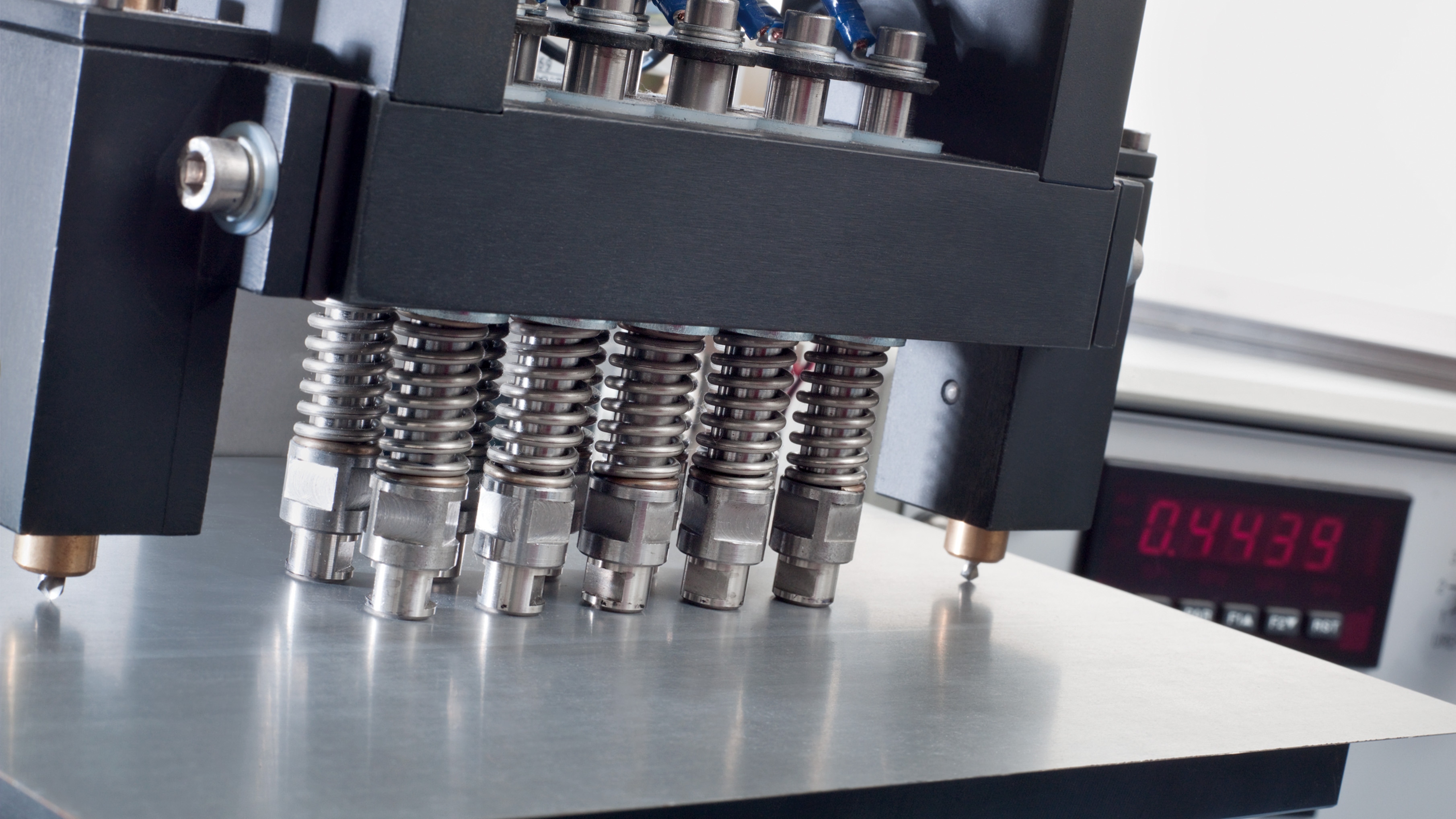
Copper materials are mainly used in the windings and in the leads as single flat conductors, multiple flat conductors and continuously transposed conductors. The condition of the enamel paint and of the paper wrapping is decisive for safe transformer operation.
The following tests are carried out on copper materials:
- Resistance of the enamel insulation after accelerated ageing in insulating liquids
- Thickness and hardness of the enamel insulation
- Adhesion and elasticity during bending and elongation
- Proof stress and elongation at break of the copper
- Breakdown voltage varnished copper conductors
- Determination of the solidification factor of continuously transposed conductors with epoxy bonding
The tank, tank cover, manhole cover and valves of a transformer are sealed using sealing materials that are resistant to insulating liquid, for example:
- Nitrile Butadiene Rubber (NBR)
- Fluoric rubber (FPM)
- Fluorosilicone rubber (FMQ)
- Asbestos-free fibrous materials (FA 200)
Outside coating materials are used as corrosion protection for tanks, radiators, coolers and other construction parts. Interior coatings on the other hand are used to protect the transformer from possible metal particle contamination.
The main coating materials used are environmentally friendly. These can be for example, water-based, “High Solid” or cathodic dip coating.
In the material testing laboratory we inspect the condition of the coating using the following procedures:
- Layer thickness measurement
- Cross-cut test
- Effect of the internal coating materials on the insulating liquid (DGA/oil values)
Adhesives, cast resins, desiccants, glide waves and detergents are only some of the numerous auxiliary materials used in transformer production or repair. The behavior of each of these auxiliary materials must be understood to the smallest detail, particularly in their interaction with other materials. We therefore test the adhesion of glues, the adsorption behavior of desiccants and the compatibility of different auxiliary materials with insulating liquids.
The process
Oil sample collection
Preliminary inspection
Analytical testing
Trend analysis
Diagnostic reporting


Successful transformer oil testing references
Enhancing transformer reliability through advanced oil diagnostics
A major utility in Europe was experiencing intermittent transformer faults leading to unplanned outages and costly downtime. Omterra’s Test Laboratory for Transformer Materials conducted comprehensive transformer oil testing including Dissolved Gas Analysis (DGA), oil quality metrics, and furan analysis. Early identification of overheating and partial discharge signs enabled the utility to perform timely maintenance and adjust load profiles, preventing potential failure.
Outcome: The utility extended the transformer's operational life by over 5 years while reducing unexpected outages by 40%, significantly improving grid stability and cost efficiency.
Preventing catastrophic failures in an industrial facility
An industrial campus in North America relied heavily on energized transformers for continuous production. Omterra’s periodic oil testing and expert interpretation highlighted accelerated cellulose degradation via furan testing, a key indicator of impending insulation failure.
Outcome: Proactive refurbishment guided by test findings prevented catastrophic transformer failures, saving potential losses estimated at several million dollars and supporting uninterrupted manufacturing processes.
Improving compliance and sustainability through transformer oil diagnostics
A global utility engaged Omterra for transformer oil testing to support SF6 phase-out mandates and improve sustainability credentials. Omterra optimized oil sampling and laboratory analysis to meet all environmental regulations and provide reliable aging diagnostics, integrating results into responsible recycling and disposal programs.
Outcome: The utility improved regulatory compliance, reduced greenhouse gas emissions effectively, and positioned itself as a sustainability leader in its market segment.
Why Omterra for transformer oil testing?

By combining proven sampling procedures with advanced laboratory diagnostics, Omterra delivers reliable data and actionable insights for informed asset management decisions.
Expertise in transformer oil diagnostics
Omterra's transformer oil testing laboratory combines over a century of expertise with state-of-the-art diagnostic and analytical services, providing customers with detailed insights into insulating oil and the condition of solid materials.
Whether you operate new installations or manage aging transformers, Omterra's test laboratory provides comprehensive diagnostics across the transformer lifecycle.
The company’s multilingual support team is available 24/7 in English, Spanish, and German to guide you through sampling, testing, analysis, and interpretation.
Reliable and reproducible oil sampling
Accurate diagnostics begin with high-quality samples. To ensure consistent and contamination-free sample collection, Omterra has developed a dedicated oil sampling solution in close collaboration with customers.
The sampling system offers several advantages:
- Ready for immediate use with all required accessories included
- Compact and stackable design for convenient handling and transport
- Self-closing couplings on all connections to minimize contamination risks
- Easy, safe, and reproducible sample collection
- Improved consistency and reliability of laboratory results
Accredited expertise in transformer materials diagnostics
As an independent ISO/IEC 17025-accredited test laboratory, Omterra combines decades of practical experience with active participation in international standardization bodies and industry working groups. This ensures that testing methods, diagnostic procedures, and evaluation criteria are continuously aligned with the latest developments in transformer materials, insulating liquids, and condition assessment technologies.
This close collaboration with industry and standards organizations enables Omterra to apply the latest diagnostic methodologies and contribute to the advancement of transformer condition assessment worldwide.

Beyond transformer oil testing
Reliable transformer asset management requires more than oil analysis alone. During their often decades-long service life, transformer materials are exposed to thermal, electrical, mechanical, and environmental stresses that accelerate aging and affect overall performance.
Omterra's test laboratory for transformer materials provides comprehensive diagnostics covering:
By evaluating the condition of both insulating and structural materials, Omterra helps customers identify degradation mechanisms at an early stage, estimate remaining service life, and plan maintenance, refurbishment, or replacement activities proactively.
Downloads
Transformer test laboratory – Certificate Accreditation DAkkS
Transformer test laboratory – Certificate Accreditation DAkkS (Annex)

Get answers: FAQs on test laboratory for transformer materials
A transformer testing laboratory has the role of determining whether a transformer, its insulating materials, and its operating condition meet the required quality, safety, performance, and reliability requirements.
Particularly important for transformer life management are
1. Solid cellulose insulation
- Kraft paper
- Pressboard
- Laminated pressboard
- Wood
2. Conductive materials
- Copper
- Aluminium
- Electrical steel
- Copper/enamel insulation systems
3. Auxiliary materials
- Gaskets
- O-rings
- Rubber
- Paints/coatings
- Adhesives
- Tapes
- Polymer components
Dissolved Gas Analysis (DGA) is a diagnostic method used for oil-filled power transformers. It measures gases that have dissolved in the insulating liquid and uses their concentrations and ratios to identify possible faults inside the transformer.
For transformer insulating oil, a laboratory typically tests a combination of electrical, chemical, physical and diagnostic properties. The exact test program depends on whether it is new oil, oil in service, mineral oil, natural ester, or synthetic ester.
Transformer testing standards vary significantly by region, although the basic engineering objectives are similar. The two major international frameworks are IEC 60076 and IEEE/ANSI C57.
The latest transformer-oil diagnostics are moving from periodic laboratory testing toward continuous, multi-parameter and data-driven condition monitoring.