Dry Gas Seals
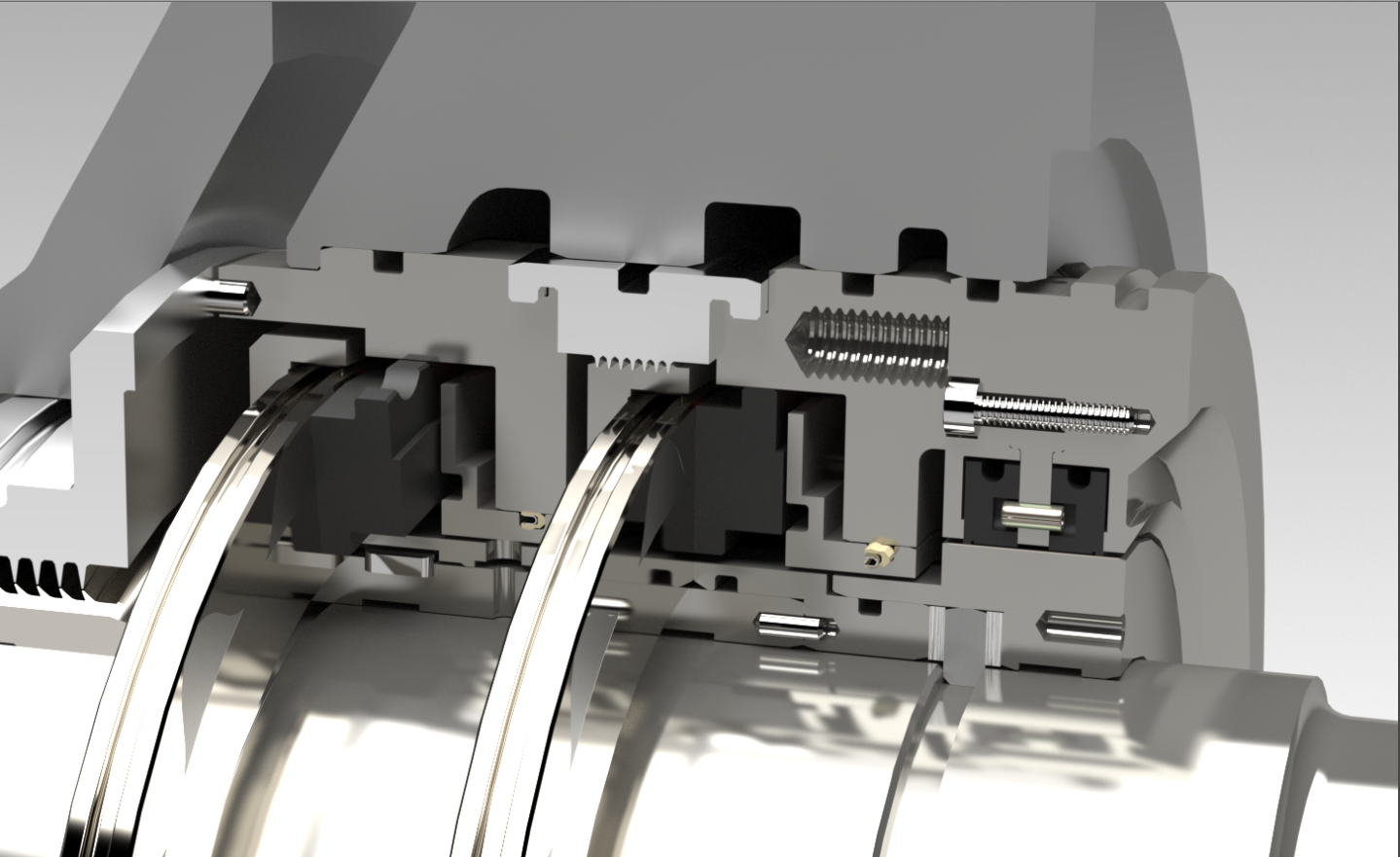
Omterra’s goal is to minimize customers’ ongoing wet oil seal costs, unscheduled downtime and resulting productivity losses. Currently, there are thousands of centrifugal compressors installed globally that predate advanced Dry Gas Seal (DGS) technology and run with wet oil seals, which require costly maintenance and cause parasitic power losses due to oil shear and drag.
Dry Gas Seals in centrifugal compressors
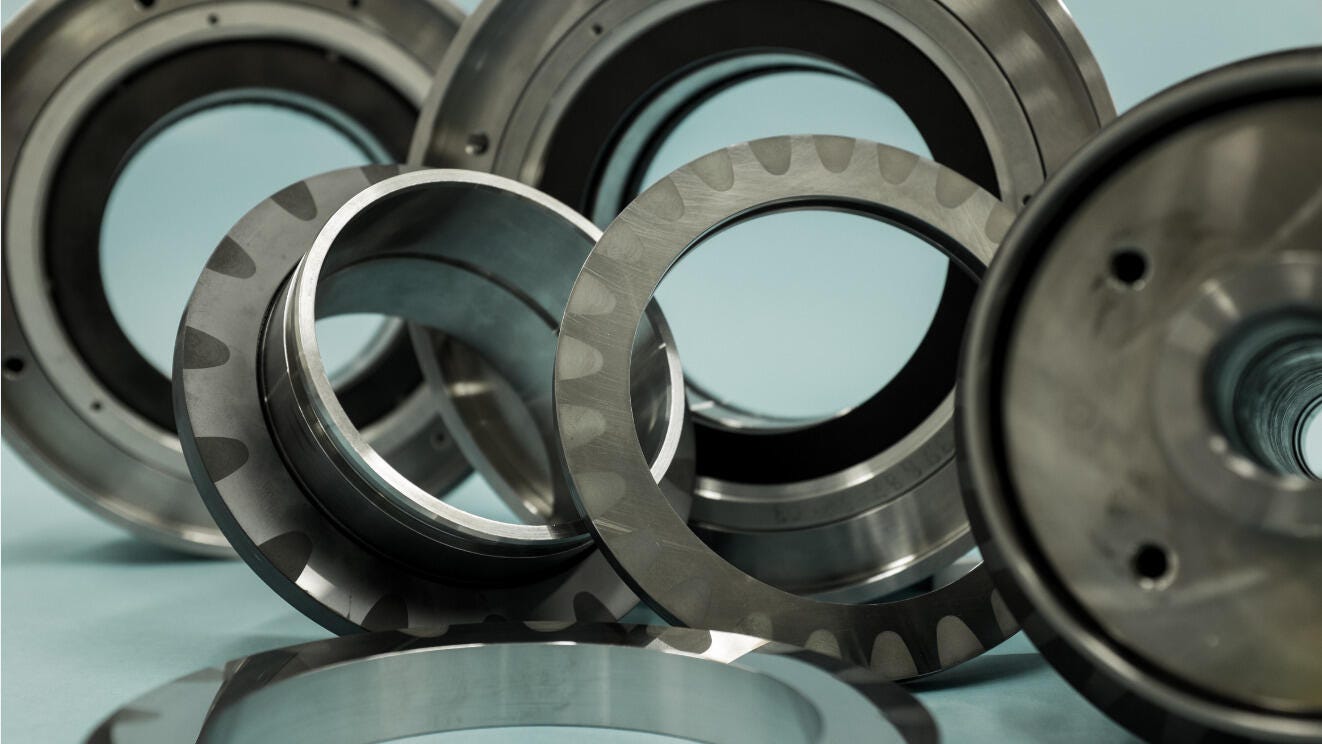
The Dry Gas Seals employed in Omterra's centrifugal compressors represent a significant advance in shaft sealing. This state-of-the-art solution will help by eliminating the ongoing maintenance costs associated with wet oil seals and thereby greatly increases equipment reliability and efficiency. The design of the Dry Gas Seal ensures best overall compressor performance as well as emission reduction for increased sustainability.
Why choose Omterra Dry Gas Seals?
- Cost reduction and productivity increase through depletion of unscheduled shutdowns
- Ability to conduct rotor dynamics studies to increase rotor stability
- State-of-the-art-design which allows for hassle-free installation
- Elimination of seal oil consumption, leakages and contamination and other ongoing associated maintenance costs
- Global Omterra network of service centers, providing a single point of contact for compressor maintenance and troubleshooting
- Seal and compressor design from a single source ensuring best overall compressor performance
- API 692 compliant
The heart of the DGS is a pair of rings. A stationary ring is held against a rotating ring by spring pressure. The contact face of the rotating ring incorporates special fil-riding geometries in the form of groves or tapered lands on the outer portion.
DGS designs:
- Patented bi-directional groove design
- Patented rotating seat centering
- Liquid Phase Sintered Silicon Carbide
- In-house Theoretical Gas Film Modeling
- Single DGS - for restrictive applications
- Double DGS - for lower pressure applications where zero emissions are a must
- Tandem DGS - When a lower emission and high-pressure tolerant solution is needed (optional without intermediate labyrinth)
- Carbon Ring Separation Seal - for protecting Dry Gas Seals from bearing oil ingress
- Carbon Ring Process Seal - for minimizing clean gas flow and for maintaining clean process side environment
Omterra, as the compressor OEM, is best suited to provide a sealing solution that ensures the best overall compressor performance and maintenance, from a single source. Applicable to all OEM and non-OEM centrifugal compressors.
Seal Protect - a reliable, cost-effective sealing solution for centrifugal compressors
Omterra’s innovative sealing solution eliminates the need for a seal gas booster, protects dry gas seals from contamination, and reduces maintenance and downtime costs.
Seal Protect sits between the dry gas seal and process side seal, remaining open during operation to prevent contamination. In static or low-speed conditions, it ensures only clean, dry process gas reaches the Dry Gas Seal.
Benefits of Seal Protect include:
- Increased reliability: Simplified design reduces component failure risk.
- Reduced cost: With lower operational and maintenance costs.
- Minimized footprint: System can replace the seal gas booster, saving space.
- Lower emissions: Seal Protect uses less power, reducing emissions.
Seal Protect is compatible with most new compressor packages and can be retrofitted into existing units for improved reliability.

Get answers: FAQs on Dry Gas Seals
Dry gas seals are primarily used in centrifugal compressors, turbomachinery, and rotating equipment to prevent gas leakage. They create a hermetic seal between rotating and stationary components using a thin film of gas, typically the same medium being compressed. This non-contact seal minimizes wear and reduces the risk of leaks, enhancing the efficiency and reliability of the compression process.
Wet oil seals use oil to lubricate and create a barrier, preventing gas leakage but requiring more maintenance and potentially causing contamination. Dry gas seals use a thin film of gas, reducing emissions, maintenance needs, and improving efficiency.
Dry gas seals are used in compressors for pipelines, offshore platforms, oil refineries, and petrochemical and gas processing plants. They prevent gas leakage by creating a non-contact seal using a thin film of gas.
The life of a dry gas seal in a compressor typically ranges from 5 to 10 years, depending on operating conditions and maintenance practices.
Dry gas seal failure in compressors can be caused by contamination, improper installation, thermal shock, mechanical wear, and pressure fluctuations.