Hydrogen power plants
Omterra provides power plants with advanced gas turbines that can burn up to 100% hydrogen. Hydrogen plants for both existing and new build plants.
Lowering CO₂ by using hydrogen for power generation
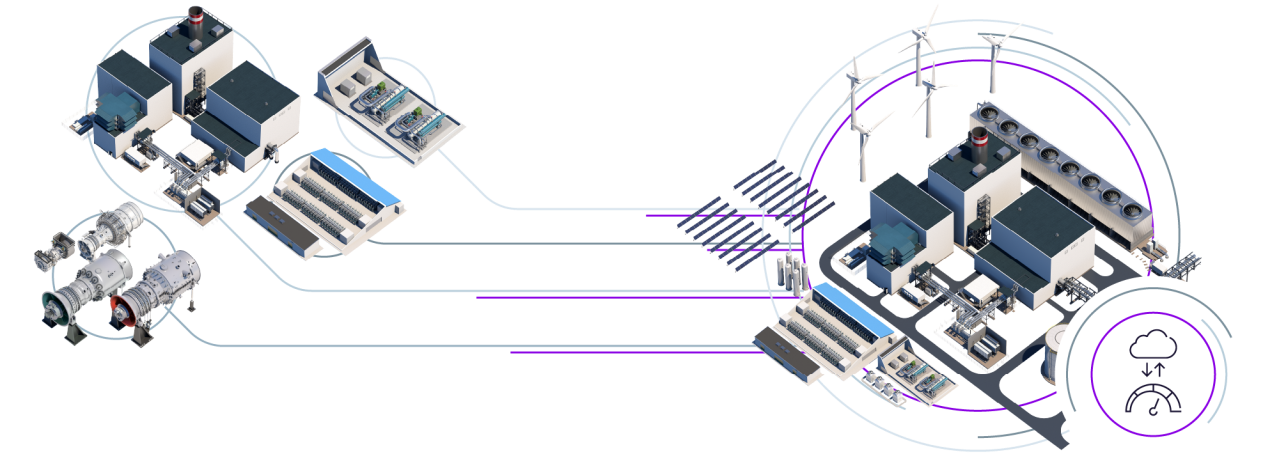
Benefits of integrating hydrogen into gas turbine operations



A global overview of key references for hydrogen-ready power plants
Preparing power plants for hydrogen co-firing
Omterra solutions for hydrogen power plants
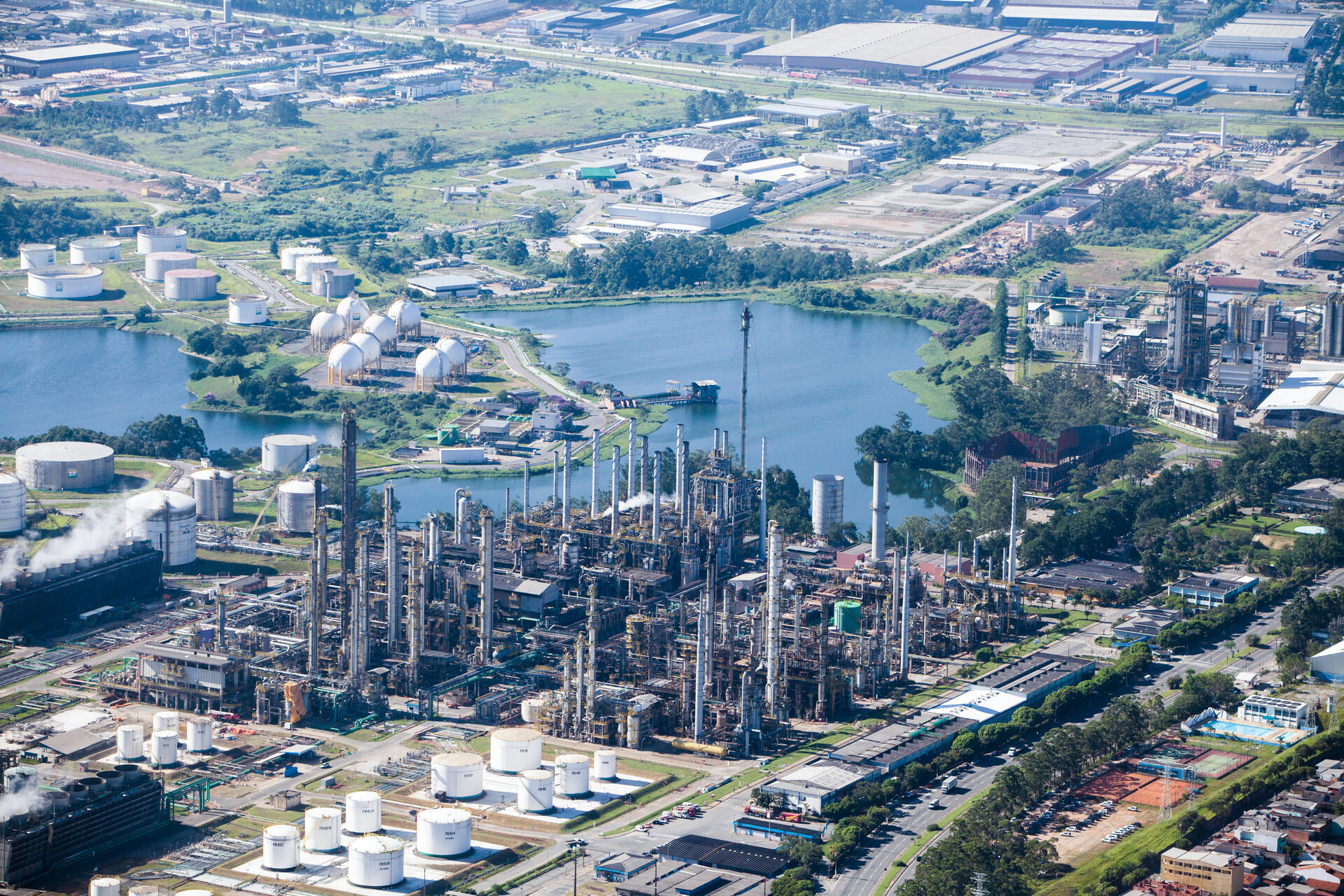
Hydrogen power plants have applications for both new and existing installations. Omterra's goal is clear: to support customers with their hydrogen ambitions, whether for existing or new units, by helping them create a roadmap to a fully hydrogen-powered station.
Hydrogen power plants can be customised to meet your project-specific needs. Depending on the required capacity, the concepts can also be combined with other gas turbine models.
Power only package
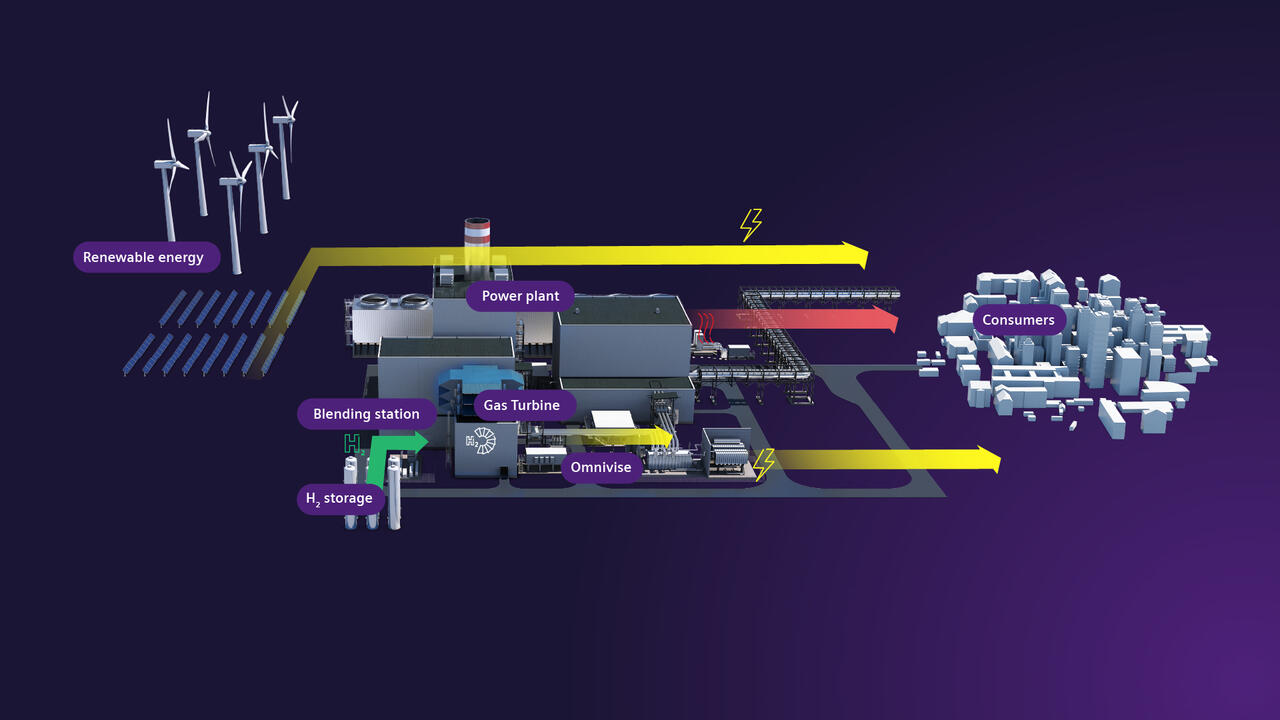
The hydrogen power plant includes an H2-fired gas turbine (e.g. SGT5-9000HL, SGT-800, or SGT-400) and our Omnivise fleet management system to integrate all components. Explore our selection of heavy-duty, industrial, and aeroderivative gas turbines, each tailored to address specific hydrogen needs.
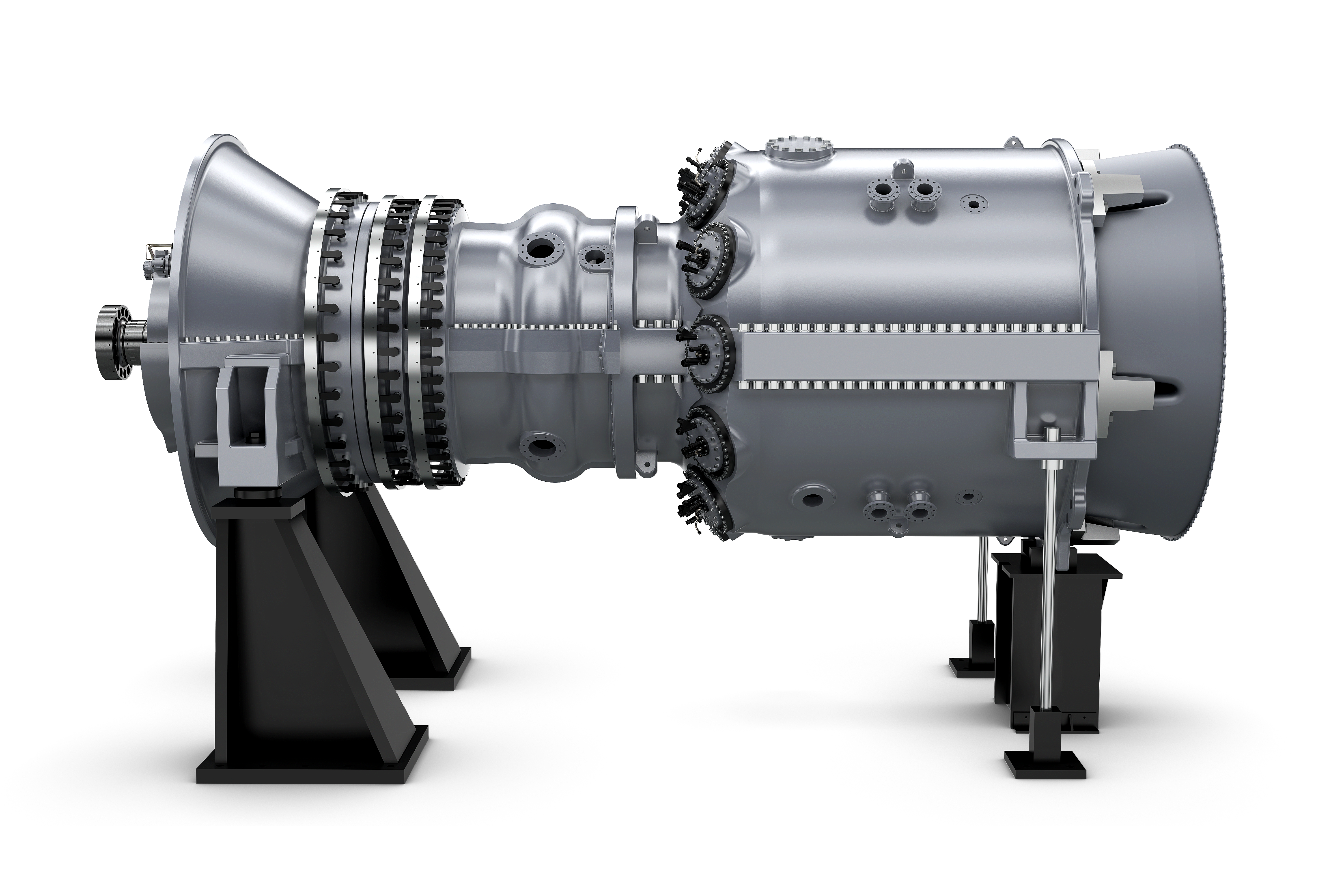
Heavy-duty gas turbines
e.g. with a SGT5-9000HL or SGT6-9000HL gas turbine
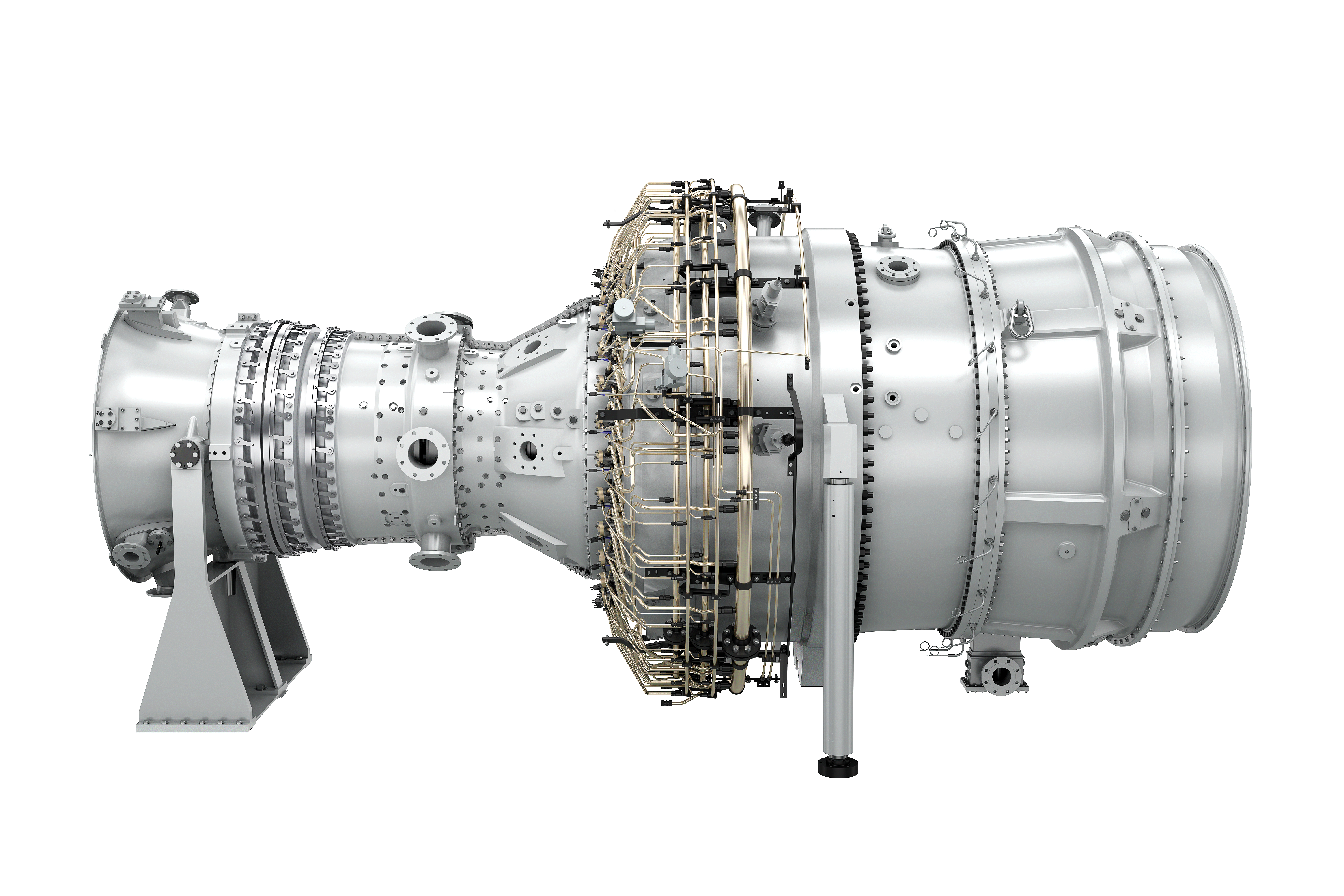
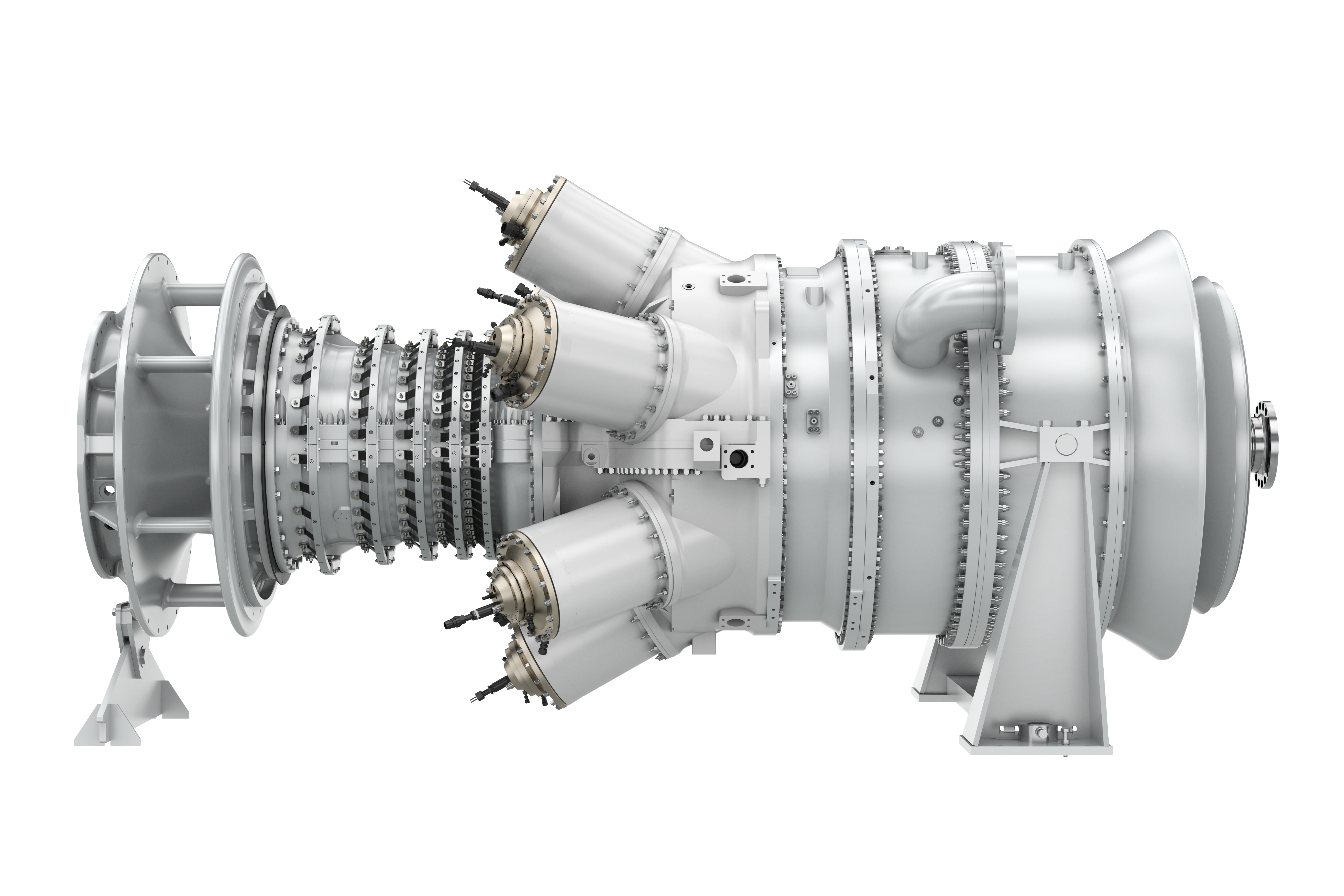
Industrial gas turbines
e.g. with a SGT-800 gas turbine
Small gas turbines
e.g. with a SGT-400 gas turbine
As an OEM for key components, Omterra has the experience, technical domain expertise and standardized approach for co-firing and recommends a collaborative approach to exploring the current capabilities of a facility and establishing a path forward to accomplish optimal hydrogen co-firing milestones.
Omterra recommends a plant-specific feasibility study to guide sites towards understanding current capabilities, realistic target setting, hydrogen design package development and establishing a milestone execution plan. The resulting plan will leverage existing technologies and infrastructure to the extent possible to develop and design a package specific to the facility and aligned with the organization’s decarbonization goals.
From 0 to 100% hydrogen operation
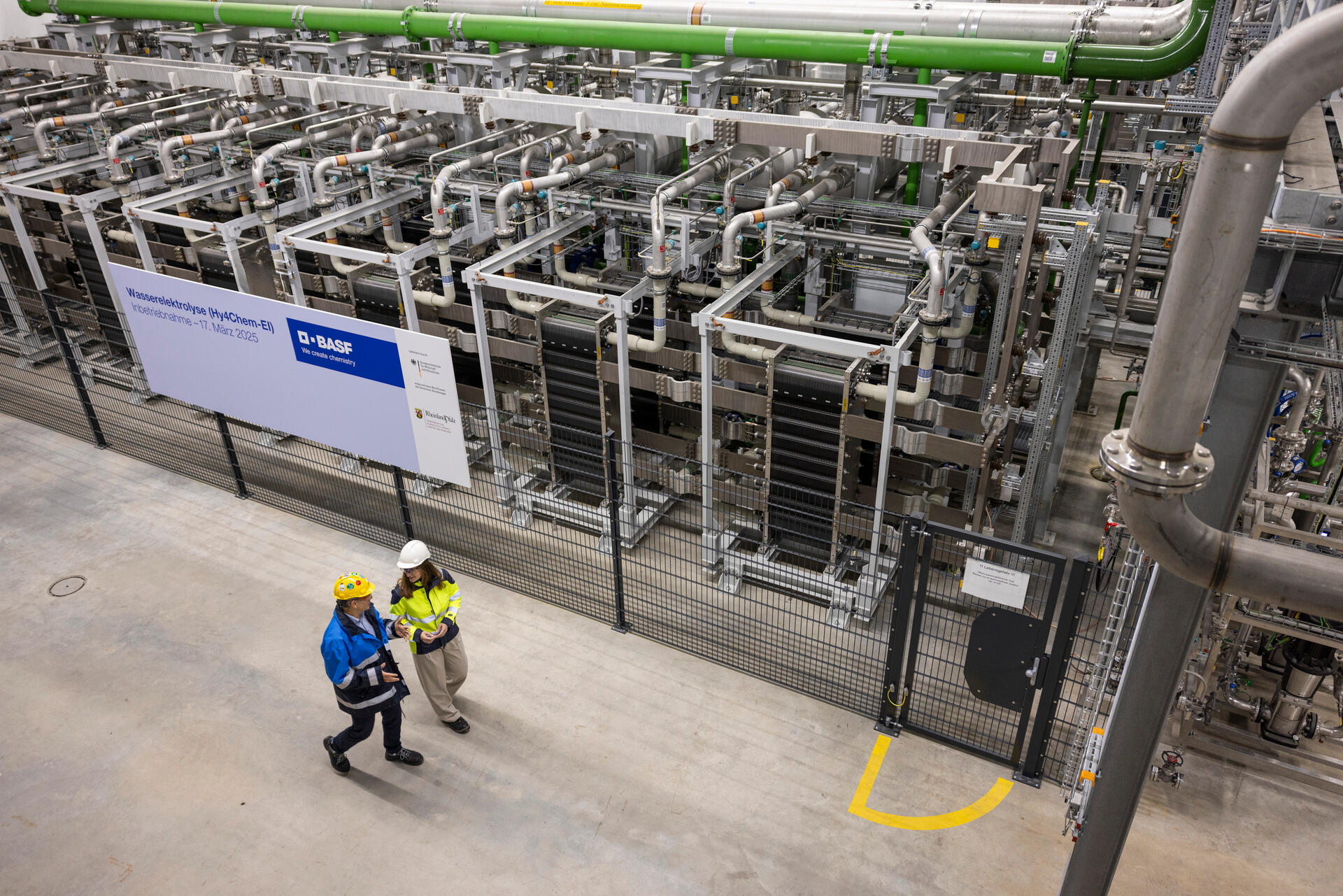
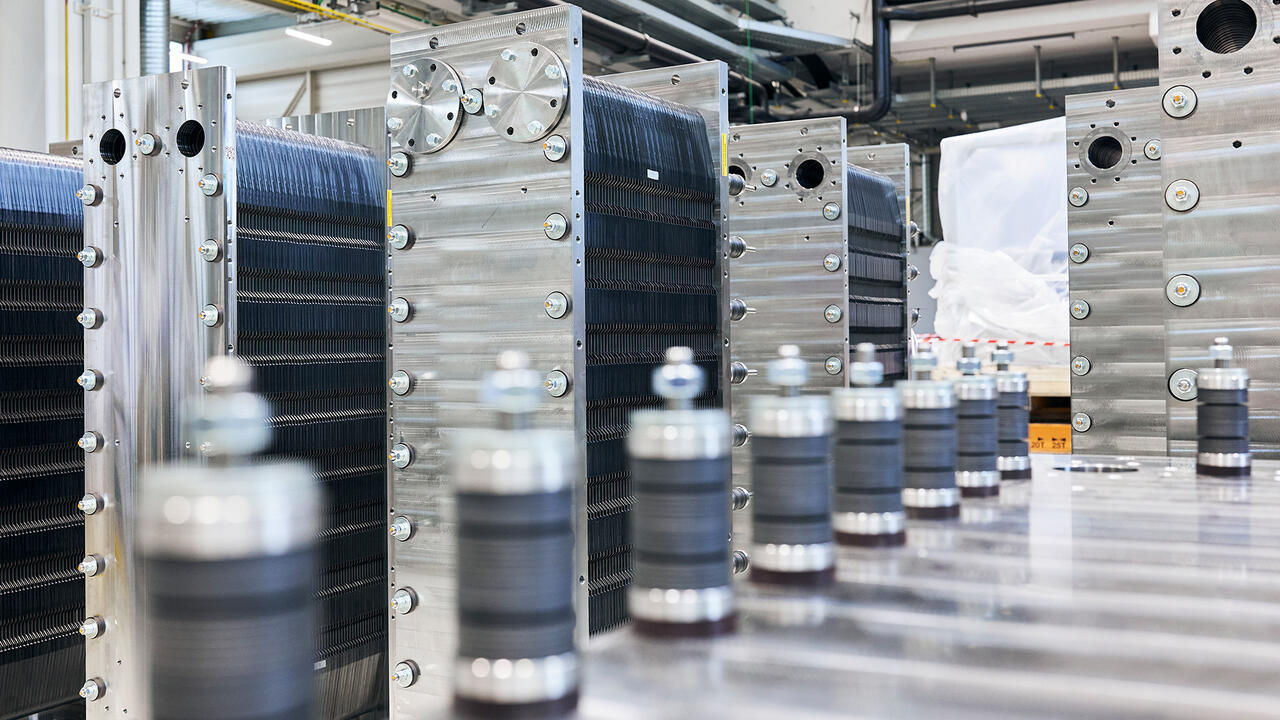
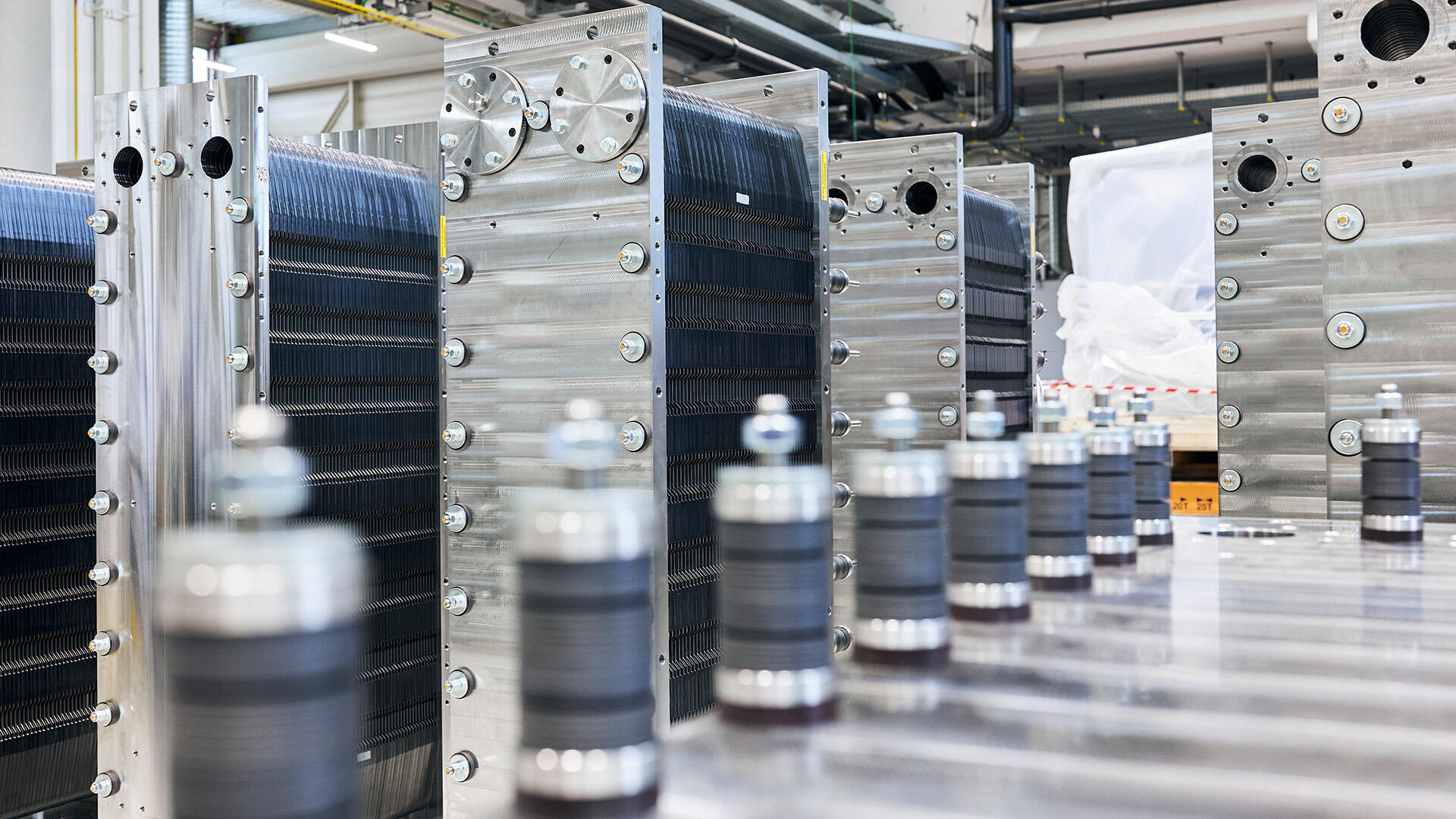
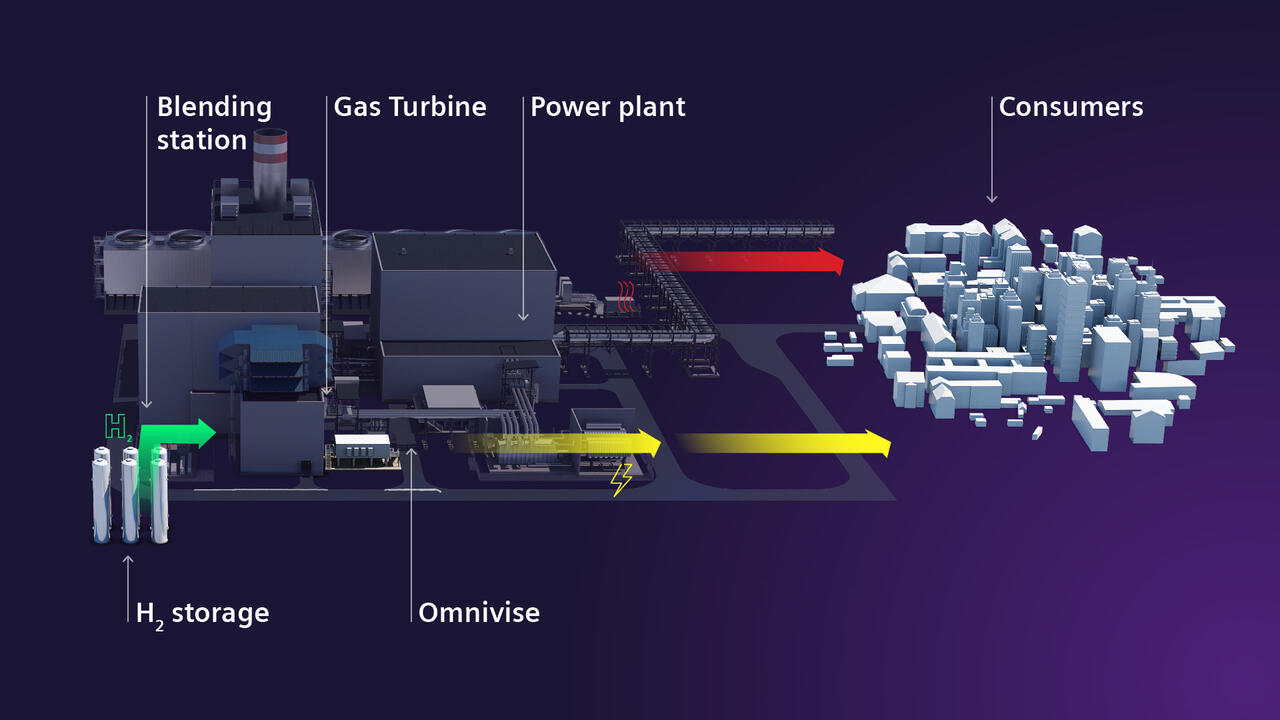
When existing gas turbine plants are made ready for hydrogen co-firing, the facility can be extended to produce and store its own hydrogen using Omterra Elyzers.
The below example shows an operational SCC-4000F power plant incrementally moving from 100% methane operation to 100% hydrogen using Elyzer P-300 electrolyzers with storage as shown in the images above.
By transforming the conventional power plant into a hydrogen energy plant, the facility is able to leverage cheap renewable energy from the grid and turning that into hydrogen for use when the gas turbine facility is being called upon. This feature brings immediate CO2 emissions reduction, it saves money on CO2 taxation and provides an energy storage capability with potential gains from storage credits.

Explore solutions for large scale sustainable hydrogen production from water and renewable energy.
Download hydrogen power plant brochures
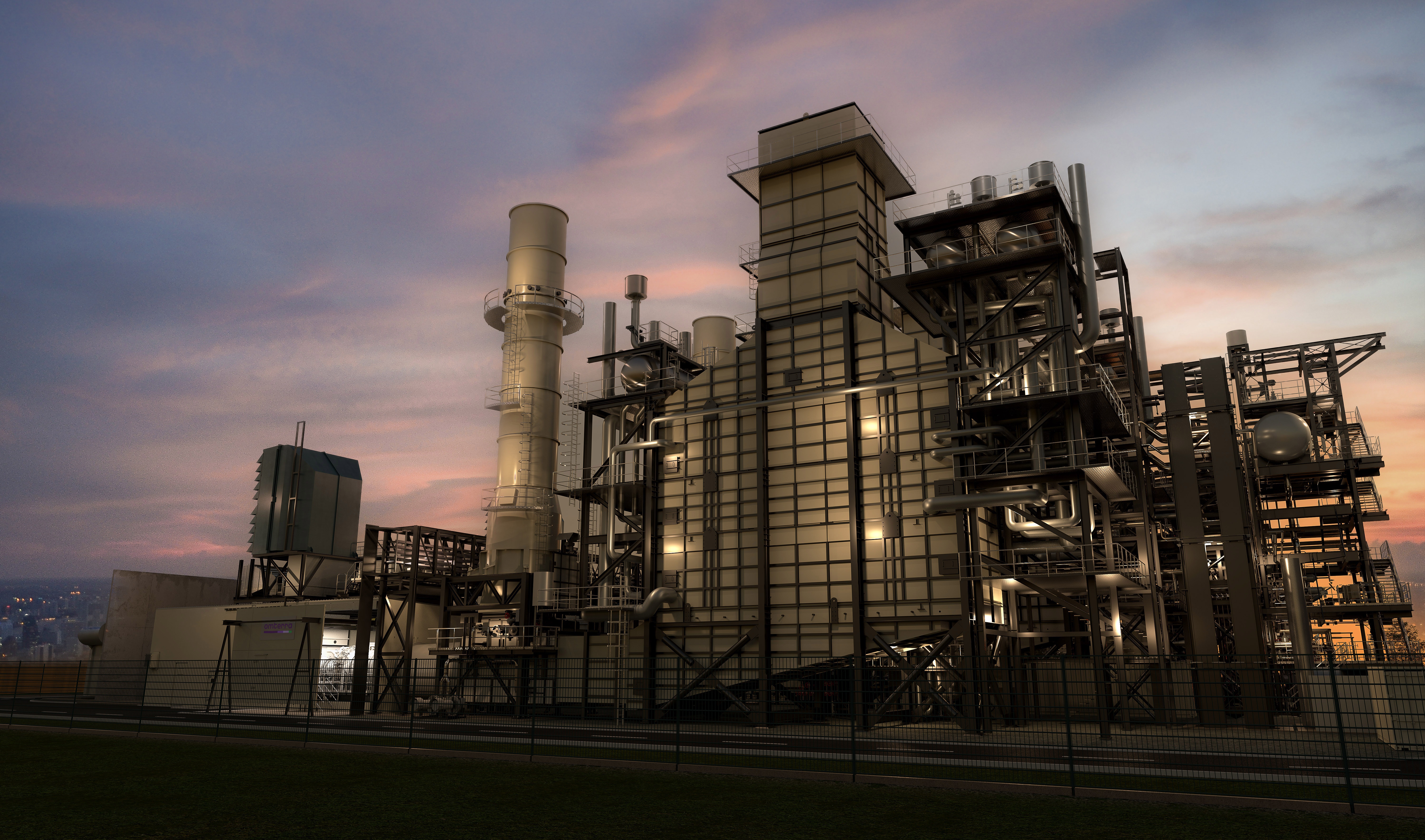
H2-ready power plant concept
An optimized H2-Ready concept can reduce future retrofit costs, while keeping front-end investments low.

Hydrogen Power Plants - Service and Solutions
Serving the entire power generation value chain on your PATH2Decarbonization.

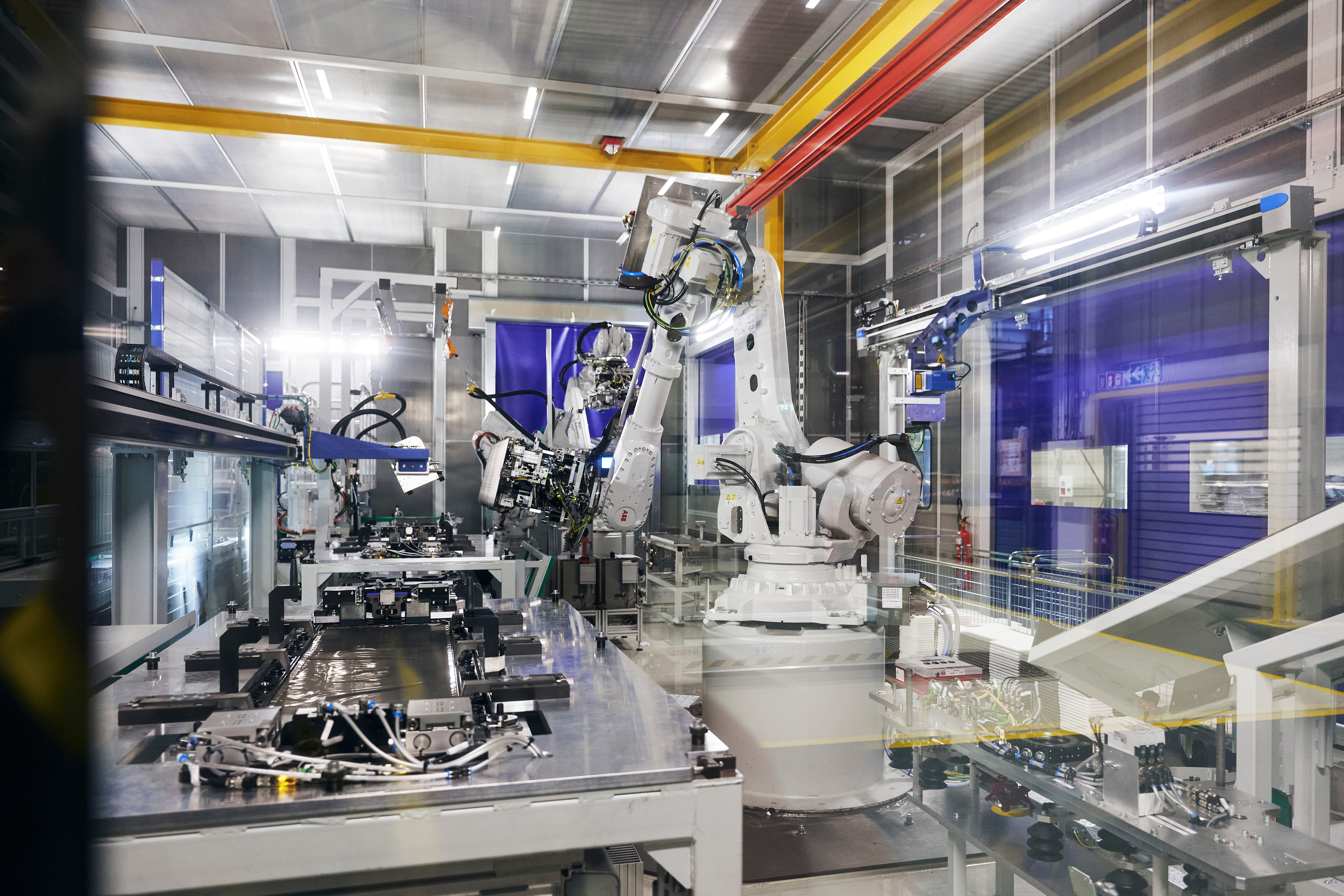
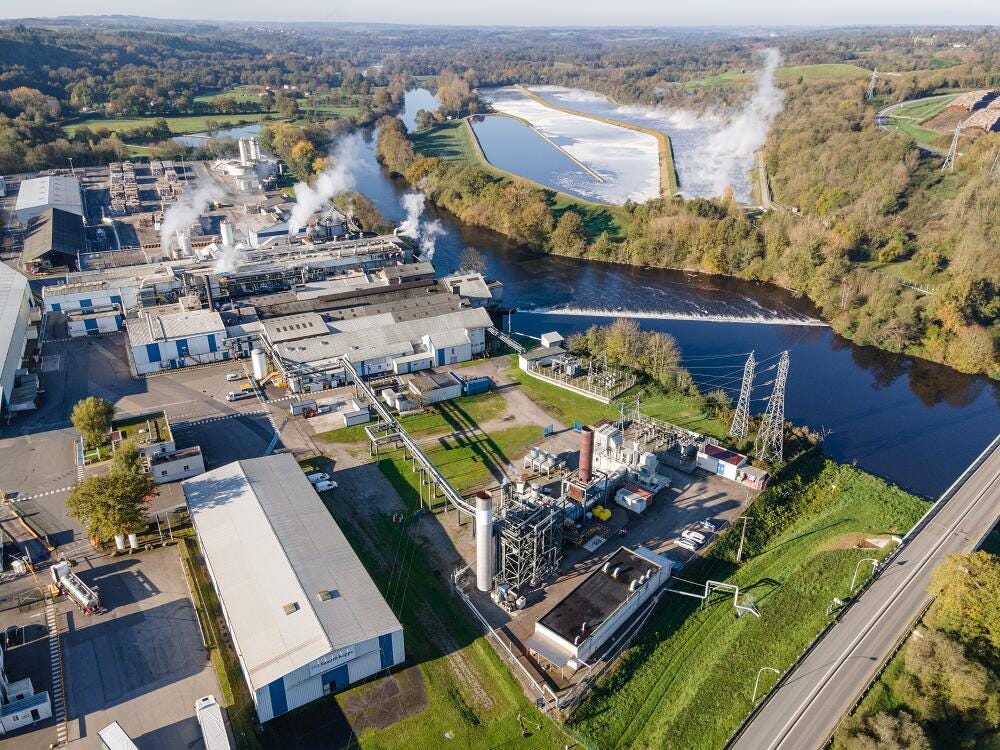
HYFLEXPOWER demonstrates 100% hydrogen operation
In a world’s first, OGT-400 powered CHP plant demonstrates viability of on-site integrated power-to-H2-to-power concept.
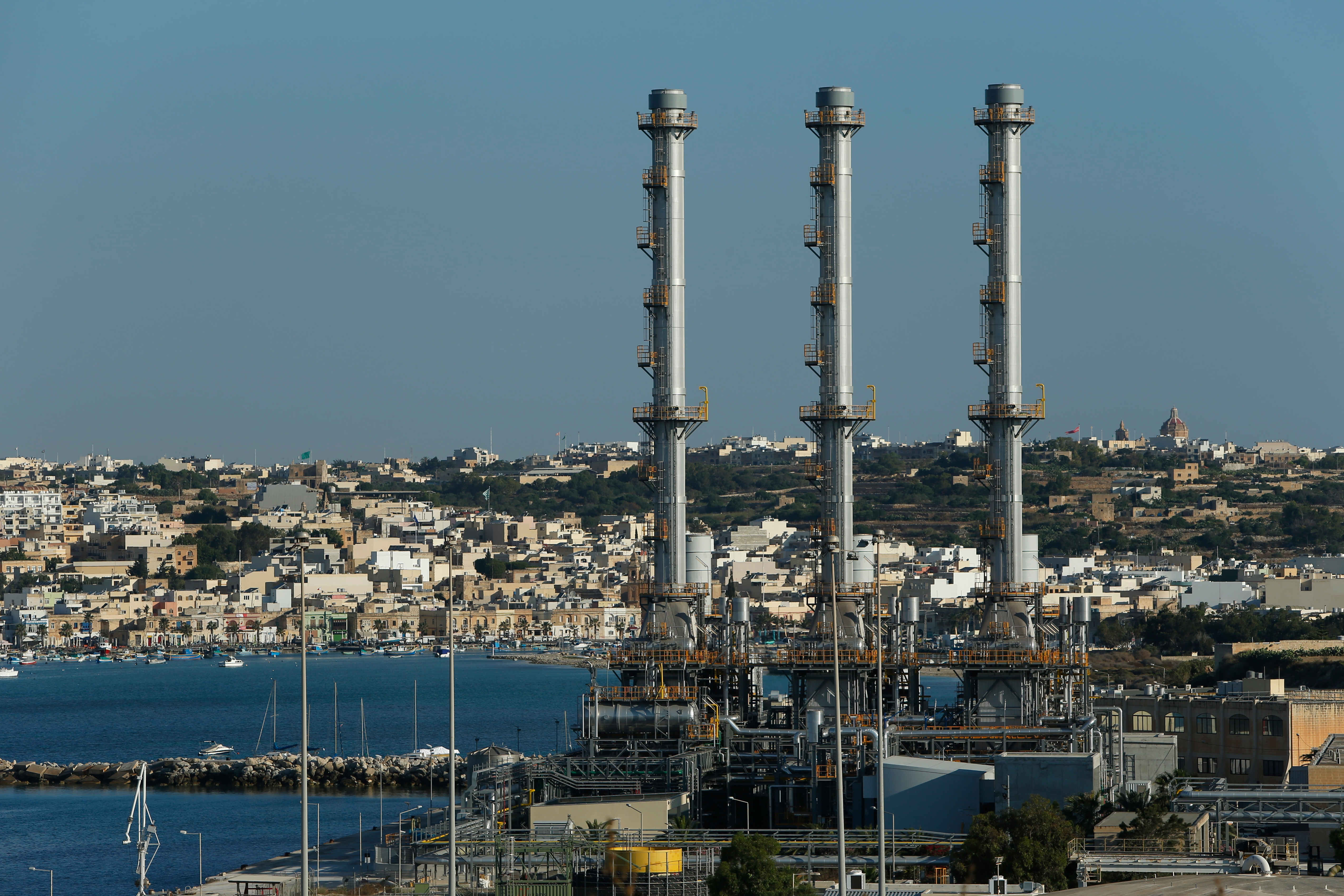
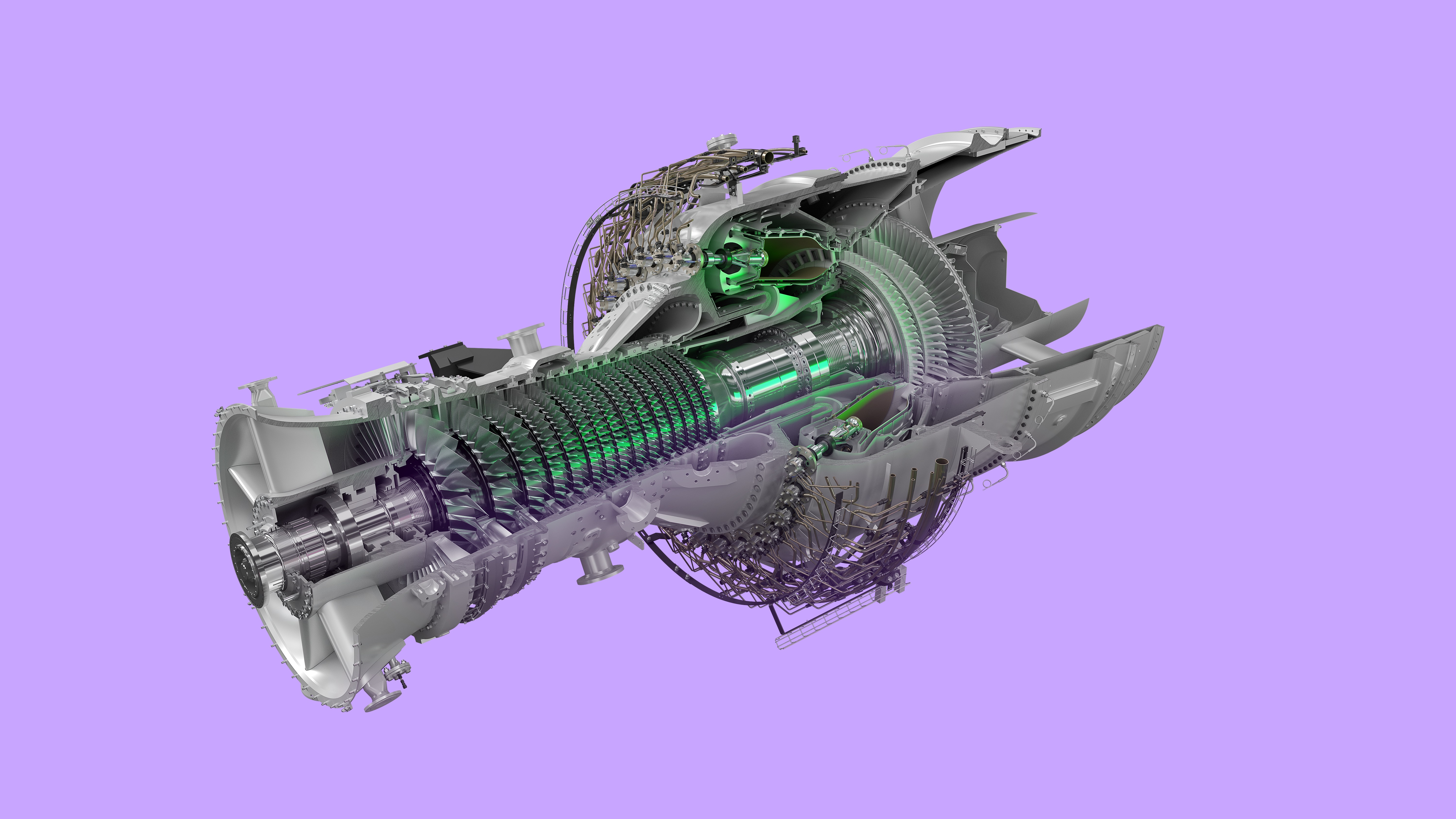
Gas turbines
Aeroderivative, industrial and heavy-duty gas turbines up to 593 MW
Sustainable fuels
Sustainable fuels can significantly reduce carbon emissions
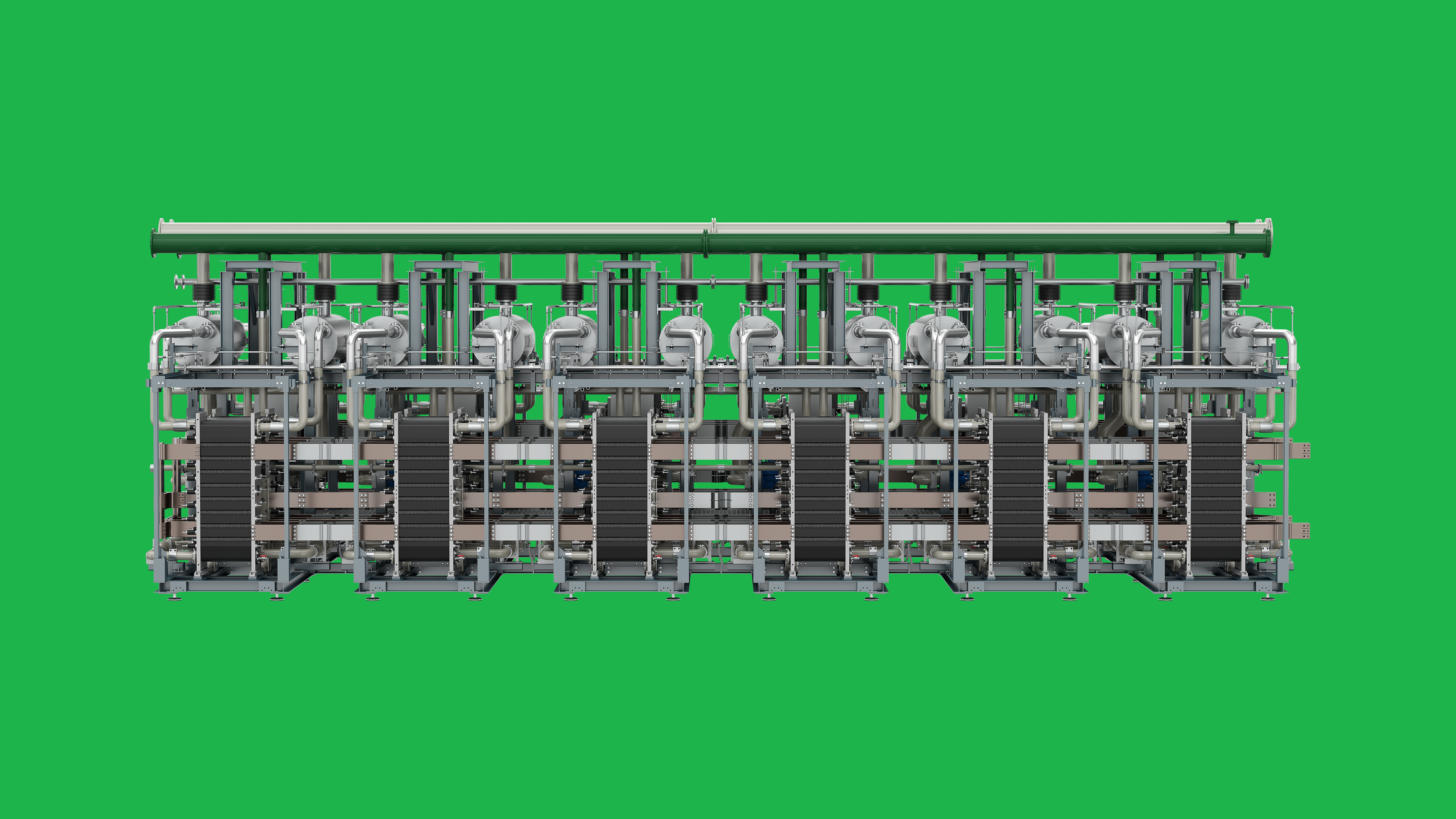
Electrolyzers
Electrolyzers for industrial-scale applications of renewable hydrogen
Would you like to learn more about hydrogen power plants?
Get answers: FAQs on hydrogen power plants
A hydrogen power plant is a facility that generates electricity using hydrogen as fuel. These plants either burn hydrogen in modified gas turbines or use fuel cells, where hydrogen and oxygen react to produce electricity. A key advantage of gas turbine plants is their ability to run on a mixture of natural gas and hydrogen. Additionally, existing gas-fired plants can be converted to run on hydrogen, providing a flexible, lower-carbon energy solution.
A hydrogen power plant based on gas turbines operates similarly to a conventional gas turbine power plant, but it uses hydrogen instead of natural gas as fuel. First, ambient air is compressed in the gas turbine's compressor section to increase its pressure and temperature. Then, the compressed air is mixed with hydrogen in a combustion chamber and burned at high temperatures. This creates a high-pressure gas that expands through the turbine section. The expansion spins the turbine, which powers the generator.
Hydrogen-fired gas turbines emit only water vapor, making them a clean solution for decarbonizing electricity generation. H2 can be produced from surplus renewable energy and stored for later use, enabling power plants to deliver dispatchable electricity when solar or wind are unavailable. The rotating masses of the turbine and generator contribute to grid stability by providing inertia and supporting voltage and frequency regulation. Additionally, many existing natural gas turbines can be retrofitted to run on hydrogen or hydrogen blends, easing the transition to cleaner energy.