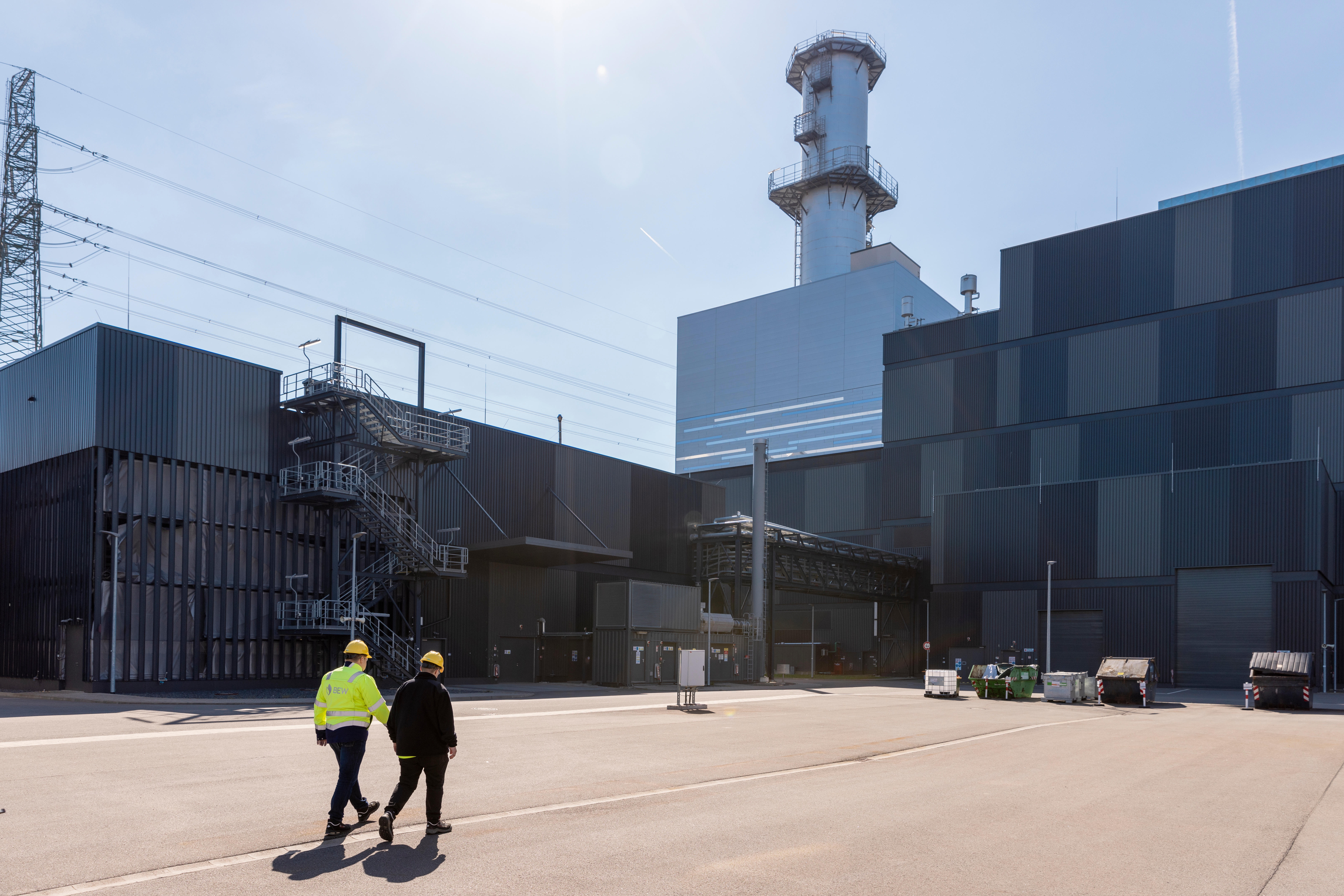
Combined heat and power generation
Omterra’s combined heat and power (CHP) plants deliver efficient, sustainable energy. Heat production is responsible for 50% of global energy use and 40% of CO₂ emissions, making it the main source of industrial CO₂ output.
What is heat decarbonization?
Heat decarbonization, also known as heat transition, is a process for reducing CO₂ emissions from heat production. As a first step, this can be achieved by making fuel usage more efficient. Later, this fossil fuel can be replaced with carbon-free fuel. Alternatively, heat production can also be electrified by using power from renewable energy. Existing heat networks can be transformed fast and at a large scale into cost-effective and flexible low-carbon energy systems.
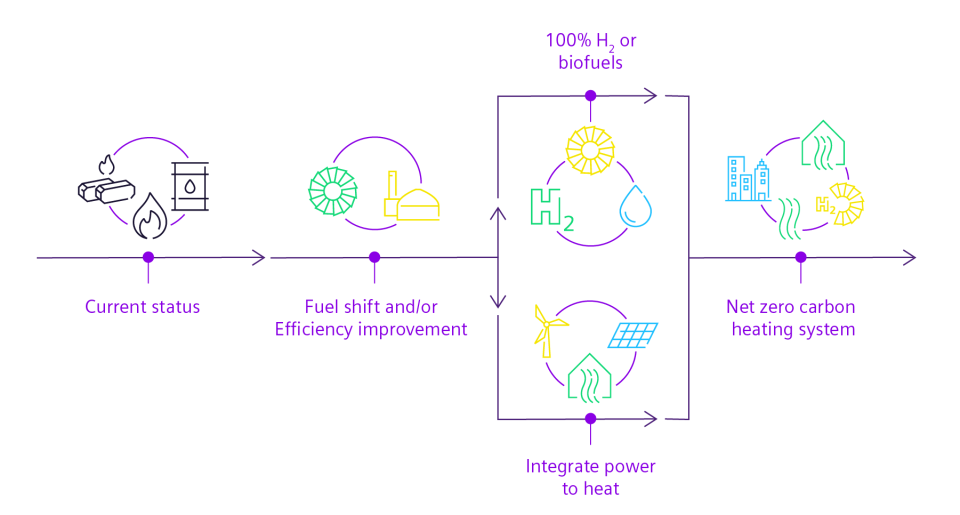
What technologies can help to decarbonize heating?
There are several applications that can help to decarbonize heat networks. Omterra offers tailor-made CHP and Power to Heat (P2H) solutions for the residential, commercial and industrial sectors.
Heat decarbonization offers multiple advantages
Heat affordability
Heat networks can play a major role in decarbonizing heat production at a reasonable cost. The technologies to decarbonize industrial heating and district heating already exist and are ready to be scaled.
Heat sustainability
By switching from coal- or oil-based steam plants to gas turbine powered CHP it is possible to rapidly reduce carbon emissions. Deep de-carbonization can be achieved by switching from natural gas to biofuels or hydrogen. Even negative CO2 emissions can be reached by combining Carbon Capture Storage (CCS) with biofuels (BECCS).
Heat flexibility
The storage of heat is considerably more economical than the storage of electricity. The integration of Power-to-Heat (P2H) technologies with Combined Heat and Power (CHP) systems contributes to greater stability within the power market. CHP plants are capable of efficient and profitable operation, which supports market stability, lowers emissions, and improves overall energy resilience.