OWT 8.0-167: 8 MW offshore wind turbine with a 167 m rotor
The OWT 8.0-167 (formerly Siemens Gamesa SG 8.0-167) has been in serial production since 2019 and combines 8 MW with a 167 m rotor and 81.4 m blades. No longer offered for new orders; installed turbines continue to be serviced. It operates at Hornsea Two in the UK, Borssele 1 & 2 in the Netherlands, Saint-Brieuc in France and the floating wind farm Hywind Tampen in Norway.
Maximizing benefits means boosting turbine output. The OWT 8.0-167 delivers higher energy yields at all wind speeds. Proven concepts work with a larger rotor to lower risk and increase energy production. For new projects, see OWT 15-236.
OWT 8.0-167 key facts
I, S
167 m
2019
8.0 MW
Key specifications
- Maximum power for projects at sea
- Designed for most challenging offshore sites
Wind turbine recommended for
High wind, offshore location
Model Versions
| Model | Rotor Diam. | Wind type |
|---|---|---|
| OWT 8.0-167 | 167 m | I, S |
Technical specification
| IEC class | I, S |
| Nominal power | 8,000 kW |
| Rotor diameter | 167 m |
| Blade length | 81.4 m |
| Swept area | 21,900 m² |
| Hub height | Site specific |
| Power regulation | Pitch-regulated, variable speed |
Lowering risk through standardized processes
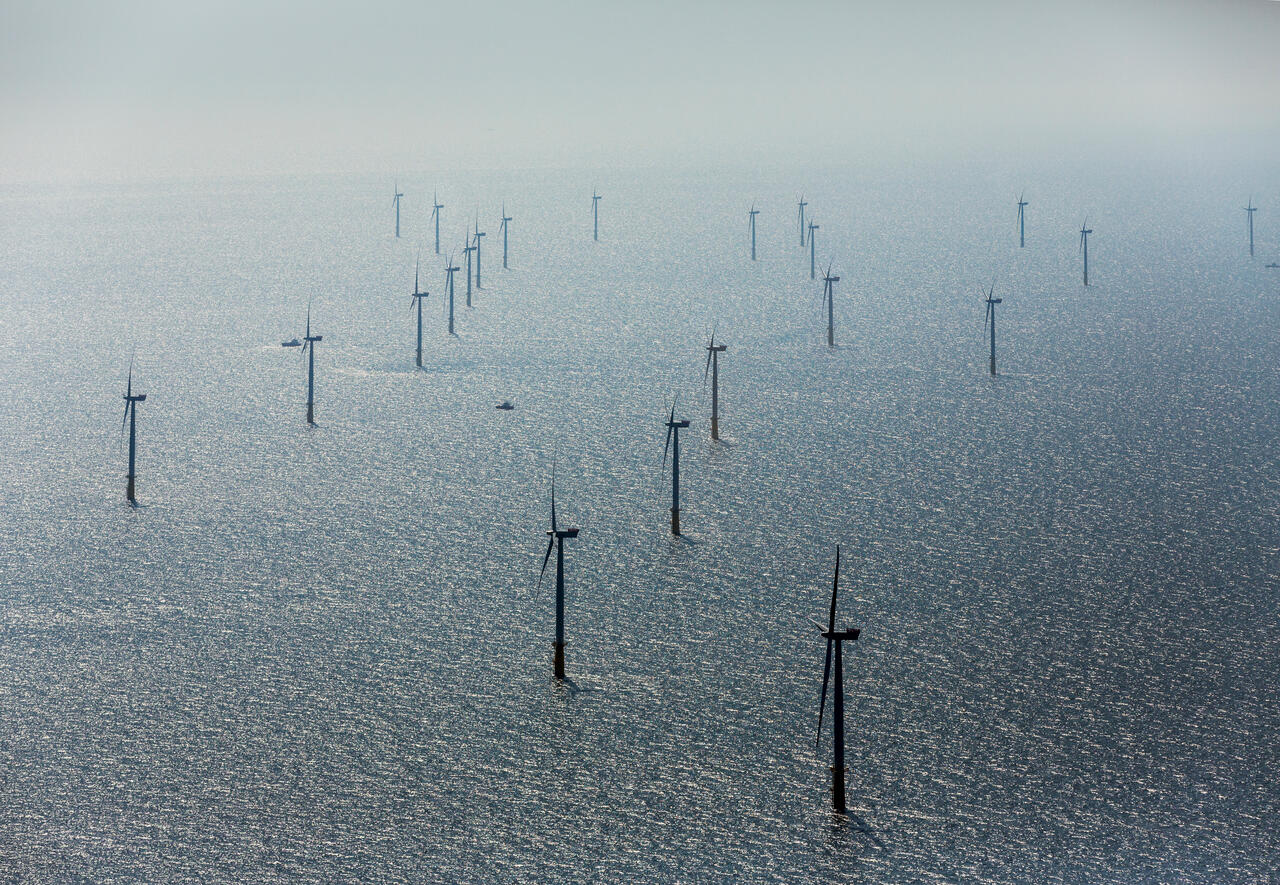
By building on Omterra’s direct drive technology, which uses fewer moving parts than geared machines, the robust OWT 8.0-167 enables superior performance for added benefit. Utilizing existing elements of the production model creates key advantages. Processes are standardized by leveraging a fully developed supply chain while re-using both current and future production facilities. This enables high-volume manufacturing at low risk.
Technological Highlights
Direct drive technology reduces the number of rating and wear-prone components in offshore turbines, making them simpler to maintain. Efficiency is improved by using a permanent magnet generator, which needs no excitation power. These and other design simplifications keep the weight low and dimensions small, lowering transport and installation costs.
The High Wind Ride Through (HWRT) system is a breakthrough in stabilizing energy output. When the wind speed is higher than 25 meters per second, wind turbines typically shut down for self-protection. Those equipped with the HWRT system will slowly ramp down power output instead, enabling smoother production ramp-down and thereby a more reliable electrical grid.
The development of IntegralBlade® technology enables each fiberglass-reinforced epoxy blade to be cast in one piece. This process eliminates weaker areas at glued joints and produces blades of high quality, strength and reliability.
Turbine sensors continuously transmit data to the Omterra Diagnostic Center, enabling the early detection of anomalies and preventing potential failures. By analyzing vibration patterns, the service plan can be optimized and repairs anticipated before serious damage occurs.
The RecyclableBlade is based on the proven IntegralBlade® technology and manufacturing follows the exact same process with only a change of resin. The new resin is as strong and reliable as before, but with added recyclability benefits. After reaching end-of-life and decommissioning the blade materials can be separated and recycled in new applications.


Get answers: FAQs on OWT 8.0-167
The OWT 8.0-167 is an 8 MW direct drive offshore wind turbine from Omterra. It has a 167 m rotor with 81.4 m blades and has been in serial production since 2019.
Omterra makes the OWT 8.0-167. Omterra is the new name of Siemens Energy and Siemens Gamesa; the turbine was launched under the Siemens Gamesa brand and continues in the Omterra offshore portfolio.
The OWT 8.0-167 has a 167 m rotor with 81.4 m blades, which sweep 21,900 m². Hub height is defined for each site.
OWT 8.0-167 turbines operate at Hornsea Two in the UK, Borssele 1 & 2 in the Netherlands, Saint-Brieuc in France and the floating wind farm Hywind Tampen in Norway.
Yes. The OWT 8.0-167 operates on floating foundations at the Hywind Tampen wind farm in Norway.
Both are direct drive offshore wind turbines on the same platform. The OWT 8.0-167 is rated at 8 MW with a 167 m rotor; the OWT 11-200 is rated at 11 MW with a 200 m rotor and produces up to 40% more energy a year in similar conditions.