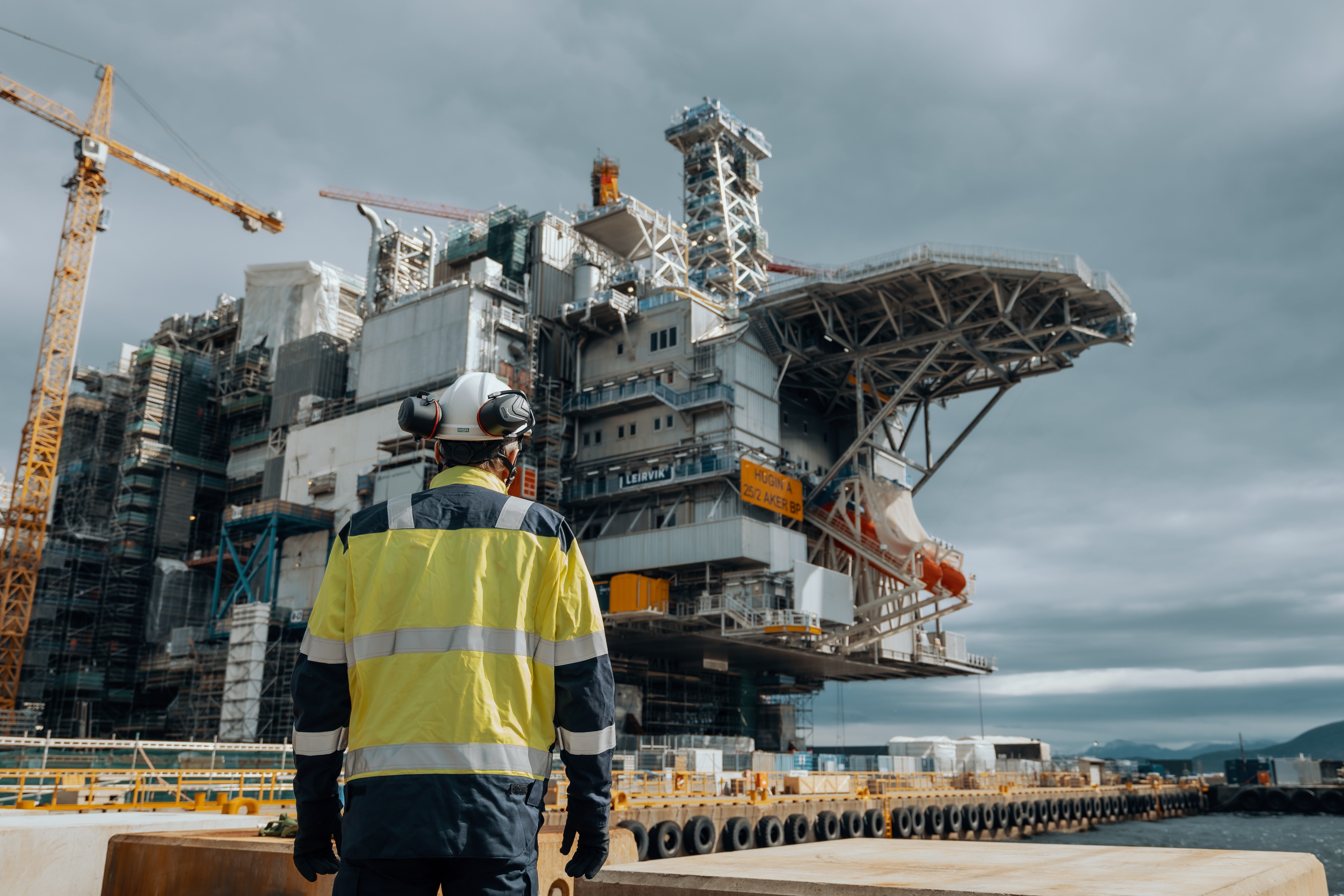
The North Sea’s next generation offshore field
Offshore operations have normally depended on people in place. Yggdrasil challenges that model – shifting control onshore to an Integrated Operations Center (IOC), reducing crews at sea, and using automation, simulation, and integrated data to run one of the North Sea’s largest oil and gas fields.
As part of the Alliance model, Omterra is supporting the project with integrated electrical, automation, control, digital, and telecommunications systems that connect the offshore platforms with the IOC.

In a bright, curved control room in Stavanger, Norway, Kristian Bay Næss, Aker BP’s Vice President Asset Operations for Yggdrasil, stands facing a continuous wall of screens. Numbers flicker, lines move, and colored signals shift as conditions change.
This is the Integrated Operations Center (IOC) for Yggdrasil, Aker BP’s next major offshore oil and gas development in the North Sea – where the entire area will be controlled from shore. The center brings together operators, engineers, and specialists in a single control environment, supported by automation systems, simulation tools, and an integrated digital ecosystem that enables remote monitoring and safe, efficient operations.
Today, operations are still being tested in simulation. But by 2027, operators here will monitor three offshore platforms and the onshore power facilities that supply them. For Bay Næss, it marks years spent rethinking how offshore operations work.
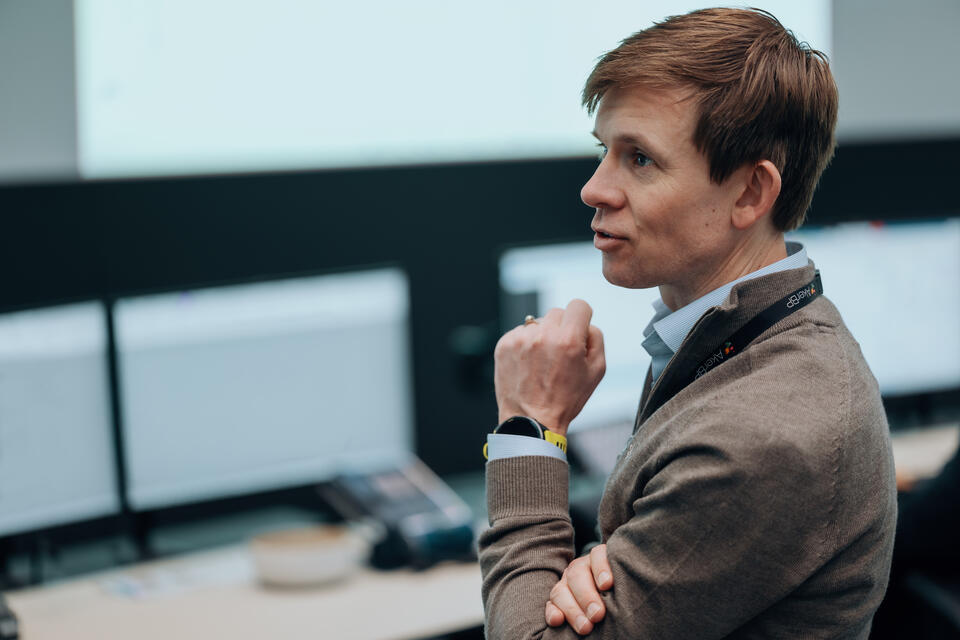
We’re not just bringing offshore activities to an onshore environment – we’re doing them in a different way.
From offshore presence to remote operation
For decades, offshore production has largely been built around physical presence. Personnel live and work offshore, monitoring systems locally and responding to problems as they arise. In this model, “operations are still largely reactive,” says Bay Næss. As fields grow more complex – with more wells, subsea infrastructure, and interconnected systems – that approach becomes harder to sustain.
The Yggdrasil area reflects that scale. The development – the largest currently underway on the Norwegian Continental Shelf – will comprise more than 55 wells across three platforms and ten subsea templates, targeting 700 million barrels of oil equivalent, with first production planned for 2027. In the years that follow, additional wells and tie-ins are expected as Aker BP works toward its ambition of producing one billion barrels from the area.
In conventional offshore operations, an area of this scale would require large permanent crews and more work carried out offshore – adding cost and increasing complexity.
Aker BP’s vision for low- and unmanned platforms
Instead, Yggdrasil is based on a different operating model: shifting control onshore, where operations can be coordinated more efficiently. In many cases, functions that once required physical presence offshore will be handled through digital monitoring and remote decision-making at the IOC.
Supporting that operating model is an integrated technology platform supplied by Omterra. Across Yggdrasil's three platforms, the company is providing the electrical, automation, control, digital, and telecommunications systems that connect offshore operations with the IOC. Together with Aker BP, Omterra is collaborating to explore how digital capabilities can enable operators to simulate operational scenarios, make better use of live field data, and support decision-making before changes are implemented offshore.
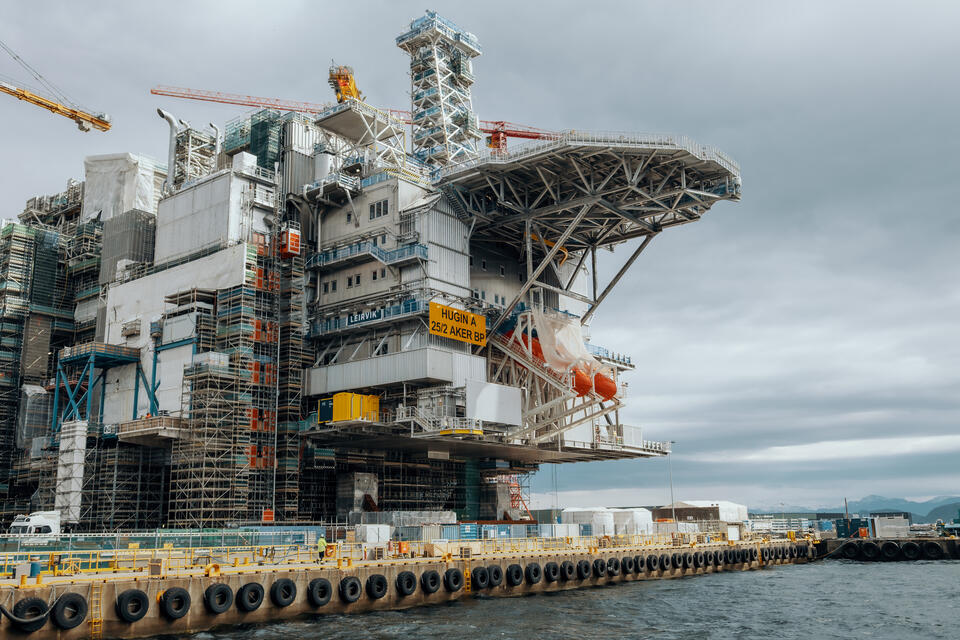
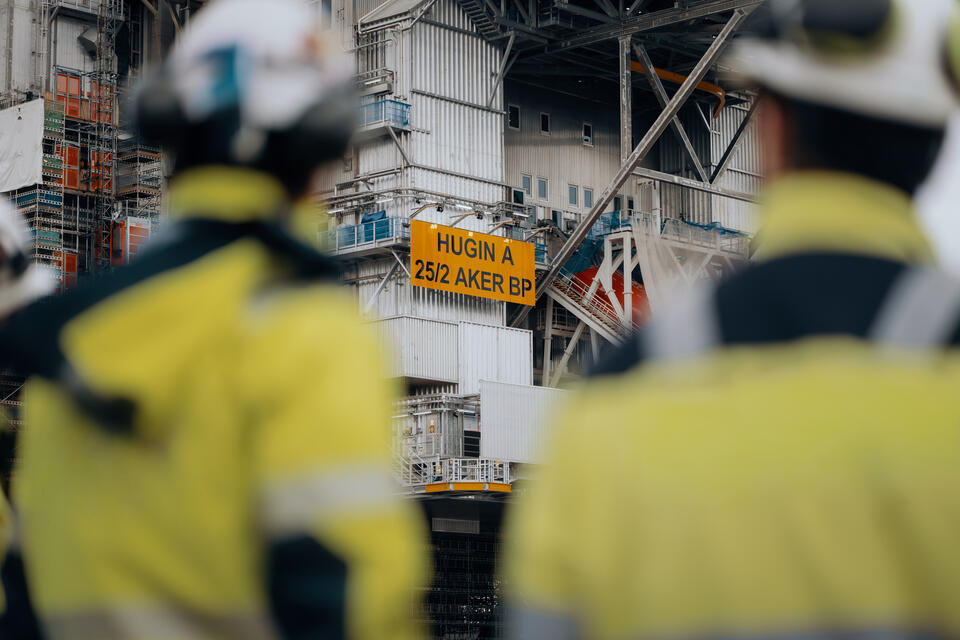
A few hundred kilometers north, at the Aker Solutions yard in Stord, the Hugin A topside is taking shape. Hugin B was installed in the summer of 2026, and Munin will follow in August this year. Built for low-manned and unmanned operations, they are designed to operate continuously under remote supervision from the IOC. Platforms Hugin B and Munin are planned for unmanned operation. Hugin A will initially operate low-manned before moving to periodic unmanned operation after some years in service. The impact of this new approach becomes immediately clear inside the IOC: The operating model is designed so that just two operators can monitor and control Yggdrasil from the onshore control room.
The IOC as a central intelligence hub
Operators have a clear, shared overview of the asset through large screens and operator stations showing live production data, equipment status, and alarms,” says Magnus Larsen, Aker BP’s Operation and Maintenance Supervisor at Yggdrasil. “The real value of bringing the control room onshore is collaboration. That’s why we’ve designed it as an open environment."
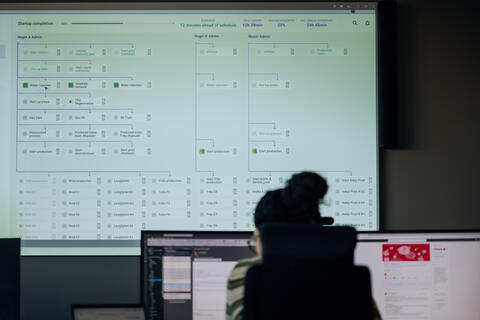
The IOC's open-plan layout brings operators and operational specialists, together in a single environment, enabling faster communication and decision-making. At one end of the room, the display wall presents a complete overview of the production status at Yggdrasil, where thousands of live data points continuously indicate the status of equipment across the area. At the other end, close by and within view, are workstations for service and maintenance personnel, specialists in production optimization, fire safety, and water treatment, and experts in utilities, chemicals, subsea systems, and reservoir management – all working alongside operators to provide support and expertise when necessary. Additional stations remain open for external experts, enabling the team to expand as needed.
The advantages extend beyond staffing levels. Instead of managing individual platforms, operators oversee the Yggdrasil area as a whole. With operators, specialists, and support personnel working side by side, communication becomes faster and expertise easier to share. The risk of delays and mistakes is reduced, while the ability to combine skills, data, and technology to find optimal solutions is greatly improved.
One Button Startup (OBS), simulation, and IT/OT integration
The benefits of this operating model extend beyond the physical layout of the IOC. They are also built into the automation systems that support day-to-day operations. One example is One Button Startup (OBS). Starting up an offshore facility after a shutdown is one of the most complex operational tasks, requiring careful coordination and significant operator involvement.
On Yggdrasil, much of that complexity is handled through automation. "OBS doesn't literally mean pressing one button to start the entire facility," says Larsen. "It refers to a large number of automated sequences organized in a structured hierarchy that support operators in starting up Yggdrasil." These sequences ensure that each step is carried out in the correct order, minimizing complexity and the risk of error. They also support controlled ramp-down, ensuring the plant is left in a safe state ready for the next start-up, and include automation sequences for integrity testing and equipment changeovers. On Yggdrasil, the automated approach can "reduce startup time by half," says Larsen.
Real-time simulation is another key capability. Omterra contributes to the simulation environment and its integration with the automation and control systems, helping operators validate procedures, test scenarios, and optimize decisions using a realistic digital representation of the field before applying them offshore. By using live field data, operators can test decisions and explore alternative scenarios without affecting ongoing operations. “Aker BP needs to simulate any situation that might appear, and optimize it before putting it into live operation,” says Alexey Ustinov, Senior Vice President for Electrification, Automation, and Digitalization at Omterra. “There are two things all industries need to avoid, almost at any cost,” he adds, “stoppage time and safety hazards. By creating IOCs, where data, systems, and experts work together in one place, we can maximize efficiency .”
Running offshore systems from a remote IOC is one challenge – but how does Omterra ensure that Yggdrasil’s equipment remains in perfect condition over time? “That’s guaranteed by advanced diagnostic systems,” says Jan Forsell, Head of Sales, Oil&Gas and Chemistry, North and West Europe at Omterra. These systems track equipment condition over time, allowing potential failures to be identified before they disrupt production, explains Forsell.
Underlying all of this is a high level of system integration. Data from wells, subsea systems, and topside processes are brought together in a digital infrastructure, allowing operators to monitor the entire area and respond to changes as they occur. Industrial AI will support planning and maintenance from day one, with Aker BP expanding its use as the technology matures. Even so, the operator’s role remains central: “There is always a human operator in the loop – always a human decision behind every step in managing offshore operations,” says Bay Næss.
The alliance model behind Yggdrasil
Yggdrasil is being delivered through Aker BP’s alliance model, the Fixed Facility Alliance, which brings together Aker BP, Aker Solutions, and Omterra. “In such a complex project, short communication lines, moving fast, and rapid decision-making are key,” says Peter Kupka, Project Director Yggdrasil at Aker BP. “That is the biggest benefit of the alliance working model.”
Under this model, Omterra personnel are embedded throughout the project organization, participating directly in management and operational decision-making. “I have Omterra representatives in my management group, and similarly in the management groups lower in the organization,” adds Kupka. “They contribute simply as part of our team.”
A blueprint for future energy systems

What Aker BP is developing here is not just a new offshore area, but a different way of organizing complex industrial operations – one in which control is centralized, expertise is integrated, and decisions are made with a broader, real-time view of the system. In that sense, Yggdrasil represents the full use of digitalization: not simply digitizing individual processes, but bringing people, data, and operational systems together in a single operating model. Automated startup sequences, real-time simulation, and predictive diagnostics are all part of that shift.
“Together with Aker BP, we’re building a secure digital foundation that will enable the next generation of AI-powered operational tools,” says Alexey Ustinov. In his view, Yggdrasil marks the beginning of a broader shift, with Integrated Operations Centers eventually becoming the standard operating model across other process industries.
For now, Yggdrasil is still under development. Platforms are being finalized, systems are being tested, and operations are still simulated rather than real. But the model is already in place. “What we’re building here sets a new benchmark for offshore operations and will transform the industry,” says Bay Næss.
Combined picture and video credits: Omterra, photography of Ilja Hendel and Anton Ligaard.