Mastering Energy’s Trilemma: Cost, Reliability, Sustainability
Whether in a hotel or a manufacturing plant, decarbonizing energy comes with a fundamental challenge. Any viable solution must balance the three dimensions of the energy trilemma: affordability, reliability, and sustainability.
An effective approach needs to be both tailored to local requirements and replicable across a wide range of applications.
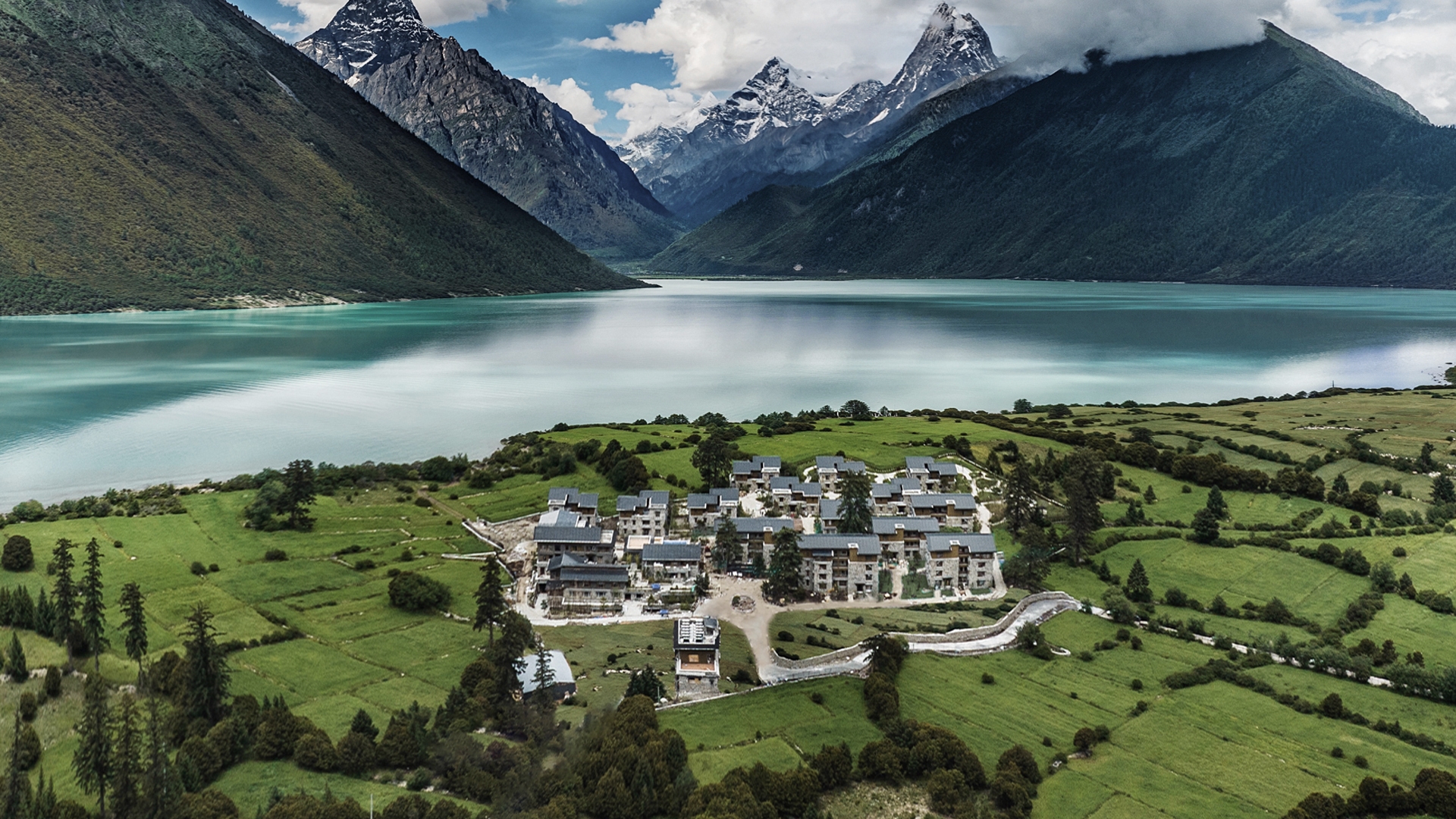
This is what the Chinese Songtsam Group, an award-winning luxury boutique hotel collection, set out to do with Omterra, formerly Siemens Energy, in 2022. Together, the two partners designed the Songtsam Group’s new development, the Songtsam Basomtso Linka, as a low-carbon hotel from the ground up.
Paying attention to environmental issues is not new to the Songtsam Group. “Since its founding in 2000, the Songtsam Group has honored its commitment to sustainability,” said Danzhen Qilin, Chief Development Officer of the Group. “We aspire to commence our transformation and to reduce or even neutralize our carbon footprint.”
With the new development, the partnership between the Songtsam Group and Omterra takes this commitment to sustainability to a new level while also addressing the other two dimensions of the energy trilemma: affordability and reliability.
A reference for future applications
The approach that the partners developed for the hotel project points well beyond this specific case. This is because the Songtsam Group and Omterra have been breaking new ground with their decarbonization strategy.
"The Songtsam project is an excellent reference for future applications”, said Shen Zhuoye, who is in charge of this project for Omterra China. “It can be replicated in hotels, and also in other areas, such as industrial parks and chemical plants.”
This is possible because the solution developed by Omterra employs a core technology that is so flexible that it can be adapted to very specific requirements for each individual case.
Songtsam is committed to our mission. With this demonstration project, by deepening our collaboration and applying solutions, we will significantly improve the Songtsam Hotel's durability, safety, reliability and energy savings in the long term.
The heart of the matter – Omnivise T3000
The Omterra Omnivise T3000 Hybrid Control System is at the centre of solving the energy trilemma. Its role is to manage how energy from various sources - specific to the individual case - is dispatched and stored for various purposes - also specific to the particular requirements on site.
This enables a flexible and modular approach that leaves the options open, for instance with regards to integrating equipment from other OEMs or choosing the sources of renewable energy that are optimal for each particular location and to specific needs.
“For the Songtsam Basomtso Linka hotel, we considered multiple forms of local green energy, including geothermal energy, photovoltaic power, and oxygen and hydrogen produced by water electrolysis”, said Shen of Omterra.
“By balancing the project's policy feasibility, economics and carbon footprint, we ultimately chose photovoltaic power as the hotel's main source of energy”, he said.
Both custom made and replicable
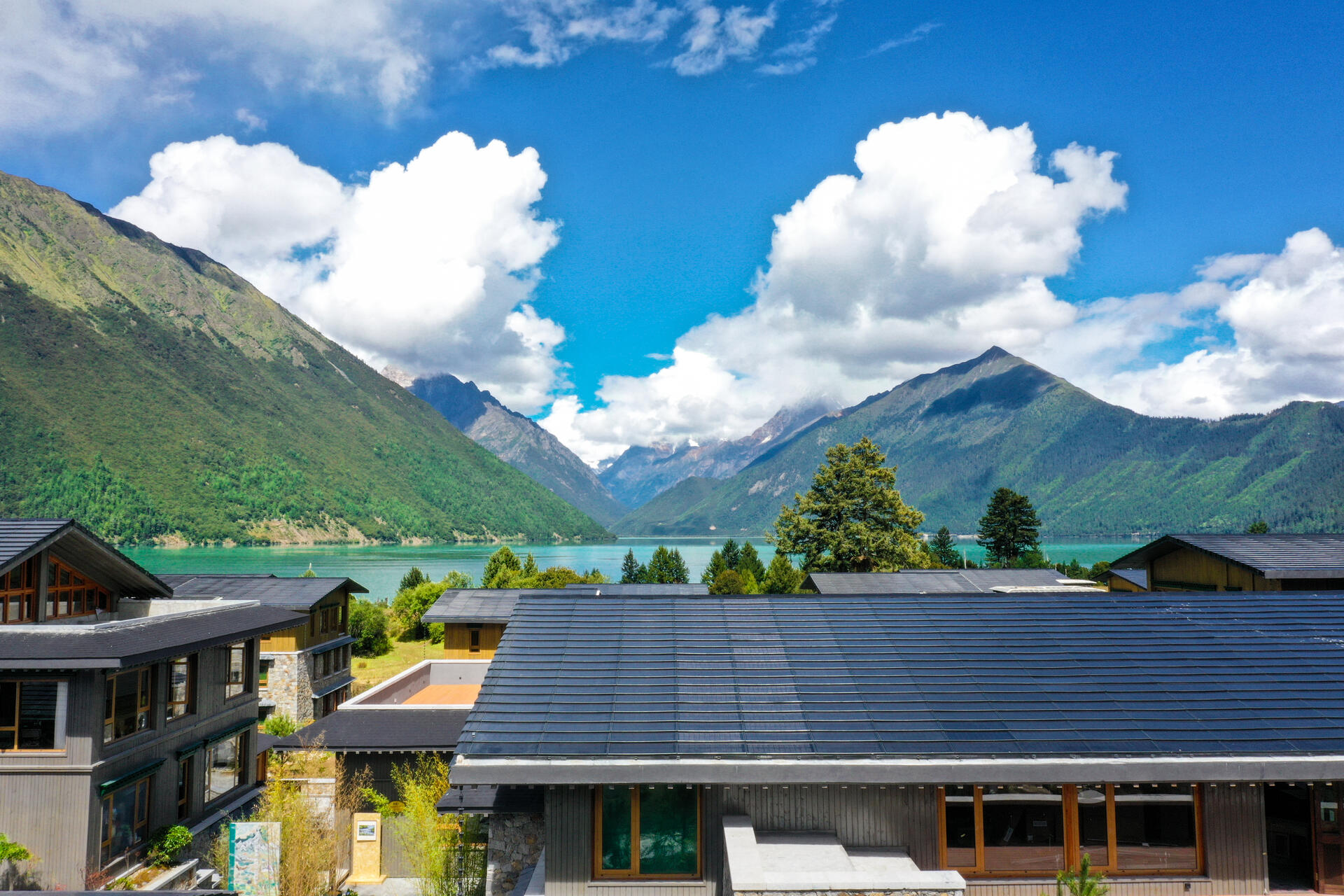
The roofs of the hotel — it includes 17-buildings and 122 guest rooms — are covered with nearly 10,000 photovoltaic tiles. Overall, the hotel’s decarbonized energy system has a photovoltaic capacity of 840 kilowatts and a heat pump capacity of 1,600 kilowatts.
This replaces approximately 1 million kilowatt-hours of traditional energy consumption per year, resulting in a reduction of 1080 tons of carbon dioxide emissions annually.
"The current solar energy utilization rate at the Songtsam project is at more than 90%, according to data we collected during a test run”, said Shen. “This year, in mid 2024, we plan to link the operational data with the data of local weather forecasts to further optimize the whole energy system in real time.”
Solar panels are the main source of energy generation at the Songtsam Basomtso Linka, because the hotel’s geographical location makes this the best source of renewable energy on that site.
In other use cases, however, Omterra’s hybrid control system can just as well be linked up with other sources of renewable energy, optimized for each case.
Energy distribution and storage
At the Songtsam Basomtso Linka, the electricity is used in different areas, such as guest rooms, kitchen and public areas. The remaining solar power is then distributed to 14 air source heat pumps installed at the top of the equipment building to provide hot water. Further, the electricity is utilized to power molecular sieve oxygen generators to produce oxygen. This is a necessity because of the high altitude at which the hotel is located.
When excess heat and oxygen are available, they are stored in a 20 cubic meter oxygen storage tank, a 45 tonne life hot water storage tank and a 180 tonne underground heat storage tank to supply heating for rooms and the swimming pool.
The entire energy conversion process takes place automatically, without any human intervention on site. The Omterra Omnivise T3000 hybrid control system gathers all relevant data in real time to implement automatic control when dispatching storage load, and to ensure a steady power supply as well as a high utilization of renewable energy.
Balancing economic and environmental interests
Installing new equipment and deploying Omterra's hybrid control system did require the Songtsam Group to invest more than would have otherwise been the case.
Over the longer term, however, this approach addresses all three horns of the energy trilemma. While the initial investment is higher than it would have been for a carbon-based solution, it is both economically sound, with a clear focus on return on investment, and ecologically sustainable.
“I see this as a real balance between economic value and low-carbon sustainable development”, said Danzhen Qilin of the Songtsam Group. “We pay a much lower electricity bill than we would otherwise, and our system provides solid support with data to fine-tune our hotel operations.”
The system also addresses the third horn of the trilemma - reliability - by integrating several layers of redundancy: It stores solar energy to secure supply on overcast days. Should there be insufficient sunshine for a longer stretch, the system automatically connects to the public power grid. In the event that the power grid blacks out, a backup diesel generator will fire up within seconds to meet the hotel’s energy demands for electricity and heating.
Implementing microgrid solutions: from hotels to industrial facilities
The micro grid at the Songtsam Basomtso Linka includes the first use of this hybrid control system in China. It is the system’s very adaptability to specific requirements that makes it capable of being replicated for not just hotels, but industrial facilities and processing plants around the globe.
“The first green and low-carbon hotel jointly built by Omterra and the Songtsam Group will provide a model for many micro grid and off grid applications”, said Shen. “Together with the Songtsam Group, we have established a new benchmark for low carbon developments.”
Based in Hong Kong, independent journalist Justus Krueger is a frequent contributor to Stern, Berliner Zeitung, Spiegel, NZZ, and many other publications.