Reinventing the grid for the era of renewables
More renewables, rising electricity demand, power electronics, and conditions that change in milliseconds—how do you reinvent a grid that was never designed for this? The answer lies in the innovations transforming how electricity is transmitted, stabilized and controlled.
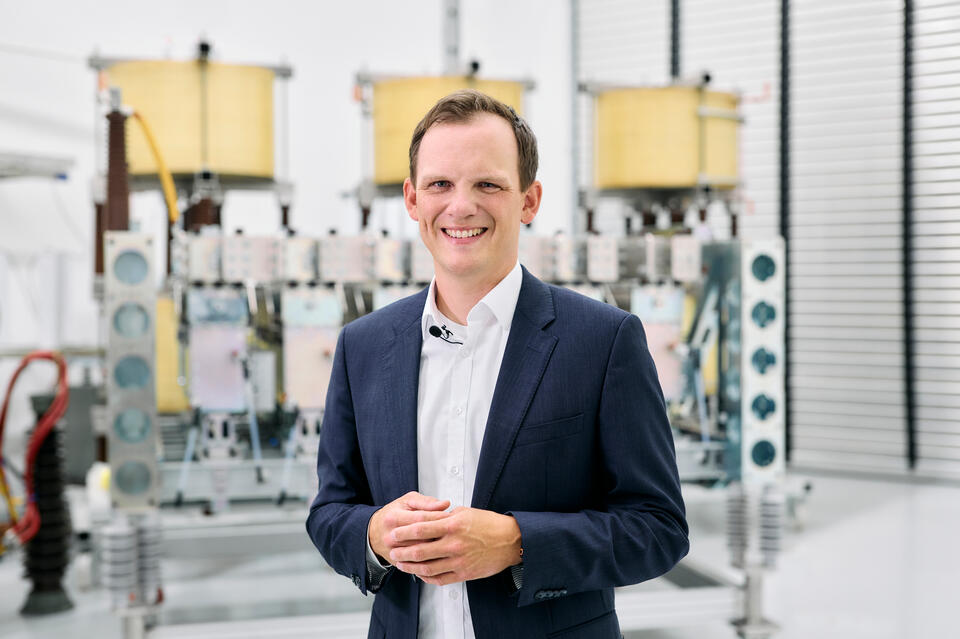
When he entered the world of transmission system operators (TSOs) two decades ago, the job of a grid operator was not seen as exciting. “But the energy transition changed everything,” says Johannes von Schkopp, who is now Head of System Integrity at TenneT Germany, one of Europe’s largest grid operators. “As we move away from fossil fuels and electrify more sectors, the electricity grid is becoming the backbone of the energy transition.”
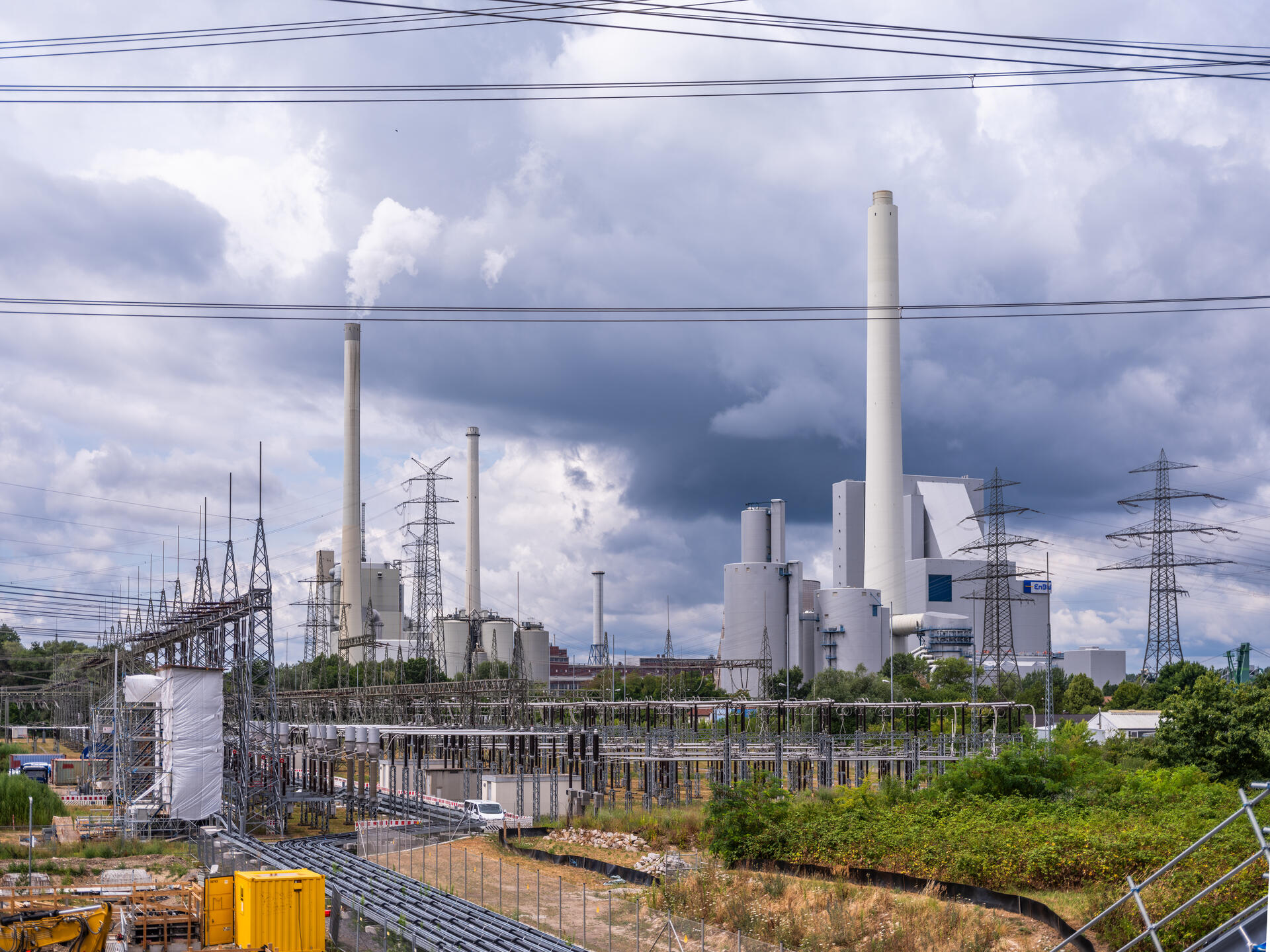
For TSOs, that means managing a power system undergoing a huge transition: from one dominated by large conventional power plants to one increasingly based on renewable generation and power electronic converters—with very different system behaviors. The blackout on the Iberian Peninsula in spring 2025, which left millions without power after voltage instabilities disrupted the grid, underscored why this matters. And the pressure for equipment manufacturers, grid operators, and governments to develop and implement new technical solutions is high.
The electricity grid is becoming the backbone of the energy transition.
Why integrating renewables strains the existing grid
Germany is far from such a scenario, says von Schkopp, but he does see grid stability becoming increasingly challenging. “Think of cold winter evenings with high demand and less renewable energy in the system,” he says, “but also the opposite: a holiday on a sunny summer day, with high generation and a very low load. While neither situation gives reason for concern today, the key task is to ensure that the grid and the wider power system continue to provide the same high level of reliability in the future.” For years the focus was on expanding renewable generation. Now, it is making the grid capable of handling both extremes.
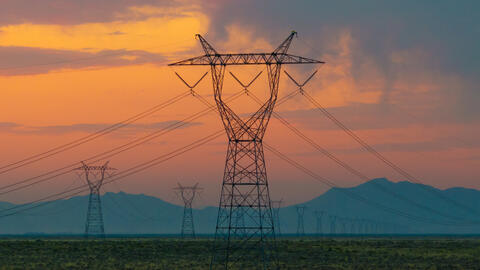
The transmission grids, which are supposed to integrate fluctuating renewables and support rising electricity demand, are under growing strain worldwide: In Europe, nearly 40 percent of transmission lines are more than 40 years old; in the US, much of the grid is 25 to 50 years old. In the same report, the IEA (International Energy Agency) states that around 80 million kilometers of grid will need to be added or modernized by 2040—equivalent to rebuilding the entire existing network. But physical expansion alone isn’t enough. As renewables replace conventional power plants, the new architecture of the grid requires new ways of managing and controlling the system: advanced technologies like direct current (DC) transmission, E-STATCOM, and synchronous condensers are becoming central to stabilizing power flows and enabling a more resilient and flexible grid.

The successful grids of the future will be the resilient ones.
New grid technologies for a renewable energy system
Von Schkopp is visiting Omterra’s factory on the outskirts of Nuremberg, where Matthias Foehr and his team are developing technologies to address these challenges. “If you take out conventional plants and bring in renewables, you reduce the inertia you have in the grids,” says Foehr, Vice President Product Management at Omterra Grid Technologies. “You basically reduce the buffering stability which you have in the grid. And this is what you have to take care of.”
HVDC: Moving renewable electricity where it is needed
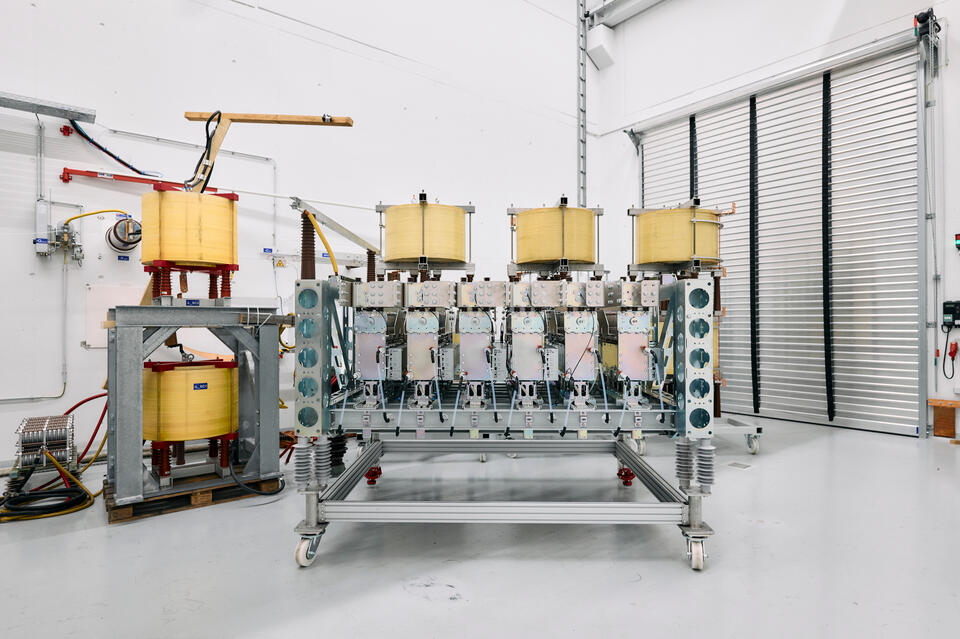
At Omterra's site in Nuremberg, Foehr's team is testing high-voltage direct current (HVDC) circuit breakers—one of the key technologies for the future grid. In Germany, as in many countries, renewable energy is often generated far from where it is consumed. Much of Germany's wind power is produced in the north, while most of its industrial demand lies in the south. HVDC enables electricity to be transmitted efficiently over these long distances with minimal losses. A prime example is the 765-kilometer HVDC interconnector linking Denmark and the UK, Viking Link.
“The traditional AC grid is a passive grid,’ says Foehr. ‘The power flow is basically the sum of what you put in and where you take something out. HVDC is not just helping you in terms of losses; you can also actively control how much power you want to send from point A to point B.”
E-STATCOM: Stabilizing a renewable power grid with supercapacitors
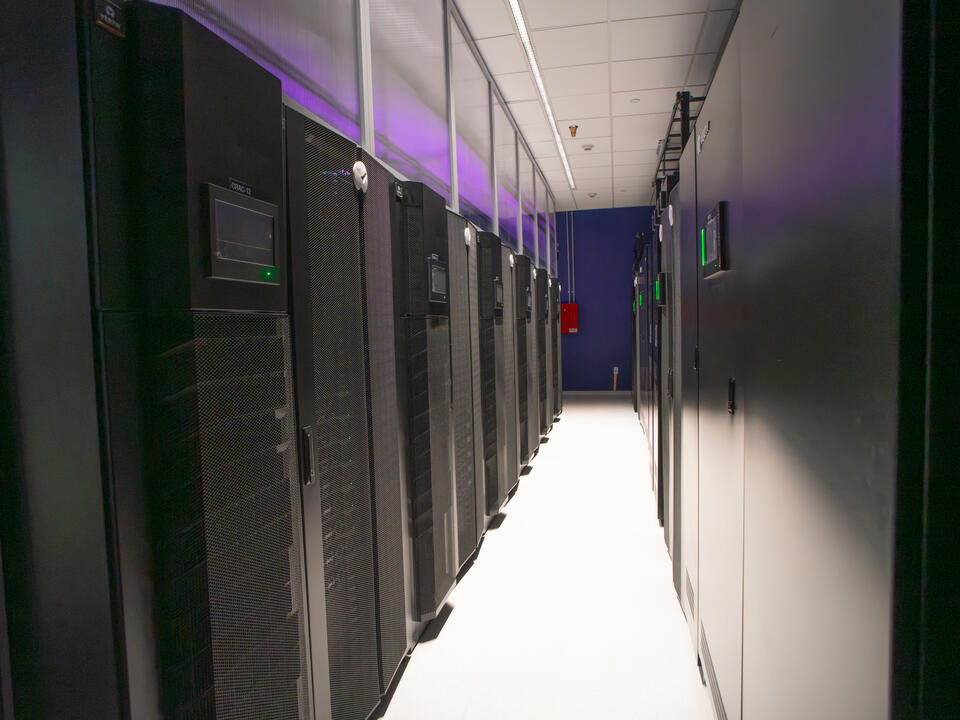
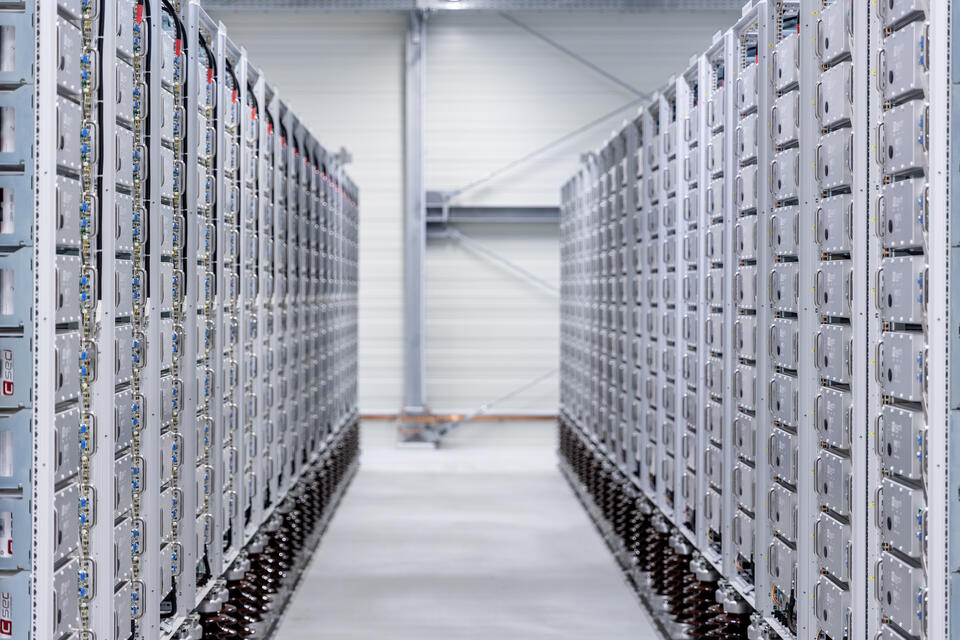
Moving electricity is one challenge. Keeping the system stable is another. At the end of 2025, Omterra and TenneT Germany completed the world’s first supercapacitor-powered STATCOM, called E-STATCOM, in Mehrum, Germany. Based on voltage-sourced converter technology, a STATCOM helps stabilize the grid by rapidly providing reactive power and regulating voltage—which makes the systems particularly valuable for high share of renewable energy.
The Mehrum Nord installation, located between the country’s two major north-south transmission corridors, helps stabilize both. “It’s a traditional STATCOM plus a big, very fast battery called ‘SuperCaps’,” explains Foehr. “With the battery, you can inject active power into the grid to help stability.”
“We’re using supercapacitors and enhanced power electronics to realize reactions in milliseconds,” says von Schkopp. The site is widely seen as a blueprint for renewable-ready grids across the globe.
SF₆-free switchgear: Building a more sustainable transmission grid
Innovation is also changing how grid infrastructure is built, reducing its own carbon footprint. One focus for Omterra is eliminating SF₆ from high-voltage switchgear. Although SF₆ is an excellent insulating gas, it has a global warming potential around 24,300 times greater than CO₂. Omterra's Blue portfolio replaces it with clean air and vacuum switching technology.
"We try to optimize the grid so that we build something which in 40 years from now will not be a big problem for our kids," says Foehr. "If you looked at university textbooks 10 or 20 years ago, they all said SF₆ was the only option up to 145 kilovolts. What we've shown is that, with the right investment in development, vacuum interrupters can operate at much higher voltages and power ratings in total. That allows us to replace SF₆ and build our Blue technology switchgear."
Why grid innovation depends on collaboration
Von Schkopp sums up the size of the challenge with a metaphor: “We’re expanding our grid while operating it, and at the same time we’re having very complex power flows which we need to manage. This is like renewing and widening a motorway in constant rush hour traffic.”
"Earlier on, innovation was one engineer with one brilliant idea," says Foehr. "Today, with the complexity, it's nothing you can do alone."
Innovation increasingly depends on collaboration between universities, equipment manufacturers, grid operators and policymakers. Omterra, for example, is working with TenneT Germany, other TSOs and industry partners to develop multi-terminal HVDC grids and other innovations that will underpin tomorrow's electricity system. "We are actively driving forward the transmission grids—not only with TenneT, but with other OEMs and other TSOs in the industry."
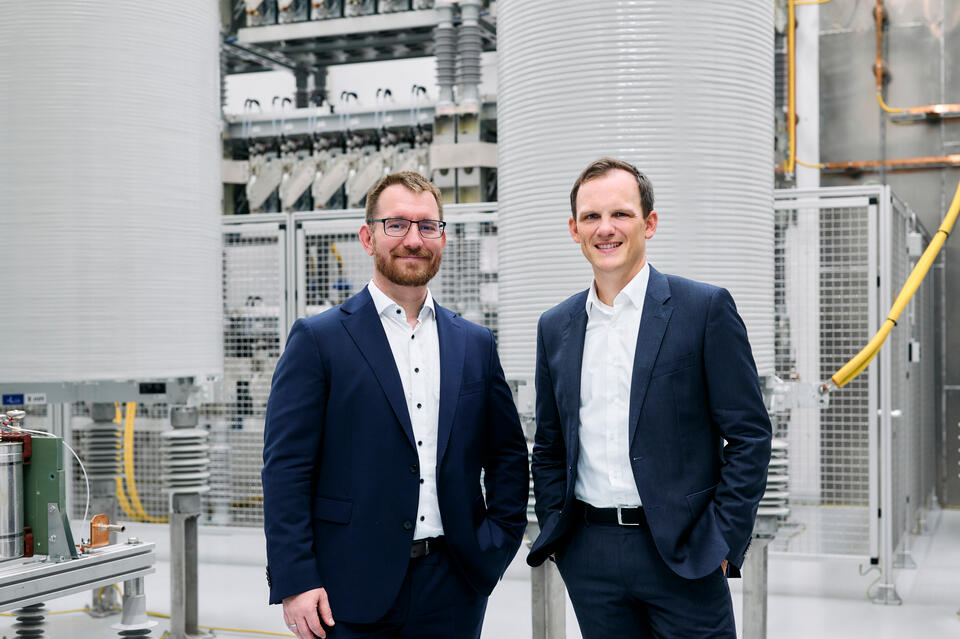
Public funding is also essential, says von Schkopp, because it helps de-risk promising technologies before they reach the market. He points to the European Commission's interoperability program, which is helping develop common standards for future HVDC systems.
By 2040, Johannes von Schkopp expects Europe's transmission grid to be a hybrid AC-DC network, combining long-distance DC overlay grids with AC infrastructure for regional transmission. "It will be dominated by power electronics, digitalized and, in Europe, increasingly interconnected."
Operating tomorrow's digital electricity grid
A few hundred kilometers south from Nuremberg, at ETH Zurich's Power Systems Laboratory in Switzerland, Professor Gabriela Hug spends her days thinking about what it will take to operate exactly that kind of system. “The electrical power system is operated at different time scales,” says Hug, “from seconds—even below seconds—to minutes, days, years. So, if we’re talking about how to optimize the electricity grid, we need to think about the different time scales.” In practice, that means managing everything from split-second changes in grid conditions to planning months or even years ahead.
One of the biggest unresolved challenges, she says, is seasonal storage—"bringing the solar energy from summer into winter." But at the other end of the spectrum, grid conditions can change in fractions of a second. Managing the grid across all of these time scales requires increasingly sophisticated forecasting, optimization and control.
The breakthrough is less in specific technologies than on the digital side.
From power electronics to intelligent grid control
This also changes the role of power electronics. "While they're part of the problem,” says Hug, “the power electronics or the inverters, they're also part of the solution because they give us a larger degree of freedom in how we can control the grid." Unlike conventional synchronous generators, whose behavior is largely determined by physics, inverter-based resources can be actively controlled, opening new possibilities for keeping increasingly dynamic power systems stable.
For Hug, that means the biggest breakthroughs are likely to come less from entirely new hardware than from developing the intelligence to operate it. "Data itself is not sufficient," she says. Instead, the challenge is developing forecasting, optimization and control algorithms that can turn growing volumes of data into actionable decisions.
Despite the challenges, Hug remains optimistic. "The technology is here," she says. "We have everything that we need to build a sustainable energy system. But it will depend a lot on policymakers, on political decisions, on how we're moving forward."
About the authors: Moritz Gathmann, Berlin, and Blas Ulibarri, Switzerland, both cover energy issues and are members of the international Primafila Correspondents team.
Combined picture and video credits: Stefan Hobmaier and Raphael Zubler